
Chimaera (fish)
Chimaeras are cartilaginous fishes (order Chimaeriformes), distant relatives of sharks. They have tooth plates, long tapering tails and often live in deep water; about 50 species occur in three families.
Overview
Chimaeras are a group of cartilaginous fishes traditionally placed in the order Chimaeriformes. They are sometimes called ghost sharks, ratfish, rabbitfish or spookfish, though they are not true sharks. As members of the larger assemblage of cartilaginous fishes, chimaeras share a skeleton made largely of cartilage rather than bone, but they show a number of distinctive anatomical and ecological traits that set them apart from their better known relatives, the sharks.
Image gallery
10 Images
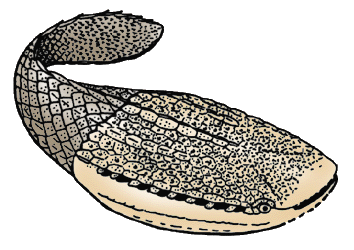


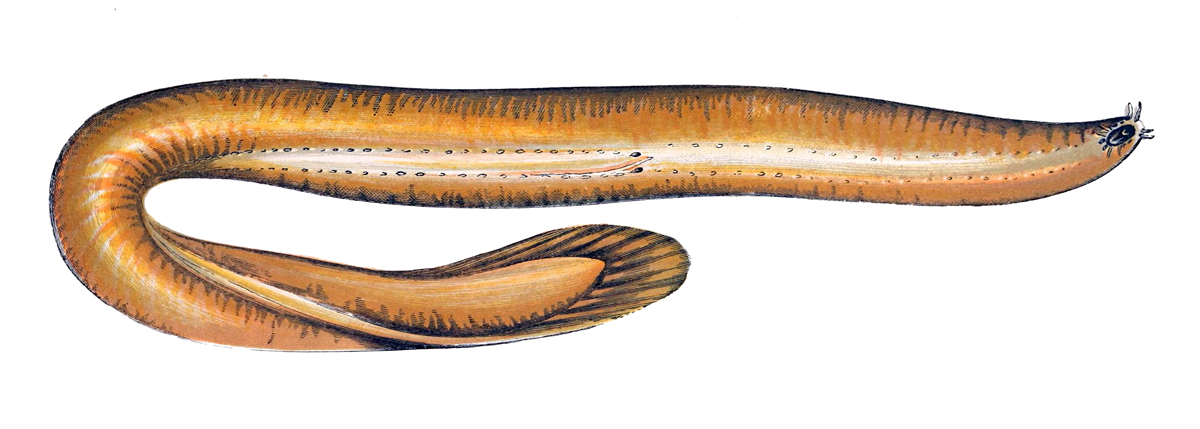
Anatomy and distinguishing features
Chimaeras possess several characteristic features: a long, tapering tail, smooth skin without the typical shark dermal denticles, and broad grinding tooth plates instead of rows of replaceable teeth. Their upper jaw is fused to the skull (a condition called holostyly), and many species have a venomous spine at the front of the dorsal fin. Males often carry additional clasping organs on the head and pelvic fins. Typical size ranges from small to moderately large, depending on species and habitat.
Reproduction and life history
Most chimaeras reproduce by internal fertilization. Males use claspers and, in some species, a forehead clasp to attach to the female. Females lay rigid, leathery egg cases that develop on the sea floor; development is generally slow, and many species appear to grow and mature at a slower rate than many bony fishes. Because many species inhabit deep or offshore waters, detailed life-history data remain sparse.
Evolution and fossil record
The chimaera lineage is ancient: their broader group first appears in the geological record during the Silurian period, and modern-style chimaeriforms have a long fossil history. Much of the ancient record is preserved as isolated tooth plates and fin spines rather than complete skeletons, so reconstruction of their early diversity relies heavily on fragmentary fossils and comparative anatomy. Molecular studies suggest the chimaera lineage diverged from the shark lineage nearly 400 million years ago and that the three living families began splitting during the late Jurassic to early Cretaceous eras; confidence in timing has grown as DNA sequencing has supplemented the imperfect fossil record.
Diversity and classification
Today about fifty living species of chimaera are recognized, grouped into roughly six genera and three families (the three families include shortnose, longnose and plough-nosed forms). Most species are found on continental slopes and seamounts at moderate to great depths, although a few inhabit shallower coastal waters. Their global distribution is patchy: where suitable deep habitats exist, local species richness may be higher.
Human interactions and conservation
Chimaeras are seldom targeted by large fisheries, but they are frequently taken as bycatch in deep trawl and longline operations. Their slow growth and low reproductive rates make some species vulnerable to overexploitation, but many remain poorly known and are listed as data deficient by conservation assessments. Conservation and scientific interest increasingly rely on molecular approaches, improved deep-sea surveys and careful management of bycatch to better understand and protect these ancient fishes.
Questions and answers
Q: What are chimaeras?
A: Chimaeras are cartilaginous fish in the order Chimaeriformes, also known as 'ghost sharks'.
Q: What is special about chimaeras in terms of their evolution?
A: Chimaeras branched off from sharks nearly 400 million years ago and have remained isolated ever since, making them one of the oldest and most enigmatic groups of fishes alive today.
Q: How diverse and abundant were chimaeras in the past?
A: Chimaeras were once a diverse and abundant group, as shown by the fossil record.
Q: Where are chimaeras mainly found nowadays?
A: Chimaeras are now found mainly in deep water.
Q: How many living species of chimaeras are there, and in how many families?
A: There are fifty living species of chimaeras in six genera and three families.
Q: Why has studying the evolution of chimaeras been problematic?
A: Studying the evolution of chimaeras has been problematic because there are few good fossils.
Q: What is the preferred approach to understanding speciation in chimaeras?
A: DNA sequences have become the preferred approach to understanding speciation in chimaeras.
Related articles
Author
AlegsaOnline.com Chimaera (fish) Leandro Alegsa
URL: https://en.alegsaonline.com/art/19712
Sources
- fishbase.org : "Chimaeriformes"
- fishbase.org : fishbase.org/Summary/FamilySummary.php?ID=24
- sciencedaily.com : "Ancient and bizarre fish discovered: new species of ghostshark from California and Baja California"
- books.google.com : Electroreceptors and other specialized receptors in lower vertrebrates