
Chichester: history, landmarks, and civic life in the West Sussex cathedral city
Chichester is a compact cathedral city in West Sussex, England. This article covers its origins, architecture, green setting, cultural institutions, twinning links and conservation efforts.
Overview
Chichester is a small cathedral city in the county of West Sussex on the south coast of England. Its compact centre, long heritage and proximity to the sea give it a distinctive character: civic buildings, narrow medieval streets and a cathedral precinct sit within fragments of the ancient city walls. The city is often described as a cathedral city because the cathedral has been the focal point of urban and cultural life for many centuries.
Image gallery
10 Images




Origins and historical development
Chichester began as a Roman settlement and developed around a distinctive grid of streets. Evidence of that Roman origin remains visible in archaeological finds and the pattern of the central plan: four principal thoroughfares continue to meet near the market area, reflecting the Roman layout that organized the town into a regular grid. The Roman past is interpreted in local museums that display artefacts and the remains of elite dwellings such as the Roman palace excavated nearby. Over the medieval and later periods the city grew around ecclesiastical and market functions, with the cathedral and a market cross or cross-shaped monument forming enduring landmarks.
Architecture and notable buildings
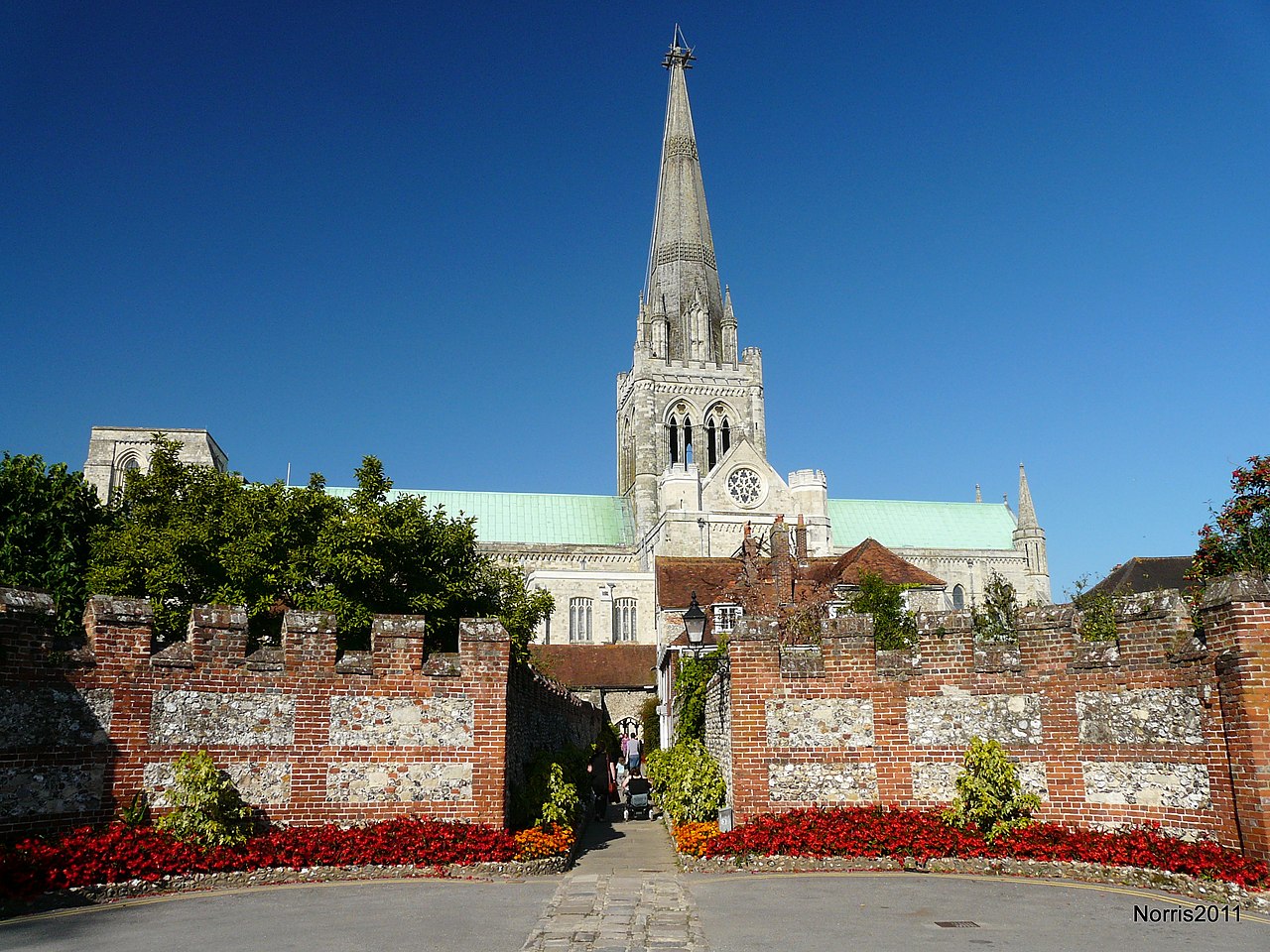
Chichester Cathedral is the city's most prominent building and an architectural anchor around which the cathedral close and historic houses are arranged. The centre also contains examples of Georgian and Victorian streetscapes and civic structures, together with later additions that reflect changing tastes and uses. Visitors commonly note the survival of stretches of the old city walls, parts of which can be walked, and the small market cross that marks the intersection of the four main streets. The city centre has areas that are largely pedestrianized, making historic buildings and public spaces accessible on foot.
- Chichester Cathedral and close: religious architecture, cloistered spaces and funerary memorials.
- The Chichester Cross: a central market monument at the junction of the main streets.
- Historic houses and the former butter market: examples of civic and commercial heritage.
Natural setting, parks and nearby attractions
Set close to the South Downs, Chichester acts as a gateway to rolling downland and chalk landscapes that are popular for walking and riding. To the north, the Goodwood estate and racecourse host sporting and cultural events; the South Downs provide countryside recreation and scenic views. Southwards, a restored canal links the city toward the harbour area and small boats, and local reedbeds support breeding birds and other wildlife. Proximity to the coast and a nearby harbour for yachts contribute to a mix of inland and maritime recreational opportunities.
Civic life, conservation and international links
Chichester places strong emphasis on preserving its historic character: the urban core is divided into several designated conservation areas that guide development and protect important buildings and streetscapes. Cultural life is supported by festivals, theatres and museums which interpret local history, art and archaeology. The city is also active in international civic friendships and is formally twinned with other European cities. Visual representations of those links are often displayed in municipal contexts:  and
and  appear in official materials showing twinning partnerships. Among the twinning connections are historic cities in France and Italy, which reinforce cultural exchange and municipal cooperation: for example, links with Chartres and with Ravenna reflect long-standing relationships between Chichester and continental centres of art and heritage (Chartres, Ravenna).
Transport, museums and community facilities
Chichester is served by regional rail and road connections that link it to neighbouring towns and the wider south-coast area. A local Roman museum close to Fishbourne displays significant archaeological material from the vicinity and interprets the grandeur of the Roman-period estate, including mosaic pavements and the remains of the Roman town and palace. Community programmes emphasise sustainable and ethical procurement—Chichester has been recognised for supporting Fairtrade providers—and the city maintains a range of municipal services, cultural venues and retail amenities focused on the centrally arranged streets.
Distinctive features and conservation priorities
Key to Chichester’s identity are the layering of historical periods visible in the urban fabric, the intimate scale of the city centre and the active management of heritage through conservation areas. The restored canal and reedbeds are examples of environmental regeneration, while civic twinning and festival activity support cultural exchange. Preservation of the historic core—its walls, cathedral precinct and traditional markets—continues to shape planning policy so that modern development complements rather than overwhelms the city’s distinctive character. For further reading on architectural detail and local events consult local guides and municipal publications or follow introductions available through cultural organisations and touring information (architecture, conservation, canal).
Additional resources and interpretive centres provide context for the city's Roman origins and subsequent development; these present archaeological evidence, civic records and curated exhibitions that explain how a Roman town evolved into the modern cathedral city known today. Where appropriate, local information points and museum displays signpost the most notable discoveries and the continuing work to protect Chichester’s past while accommodating present-day needs.
Questions and answers
Q: What is the population of Chichester?
A: The population of Chichester, according to the 2001 Census, is 23,731.
Q: What two cities is Chichester twinned with?
A: Chichester is twinned with Chartres in France and Ravenna in Italy.
Q: What is the oldest building in Chichester?
A: The oldest building in Chichester is Chichester Cathedral.
Q: Where can one find a butter market dating from 1808?
A: There is an old butter market dating from 1808 located in the city of Chichester.
Q: What type of event takes place at Goodwood race course near Chichester?
A: At Goodwood race course near Chichester, horse races take place during the summer months.
Q: How was the canal south of Chihester used before the railway came to town?
A: Before the railway came to town, the canal south of Chihester was used as a way to link it to the sea.
Q: Where can one see Roman remains near Chichester?
A: Near Fishbourne just west of Chichester there is a Roman Museum where many Roman remains can be seen including a palace that once stood there.
Related articles
Author
AlegsaOnline.com Chichester: history, landmarks, and civic life in the West Sussex cathedral city Leandro Alegsa
URL: https://en.alegsaonline.com/art/19558
Sources
- westsussex.gov.uk : "2001 Census: West Sussex – Population by Parish"