
Chi (Greek letter χ): shape, sound, numeric value and uses
Chi (Χ, χ) is the 22nd letter of the Greek alphabet. It denotes a voiceless velar or palatal fricative in Greek, has the numeral value 600, and appears widely in mathematics, statistics and derived scripts.
Overview
Chi (uppercase Χ, lowercase χ) is the 22nd letter of the Greek alphabet. Visually it resembles the Latin X and is the ancestor of several letters in other scripts. In modern Greek orthography it represents a voiceless fricative sound; historically its exact pronunciation has changed over time. The glyph is used not only in language but also as a symbol in multiple academic fields.
Image gallery
1 Image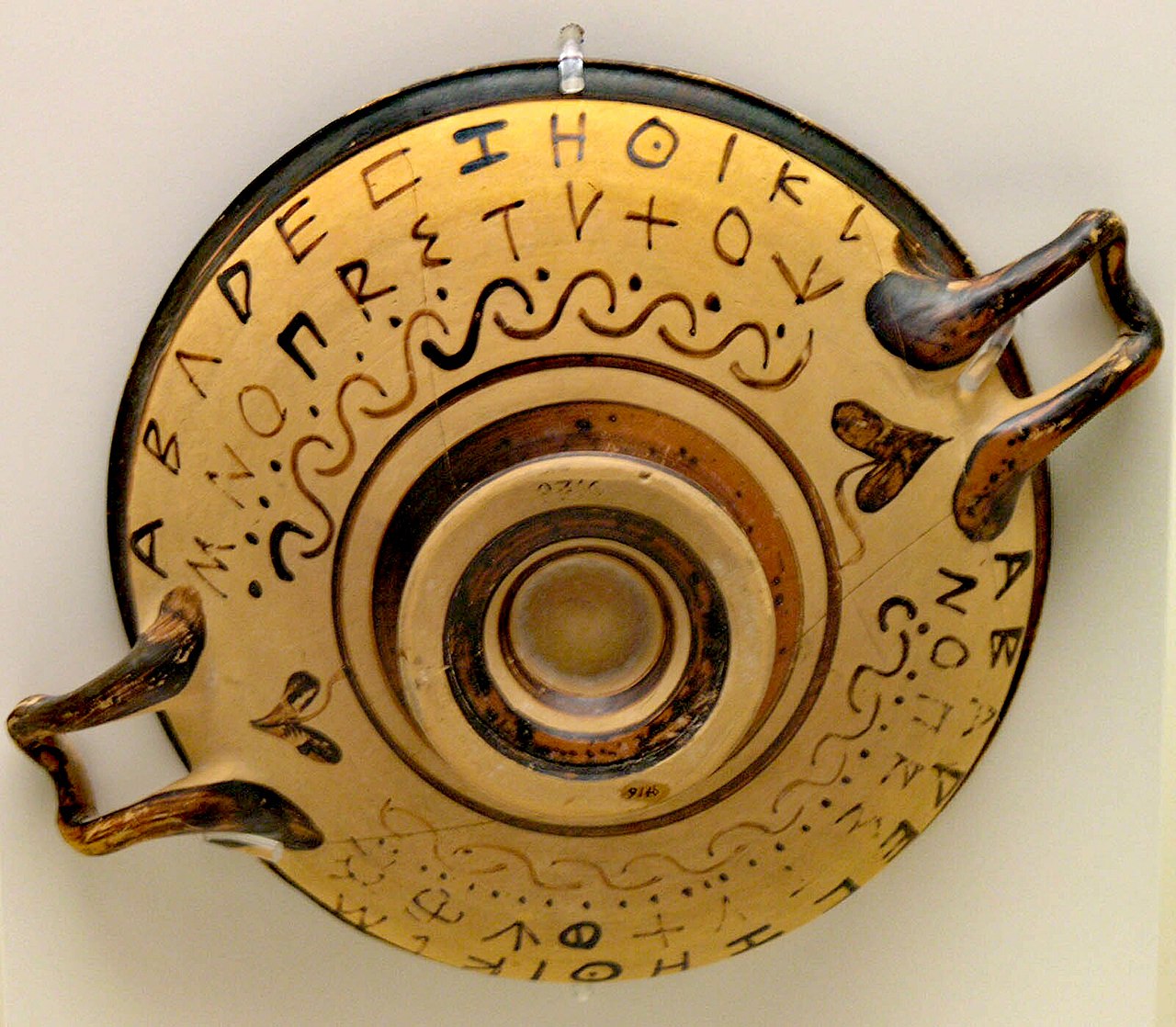
Pronunciation and historical development
In Ancient Greek the letter represented a velar or aspirated consonant, and over centuries its articulation evolved. In Modern Greek chi typically denotes a voiceless velar fricative [x] before back vowels and a voiceless palatal fricative [ç] before front vowels — a distinction familiar to speakers of German words like "Bach" compared with fronted fricatives. The letter has been part of Greek since early alphabetic inscriptions and its phonetic value shifted as the language changed.
Numeric value and descendants
As part of the Greek numeral system, chi has the numeric value 600; this function parallels other Greek letters serving double roles as letters and numerals. Several alphabets borrowed the chi form or its shape: the classical Roman X traces its graphic lineage to chi, and the Cyrillic letter Х (used in many Slavic languages) also derives from it. For reference on the old numeric conventions see the entry on Greek numerals.
Uses in mathematics, science and statistics
The lowercase chi, χ, is a compact and widely recognized symbol in scholarly notation. Common uses include:
- the characteristic function or indicator function of a set in probability and set theory;
- the chi-square distribution and related tests in statistics, often written χ²;
- the Euler characteristic in topology and geometry, where χ measures a basic topological invariant of shapes and surfaces.
Typography, variants and notable facts
Typographic forms of chi vary: the lowercase can appear with a looped tail or with strokes that meet more like an X; fonts may render these shapes differently for clarity. In addition to mathematical and linguistic roles, chi figures in cultural references and nomenclature where a single Greek letter serves as a concise label. For further mathematical context consult general references on mathematical notation.
Usage
- in stochastics for a probability distribution, see chi-square distribution or for the corresponding distributed test variable, see chi-square test
- in chemistry, a (non-standard) formula symbol for the substance quantity fraction
- in set theory the indicator function
- in linear algebra for the characteristic polynomial
- In physics, material property of being polarized or magnetized in an external electric (electric susceptibility) or magnetic (magnetic susceptibility) field.
- Chi phase, metallic phase
- in the International Phonetic Alphabet, the lower case [χ] is used to denote the unvoiced uvular fricative
- in the calculation of machine elements, the related stress gradient (consideration of the supporting effect of elastically stressed near areas of stress peaks in the component, for example in the case of a notch)
- in the graph colouring for the chromatic number and the chromatic index
- as German spelling for Qi as a term for life energy, "fluidum" in traditional Chinese medicine (TCM)
- in flight dynamics as orbit azimuth
- as a symbol for Jesus Christ: The Greek X is the first letter of the name Χριστός and at the same time symbolizes the cross.
See also
- Chiasmus
- Chiasma
- optic chiasm
Related articles
Author
AlegsaOnline.com Chi (Greek letter χ): shape, sound, numeric value and uses Leandro Alegsa
URL: https://en.alegsaonline.com/art/19467