
Chest X-ray
An introduction to chest X‑ray imaging: how images are made, common projections and findings, clinical uses, safety considerations, and historical context.
Overview
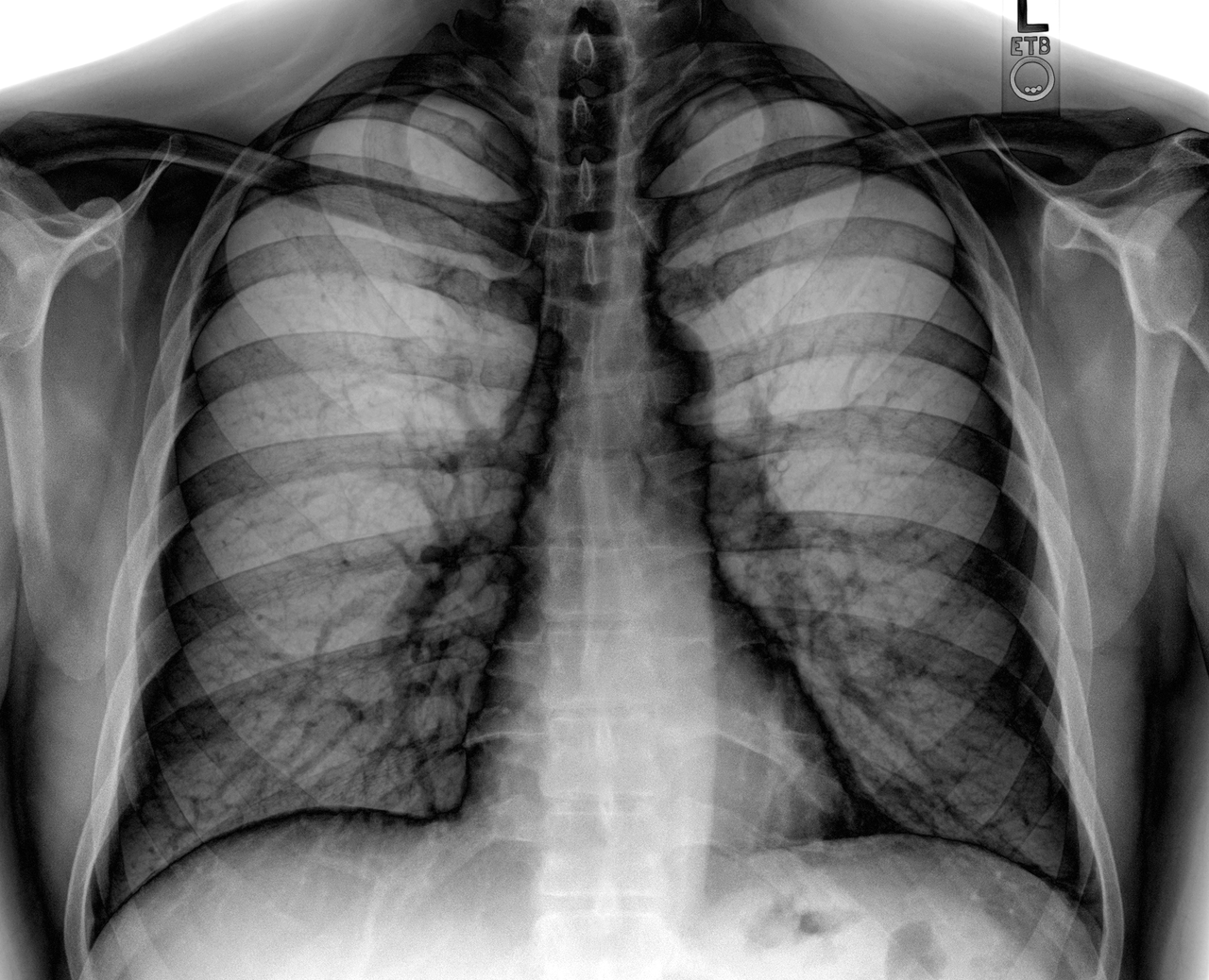
A chest X-ray is a radiographic image of the chest that shows the lungs, heart, bones, and supporting structures. Often called a chest film or radiograph, it is one of the most frequently performed medical imaging tests. Clinicians order a chest X‑ray to evaluate symptoms such as cough, shortness of breath, chest pain, fever, or to check the position of medical devices. For a general introduction to the technique see chest X-ray.
Image gallery
10 Images



How the image is formed
Chest X‑rays are produced by passing a controlled beam of X‑rays through the body onto a detector. Different tissues absorb X‑rays to different degrees: air-filled lungs appear darker, denser structures such as bone appear lighter, and soft tissues and fluid are intermediate. This principle is the basis of radiography. Because X‑rays are a type of ionizing radiation, exposures are kept as low as reasonably achievable while maintaining diagnostic image quality.
Common projections and technique
- Posteroanterior (PA): standard upright view with the detector in front of the chest.
- Anteroposterior (AP): often used for bedridden or portable studies; magnifies the heart compared with PA.
- Lateral: provides depth information and helps localize abnormalities seen on the frontal view.
- Special views: lordotic or expiratory films, and focused rib series when needed.
Clinical uses and typical findings
Chest radiographs help detect pneumonia, pulmonary edema from heart failure, pleural effusion, pneumothorax, lung masses, fractures of the ribs and clavicle, and the presence and position of lines and tubes. Interpretation combines pattern recognition (for example, air‑space consolidation versus interstitial markings), assessment of heart size, and comparison with prior films when available.
Limitations and safety
Although quick and widely available, chest X‑rays have limitations: small or early abnormalities can be missed, and overlapping structures can obscure detail. Computed tomography (CT) offers greater sensitivity when more detail is required. Radiation dose from a single chest X‑ray is low but is managed carefully in children and pregnant patients. Clinical decisions weigh the diagnostic benefit against any exposure risk.
History and notable facts
The use of X‑rays in medicine began after Wilhelm Röntgen's discovery of X‑radiation in the 1890s; chest radiography became a cornerstone of pulmonary and cardiac diagnosis in the 20th century and remains one of the most common diagnostic imaging procedures worldwide. Modern digital detectors and standardized reporting systems have improved consistency and enabled easier comparison between studies.
For further reading, consult clinical radiology resources and institutional imaging protocols: overview, technique guides at radiography references, and safety summaries about ionizing radiation. Additional practical guidance for chest imaging appears in clinical practice guidelines and radiology textbooks (chest resources).
Questions and answers
Q: What is a chest X-ray?
A: A chest X-ray is a type of medical imaging used to diagnose diseases of the chest.
Q: What do doctors use chest X-rays for?
A: Doctors use chest X-rays to diagnose problems in the chest.
Q: How common are X-rays in the medical field?
A: X-rays are among the most common medical images.
Q: What type of radiation is used in chest X-rays?
A: Chest X-rays use ionizing radiation.
Q: What does the chest X-ray process produce?
A: The chest X-ray process produces a photo that shows the inside of the chest.
Q: Can chest X-rays diagnose diseases in other parts of the body?
A: No, chest X-rays are only used to diagnose diseases of the chest.
Q: Are there any potential risks associated with chest X-rays?
A: Like all radiography methods, chest X-rays use ionizing radiation, which can potentially cause harm in large doses. However, the benefits of using chest X-rays to diagnose problems in the chest usually outweigh the risks.
Related articles
Author
AlegsaOnline.com Chest X-ray Leandro Alegsa
URL: https://en.alegsaonline.com/art/19350
Sources
- cdc.gov : Using Digital Chest Images to Monitor the Health of Coal Miners and Other Workers