
Chess Olympiad
The Chess Olympiad is the biennial world team championship organized by FIDE for national teams in open and women’s sections, featuring evolving formats from round-robin to modern Swiss pairing systems.
The Chess Olympiad is the premier international team competition in chess, organized by the world governing body FIDE. It brings together representative squads from around the globe — typically national delegations — to compete in parallel open and women’s sections. The event is one of the most important occasions in the chess calendar, combining sporting rivalry, national pride and opportunities for title norms and ratings impact.
Image gallery
6 Images


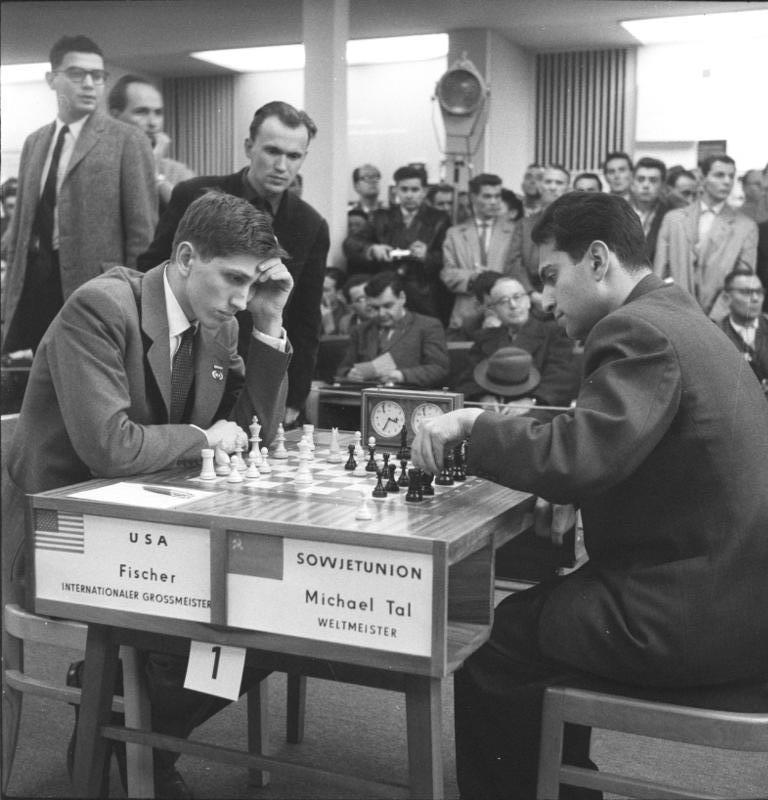

Format and match structure
Over time the Olympiad has used several tournament systems as participation grew. Early editions were round-robin (all-play-all) events; later, qualifying sections or pools were introduced; since the late 20th century a Swiss-system format has become standard for large fields. Matches are usually contested on several boards at once (commonly four boards per team with one or more reserves), with each board played as an individual classical game. Team scoring methods and tie-break procedures have varied, including board points, match points and Sonneborn–Berger type tie-breaks.
History and development
The first official Olympiad took place in 1927. After interruptions and reorganization in the mid-20th century, the event settled into a regular biennial rhythm from about 1950 onward. A separate women’s section was established later to provide a focused international competition for female players. The Olympiad’s size and profile expanded steadily, reflecting chess’s global growth and the increasing number of FIDE member federations taking part.
How teams participate
- National federations affiliated with FIDE may enter teams; entries typically include primary players and official reserves.
- Delegations travel to the host city, which is chosen by FIDE after a bidding and selection process.
- Pairings in Swiss rounds match teams with similar scores each round, a method also used widely in individual tournaments (Swiss system).
Importance and notable aspects
The Olympiad is important for several reasons: it crowns national team champions, influences player ratings and can be a venue for earning title norms under FIDE regulations. It also showcases shifts in global chess power — historically dominated by a few strong federations, the event today features a wider range of contenders and rising programs. Beyond results, the Olympiad fosters international exchange and remains a celebration of chess at the national level (national teams).
Practical considerations and legacy
Host cities must provide playing halls, accommodation and anti-cheating measures; modern Olympiads also emphasize live broadcasts and digital coverage. The tournament’s long history and recurring nature make it a key part of chess heritage, connecting generations of players and reflecting the sport’s evolving competitive and organizational practices.
Questions and answers
Q: What are Chess Olympiads?
A: Chess Olympiads are chess events open to all national teams.
Q: Who runs the Chess Olympiads?
A: The world chess organisation, FIDE, runs the Chess Olympiads.
Q: How long have Chess Olympiads been running?
A: Chess Olympiads have been running since 1927.
Q: How often are Chess Olympiads run?
A: Chess Olympiads have been run every two years since 1950.
Q: What was the format of earlier Chess Olympiads?
A: Earlier Chess Olympiads were all-play-all.
Q: What was the system used when numbers grew for Chess Olympiads?
A: When numbers grew, a system of qualifying sections were used for Chess Olympiads.
Q: What is the format of Chess Olympiads in recent times?
A: In recent times, the format of Chess Olympiads has been a Swiss system. This is a method whereby opponents are chosen each round to have similar scores.
Related articles
Author
AlegsaOnline.com Chess Olympiad Leandro Alegsa
URL: https://en.alegsaonline.com/art/19340
Sources
- fide.com : fide.com/component/content/article/1-fide-news/4279-russia-wins-world-team-chess-champion…
- olimpbase.org : List of Chess Olympida
- olympic.org : Recognized Sports of the International Olympic Committee
- olympic.org : International Federation (IF) for chess.
- fide.com : FIDE - Uniting the Chess World
- arisf.org : ARISF Members
- fide.com : Complete FIDE Anti-Doping Documents
- chessbase.com : Controversy over FIDE doping check
- jeremysilman.com : The Insanity of drug testing in chess
- chinaorbit.com : Chess Olympiad in Dresden 2008
- chesshistory.com : Edward Winter: The 1936 Munich Chess Olympiad