
Chemistry education: teaching, learning, and the development of instruction
Study and practice of teaching chemistry across school and university levels, including methods, curricula, laboratory work, teacher preparation, challenges and the discipline’s role in society.
Chemistry education examines how people learn chemistry and how teachers can promote meaningful understanding. It spans primary, secondary and tertiary levels and combines subject knowledge with pedagogy, assessment and laboratory practice. The field draws on cognitive science, curriculum studies and practical classroom evidence to design instruction that helps learners reason about atomic structure, reactions, thermodynamics and chemical systems.
Image gallery
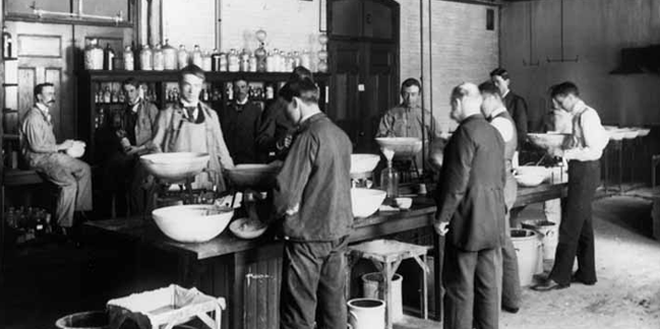
6 Images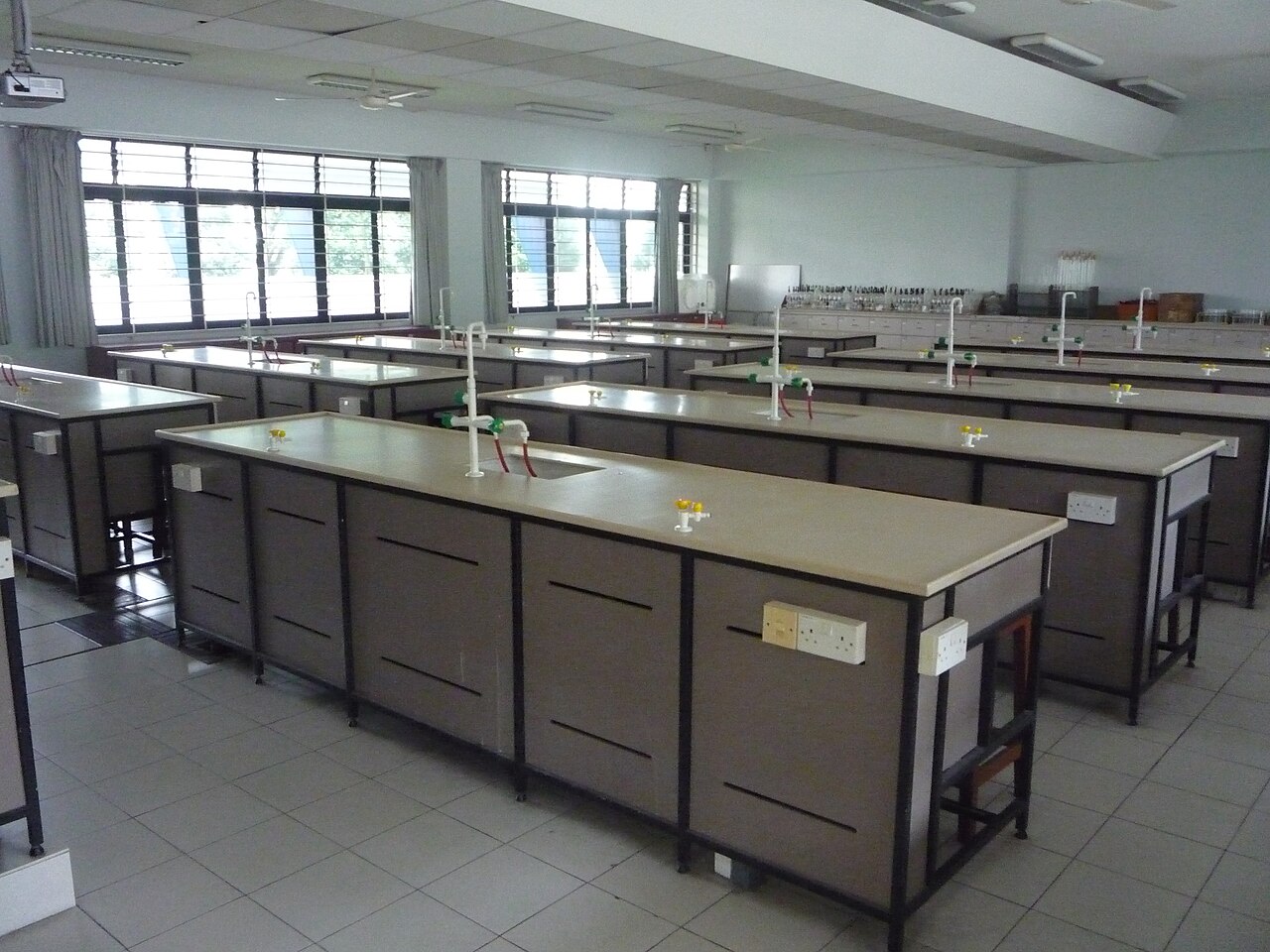


Key components
Core elements include curriculum design, teacher preparation, instructional materials, laboratory experiences and assessment. Curriculum defines the concepts and skills students should acquire; pedagogy determines how those topics are presented; laboratory work provides hands‑on opportunities to apply theory; and assessment evaluates conceptual understanding as well as procedural competence. Teacher education programs and continuing professional development help instructors stay current with content and methods.
Teaching methods and typical activities
Instructional approaches in chemistry range from traditional lectures to inquiry‑based learning and collaborative problem solving. Common modes are:
- Lecture and guided discussion for conveying core concepts.
- Demonstrations that make invisible processes visible and provoke prediction and explanation.
- Laboratory activities that develop experimental technique, data interpretation and safety practices.
- Simulations and models to represent molecular structure and reaction dynamics.
- Formative assessment and concept inventories to identify misconceptions and guide instruction.
Effective instruction often blends these elements: a short lecture or model, a concrete demonstration or simulation, and a hands‑on lab or group activity that lets students test ideas and analyse outcomes. Emphasis on argumentation, quantitative reasoning and laboratory safety is common.
Research in chemistry education investigates how students form mental models of atoms and bonds, how they transfer laboratory skills to novel problems, and which interventions reduce persistent misconceptions (for example about chemical equilibrium or conservation of mass). The community uses classroom studies, controlled interventions and long‑term professional development evaluations to refine practice.
The history of formal chemistry teaching mirrors the discipline’s growth: from apprentice and lecture traditions in the 18th and 19th centuries to the laboratory‑centred curricula of the 20th century, and more recently to learner‑centred and research‑informed approaches. Advances in instrumentation, computing and virtual laboratories have expanded methods available to teachers.
Several broader issues affect chemistry education today. Many countries report shortages of qualified chemistry teachers and difficulties retaining them, often because alternative careers in industry or research offer higher pay. For example, large numbers of math and science teachers left the U.S. workforce following the 1999–2000 school year, illustrating long‑standing retention challenges. Equity, inclusion and access to well‑equipped labs are ongoing concerns, as is ensuring instruction supports both conceptual understanding and practical skills for a workforce that needs scientific literacy.
Overall, chemistry education is an applied research area and a professional practice: it seeks to translate what we know about learning into classroom strategies that help diverse students understand and use chemical knowledge in science, health, the environment and technology.
Questions and answers
Q: What is chemistry education?
A: Chemistry education is the study of the teaching and learning of chemistry.
Q: What are the topics in chemistry education?
A: The topics in chemistry education include understanding how students learn chemistry and how best to teach chemistry.
Q: What is the objective of researchers in chemistry education?
A: The objective of researchers in chemistry education is to improve learning results by improving teaching methods and training chemistry teachers.
Q: Which teaching methods do researchers in chemistry education study?
A: Researchers in chemistry education study many teaching modes, including: classroom lecture, demonstrations, and laboratory activities.
Q: Why is there a shortage of chemistry teachers?
A: There is a shortage of chemistry teachers because people with science training can get jobs that pay more outside of teaching.
Q: What is the consequence of this shortage of science teachers?
A: The consequence of this shortage of science teachers is that more than 45,000 math and science teachers left teaching in the United States just after the 1999-2000 school year.
Q: How do researchers in chemistry education help in addressing this issue of shortage of science teachers?
A: Researchers in chemistry education try to address this issue of shortage of science teachers by exploring ways to improve teaching methods and training chemistry teachers to retain them in the field.
Related articles
Author
AlegsaOnline.com Chemistry education: teaching, learning, and the development of instruction Leandro Alegsa
URL: https://en.alegsaonline.com/art/19168
Sources
- commons.wikimedia.org : Chemistry Education
- nsta.org : "Teaching science in the 21st century: the science and mathematics teacher shortage: fact and myth"