
Chelonia: name, taxonomy and the green sea turtle
Chelonia refers both to a historical name for the turtle order and to the genus containing the green sea turtle (Chelonia mydas); this article explains usage, biology, and conservation.
Chelonia is a scientific name that has been applied in more than one way within turtle classification. Historically it has been used as a name for the entire group of turtles, though modern taxonomy more commonly uses the order name Testudines. At the same time, Chelonia also appears in the scientific name of the widely known green sea turtle, Chelonia mydas.
Image gallery
10 Images


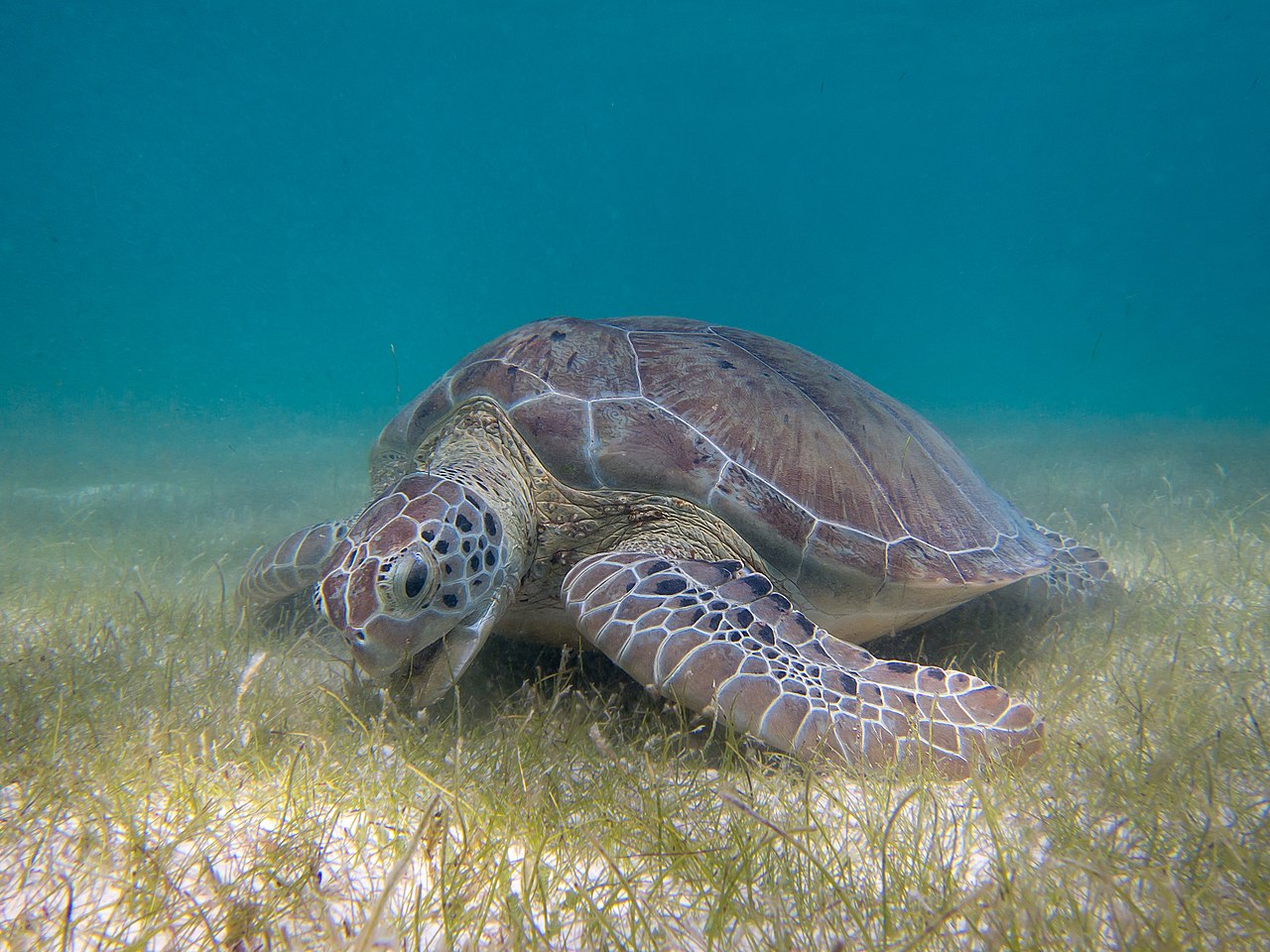
Classification and name
The word Chelonia stems from classical roots referring to tortoises and turtles. In practice, taxonomists distinguish ranks such as order, family and genus to organize living turtles. Some historical literature and older classification schemes used Chelonia in different senses; modern works emphasize standardized ranks and the name Testudines for the whole order.
Characteristics and ecology
Turtles in the broader group possess a bony or cartilaginous shell, a toothless beak, sturdy limbs modified for walking or swimming, and are cold-blooded reptiles that reproduce by laying eggs. Many species show slow growth and long lifespans. Marine forms such as the green sea turtle have flipper-like limbs and undertake long migrations between feeding grounds and nesting beaches.
Common ecological traits include:
- Dietary variety: herbivory, omnivory, or carnivory depending on species;
- Reproductive behavior: oviparity with nesting on land;
- Role in ecosystems: seed dispersal, vegetation control, and as prey or predators.
For example, Chelonia mydas is famous for its largely herbivorous adult diet, extensive migrations, and beach nesting behavior that is important to coastal ecosystems and conservation efforts.
Threats to turtles include habitat destruction, bycatch in fisheries, pollution, and illegal trade. Conservation responses combine protected nesting sites, fisheries management, and international cooperation. The differing uses of the name Chelonia — as an historical order name and as part of a species name — are a reminder that scientific nomenclature evolves as classification systems are refined.
Questions and answers
Q: What is Chelonia?
A: Chelonia is a name for the whole order of turtles.
Q: Is Chelonia a specific type of turtle?
A: Yes, Chelonia is a particular type of turtle.
Q: What is Testudines?
A: Testudines is another name for the order of turtles.
Q: Is Testudines often used instead of Chelonia?
A: Yes, nowadays Testudines is often preferred over Chelonia.
Q: What type of turtle is Chelonia mydas?
A: Chelonia mydas is the Green sea turtle.
Q: Can Chelonia be used to refer to all turtles?
A: Yes, Chelonia is a name for all turtles.
Q: What is the scientific classification of turtles?
A: The scientific classification of turtles is Testudines or Chelonia.
Related articles
Author
AlegsaOnline.com Chelonia: name, taxonomy and the green sea turtle Leandro Alegsa
URL: https://en.alegsaonline.com/art/19137
Sources
- zfmk.de : "The distinction between family-series and class-series nomina in zoological nomenclature, with emphasis on the nomina created by Batsch (1788, 1789) and on the higher nomenclature of turtles"
- worldcat.org : 0006-7172