
Check and Checkmate in Chess: Rules, Types, and Common Patterns
Definitions and rules for check and checkmate in chess, how to respond, common tactical forms, notation, and distinctions from stalemate and resignation.
Overview
In chess, a king is said to be in check when one or more enemy pieces attack the square occupied by that king. A check is a direct threat: the player whose king is attacked must make a move that ends the threat on the next turn. If no legal move removes the threat and the king remains attacked, the position is checkmate and the game ends with the attacker winning.
Image gallery
1 Image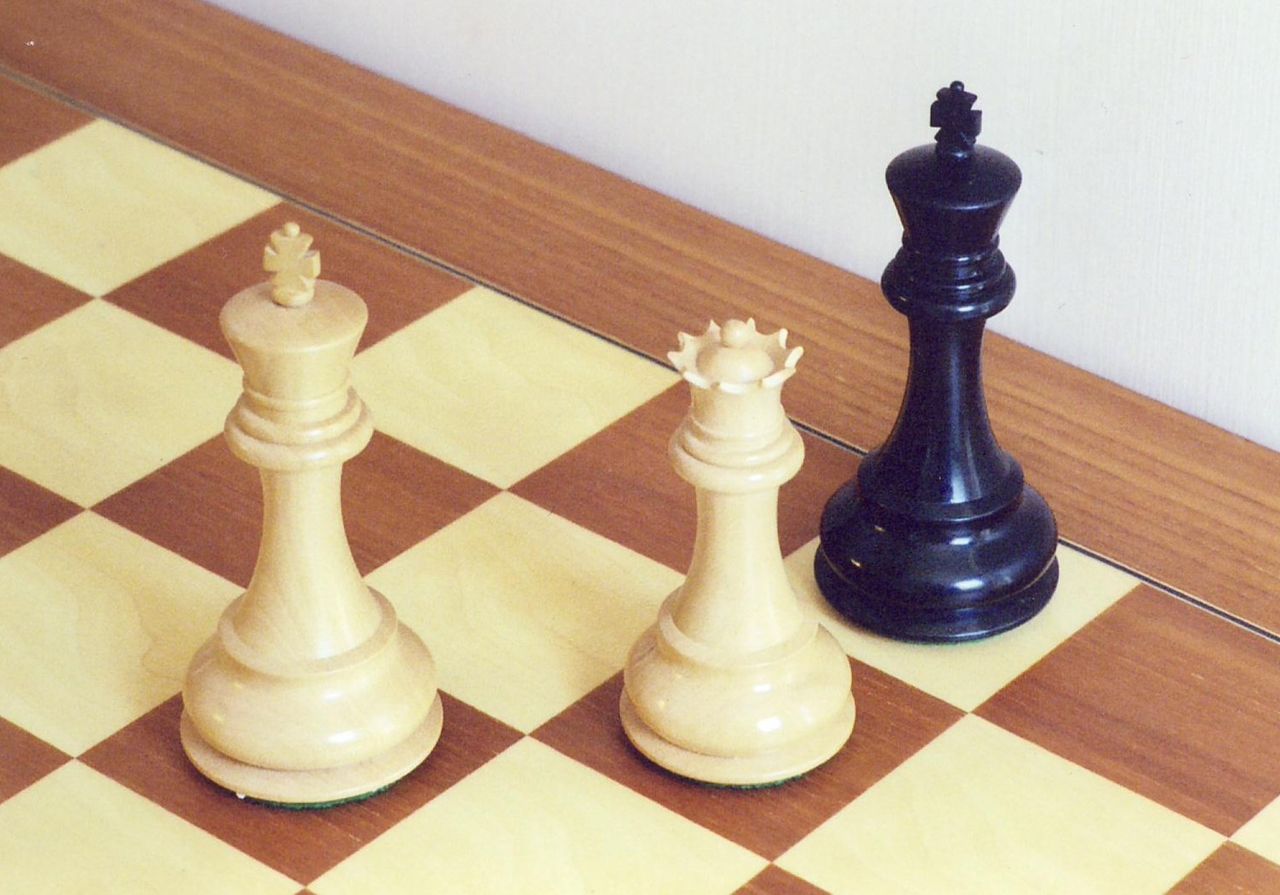
How to respond to check
When in check, a player has only a limited set of legal options. At least one of the following must remove the immediate threat:
- Capture the checking piece — the king itself or another friendly piece may take the attacker if doing so removes the check.
- Interpose a piece — place a piece between the attacker and the king; this is possible only against sliding pieces (bishop, rook or queen) and when there is an intervening square available.
- Move the king — the king may move to any adjacent square that is not attacked by an enemy piece.
Moves that leave the king in check or place it into check are illegal. Certain special moves, such as castling, cannot be used to evade an existing check: the king may not castle out of, through, or into check.
Types and tactical uses of check
Checks arise in many tactical themes and can be used to gain time, force exchanges, or create mating nets. Common forms include:
- Discovered check — a piece moves away to reveal an attack by another piece.
- Double check — two pieces simultaneously give check; the only legal response is to move the king because a single capture or interposition cannot block both threats.
- Direct checks — delivered by any piece including pawns and knights; knight checks cannot be blocked by interposition.
Checkmate and important distinctions
Checkmate occurs when the king is in check and there is no legal move that removes the threat. The game ends immediately on checkmate. It is different from stalemate, where a player has no legal moves but the king is not in check; stalemate is usually a draw. Players often resign before being checkmated when defeat is inevitable.
Notation, history and practical notes
In algebraic notation a check is commonly marked with a plus sign (+) and checkmate with a hash sign (#). Historically other symbols were used, but modern texts use these marks. Delivering check can be a decisive tactical tool: it may force a defender's piece to a worse square, win material, or steer the opposing king into a vulnerable position. For formal rules and tournament details consult the governing rules referenced by official chess regulations.
Questions and answers
Q: What is check in chess?
A: Check in chess is a situation where a player's king is under attack.
Q: What must a player do if their king is in check?
A: If a player's king is in check, they must find a way to stop the threat. They cannot ignore it.
Q: What are the three things a player can do to stop a checkmate?
A: A player can capture the checking piece (with the king or another piece), interpose by putting a piece between the checking piece and the king or move the king to a square which is not threatened.
Q: When does a check become a checkmate?
A: If none of the three methods of stopping a check work, then it is not a check but a checkmate.
Q: Can a player ignore a check in a chess game?
A: No, a player cannot ignore a check. They must find a way to stop the threat.
Q: What is interposing in chess?
A: Interposing in chess is when a player puts a piece between the checking piece and the king to stop the check. It only works if the checking piece is a long-distance piece such as a bishop, rook or queen.
Q: What is a long-distance piece in chess?
A: A long-distance piece in chess is a piece that can move multiple squares in one move like a bishop, rook or queen.
Author
AlegsaOnline.com Check and Checkmate in Chess: Rules, Types, and Common Patterns Leandro Alegsa
URL: https://en.alegsaonline.com/art/19088
Sources
- fide.com : "Laws of Chess"