
Château de Montsoreau: Loire Valley riverside château and contemporary art museum
Riverside Renaissance château in Montsoreau, France, notable for its riverbed setting and for housing a major collection of Art & Language works as a public museum since 2016.
Overview
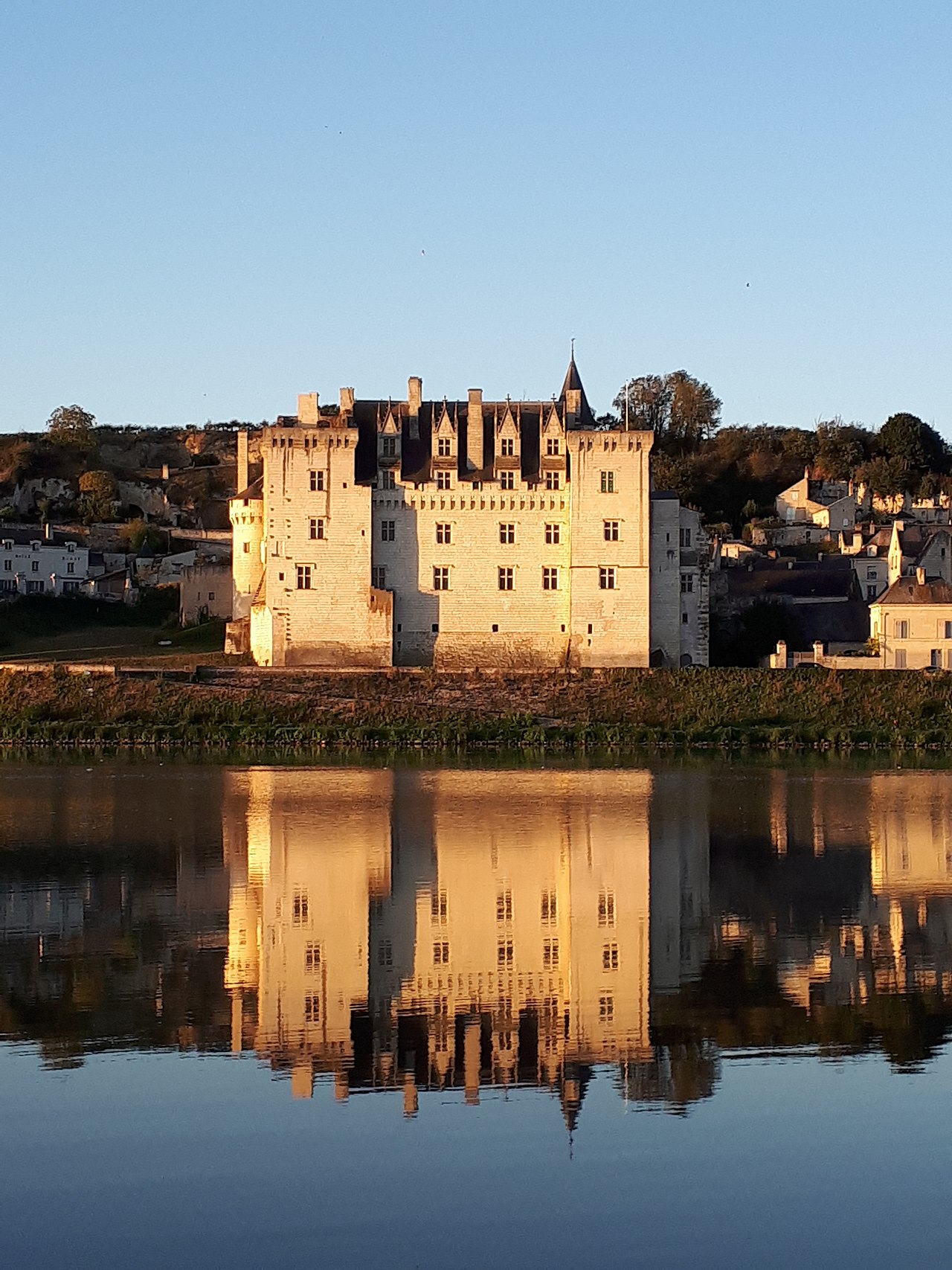
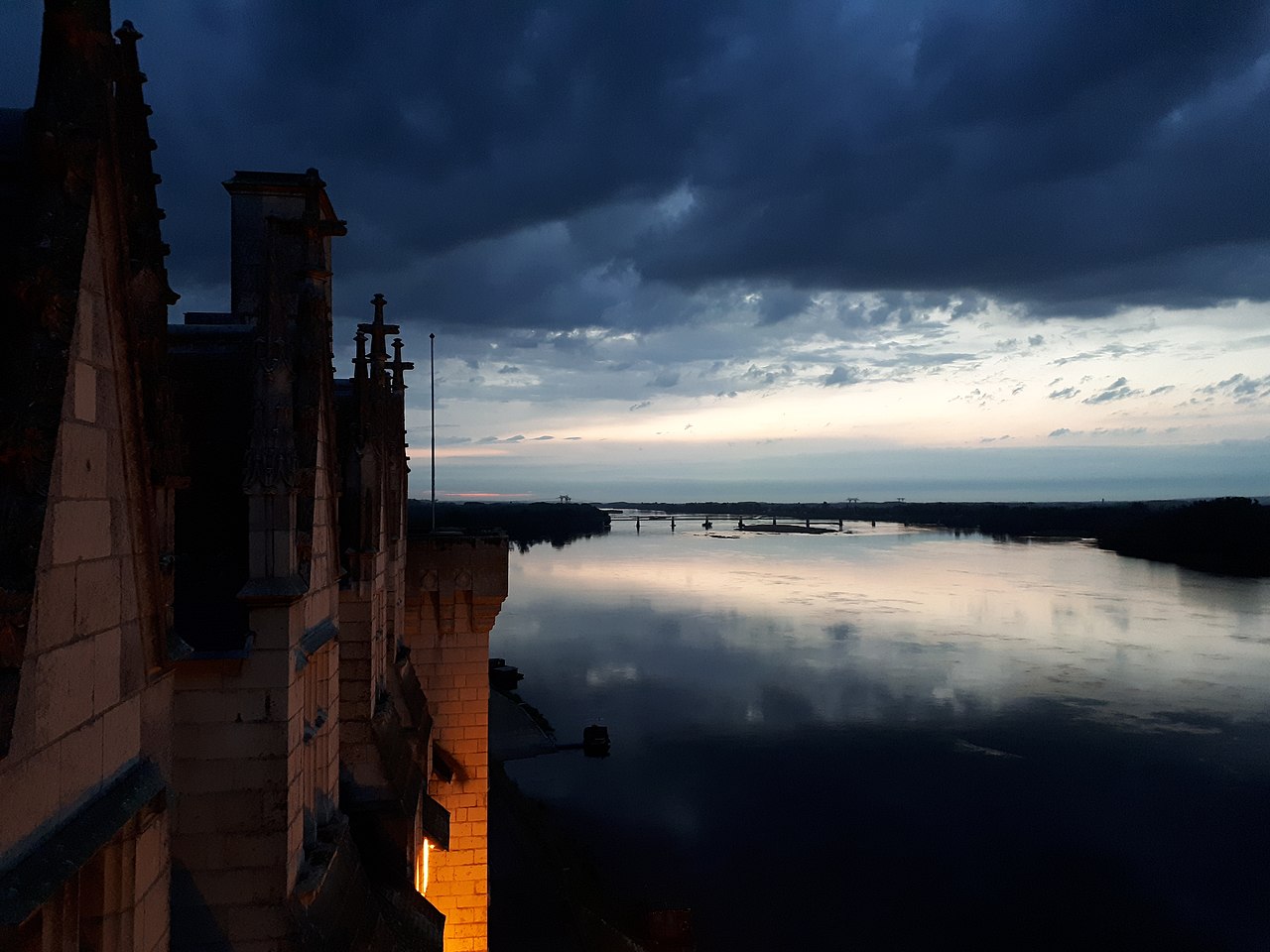
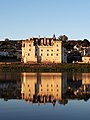
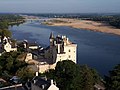
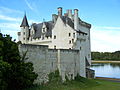
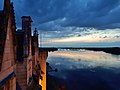
The Château de Montsoreau stands at the water's edge in the village of Montsoreau, in western France. It is distinctive among Loire Valley residences because it was built directly in the Loire riverbed, presenting its principal façades to the river rather than sited high above it. In English the building is often called the chateau de Montsoreau or simply Montsoreau. The château is commonly cited as an early example in the region of a shift from fortified medieval forms toward more domestic manifestations of Renaissance taste.
Image gallery
10 Images



Site and architectural character
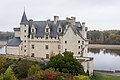
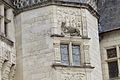
The château occupies a rocky spur known historically as Mont Soreau. Its long, low silhouette and riverfront orientation contrast with the tall keeps of older fortresses. The plan and façades show a mixing of defensive vestiges—thick walls and a compact footprint dictated by the narrow promontory—with Renaissance features such as regularized window openings, more comfortable living spaces, and refined stone detailing. Because it sits at river level the building reads as part of the Loire landscape and functions visually as a link between village, river and surrounding countryside. Scholars often compare it with later Loire estates that developed more elaborate garden and park schemes at higher ground among the region's group of Renaissance châteaux.
History and development
The promontory has been occupied since antiquity and the Middle Ages. Documentary and archaeological evidence point to earlier religious buildings and to a fortified strongpoint that controlled river communications. In the later medieval period the locality was connected with the counts of Anjou and became part of the political landscape of the Loire. By the mid-15th century, during a time when royal power and courtly life were increasingly centred in the Loire basin under rulers such as Charles VII, the present château took on its residential form. Nearby royal and noble centres such as Chinon and Tours helped make the valley a cultural and political focus in late medieval and early modern France.
Museum of Contemporary Art
In 2016 the château was opened to the public as the Château de Montsoreau—Museum of Contemporary Art through the initiative of collector Philippe Méaille. The conversion repurposed the historic rooms and spaces to present contemporary exhibitions while retaining the building's historical character. The museum hosts a major collection of works associated with the conceptual group Art & Language, forming one of the most substantial single holdings of that collective in a museum context. The institutional project illustrates a broader trend in which heritage monuments are adapted for cultural programmes; practical visitor information and current exhibitions are published by the château's own pages and museum guides (museum site).
Collections, programming and interpretation
The museum's exhibitions combine the permanent collection with temporary presentations, commissions and public programmes that aim to link contemporary practice with the historic setting. Curatorial initiatives have addressed the relationship between art, history and place, and the château has hosted events, talks and educational activities intended to broaden access and interpretation. The reuse of the château for contemporary art prompts discussion about conservation, presentation and the layering of meanings in a single site that has served strategic, residential and symbolic roles over centuries.
Cultural significance and references
Montsoreau figures in local identity and in literature: it is associated with Alexandre Dumas’s historical novel often known in English as "The Lady of Monsoreau," a work that contributed to the site's romantic reputation in the nineteenth century. Architecturally, the château is often described as among the earliest Loire houses to show a coherent set of Renaissance features, marking a phase in which regional aristocratic residences adopted new forms of comfort and ornament alongside older defensive vocabulary. The château and village continue to attract visitors interested in architecture, river landscapes, and the dialogue between historic monuments and contemporary art.
Visiting and conservation
- Setting: the building faces the Loire and is integral to the village of Montsoreau, offering riverside views and a compact historic centre.
- Museum access: since 2016 the château has been open for museum visits; current opening times and tickets are listed on the institution's pages (museum site).
- Collections: the site presents a significant concentration of works by Art & Language and rotating contemporary projects.
- Context: the château is studied in relation to other Loire Valley monuments and the emergence of Renaissance architecture in France (Renaissance, Renaissance châteaux).
For further information consult local heritage resources and regional guides, and the château's official information pages for the most recent visitor and exhibition details (Château, museum), as well as broader studies of the Loire Valley's role in French royal geography and culture (France, Charles VII, Chinon, Tours).
Etymology
The name Mount Soreau (Castrum Monte Sorello, Mons Sorello, Mountsorrell, Monte-Sorel, Monsorel, Munsorel, Muntesorel or Montsorel) first appears in its Latin form in a cartulary in 1086. Mons or Monte (mountain) refers to the rocky promontory located in the Loire riverbed on which the fortress of Montsoreau was built. The name Sorello has not been interpreted. It is found in several Latinized forms: Sorello, Sorel, Sorelli.
Name variations
- Montsoreau
- Monsoreau

Gallery
· 
· 
· 
· 
· 
· 
· 
· 
Questions and answers
Q: What is the Château de Montsoreau?
A: The Château de Montsoreau is a residential castle in Montsoreau, France.
Q: Where is the Château de Montsoreau located?
A: The Château de Montsoreau is located in Montsoreau, France in the Loire riverbed.
Q: Who opened the Château de Montsoreau-Museum of Contemporary Art and when?
A: Philippe Méaille opened the Château de Montsoreau-Museum of Contemporary Art in 2016.
Q: What is the world's largest collection of Art & Language works?
A: The world's largest collection of Art & Language works can be found at the Château de Montsoreau.
Q: What historical structures were previously built on the top of the "mount Soreau"?
A: A roman temple, a fortress of the counts of Anjou, and a chateau in the Renaissance architectural style were previously built on the top of the "mount Soreau".
Q: When was the Château de Montsoreau built and what is its significance?
A: The Château de Montsoreau was the first of the chateaux of the Loire Valley to be built in the Renaissance architectural style. It was built in a historical village, home of a royal fortified castle, in 1450 after King Charles VII and King Louis XII moved to Chinon and Tours, making the Loire Valley the centre of power of the ancien régime.
Q: How is the Château de Montsoreau referred to in English?
A: In English, the Château de Montsoreau is often referred to as Montsoreau.
Related articles
Author
AlegsaOnline.com Château de Montsoreau: Loire Valley riverside château and contemporary art museum Leandro Alegsa
URL: https://en.alegsaonline.com/art/18936
Sources
- news.artnet.com : "Largest Art & Language Collection Finds Home – artnet News"
- artmarketmonitor.com : "Everybody Talks About Collecting with Their Eyes, Not Their Ears; Few Do It Like Philippe Meaille"
- artsy.net : "The Collector Who Turned a 15th-Century French Castle into a Contemporary Art Destination"
- mutualart.com : "Combining Past, Present and Future: The Contemporary Art Museum at Château de Montsoreau"
- hyperallergic.com : "A Historic Conceptual Art Group Has Taken Over a French Château"