
Charlotte Corday (Marie‑Anne Charlotte de Corday d'Armont)
French revolutionary figure who assassinated Jean‑Paul Marat in 1793; executed soon after. Associated with the Girondin cause and remembered through art, literature, and political debate.
Marie‑Anne Charlotte de Corday d'Armont, commonly known as Charlotte Corday (27 July 1768 – 17 July 1793), was a prominent and controversial figure of the French Revolution. Born into a provincial, largely aristocratic family in Normandy, she became known for the politically motivated assassination of the radical journalist and Jacobin leader Jean‑Paul Marat. Her act and its aftermath made her a subject of intense public discussion during the Revolution and a recurring symbol in later art and literature.
Image gallery
10 Images


Background and political alignment
Corday was influenced by the turbulent political climate of revolutionary France and identified with the moderate republican faction associated with the Girondins. She viewed revolutionary violence and radical agitation as threats to the republican project and believed the Girondin deputies, who favored a less extreme course, represented a purer civic ideal. Her sympathies led her to travel to Paris in 1793 with the aim of confronting what she saw as dangerous influences within the revolutionary leadership.
Assassination and trial
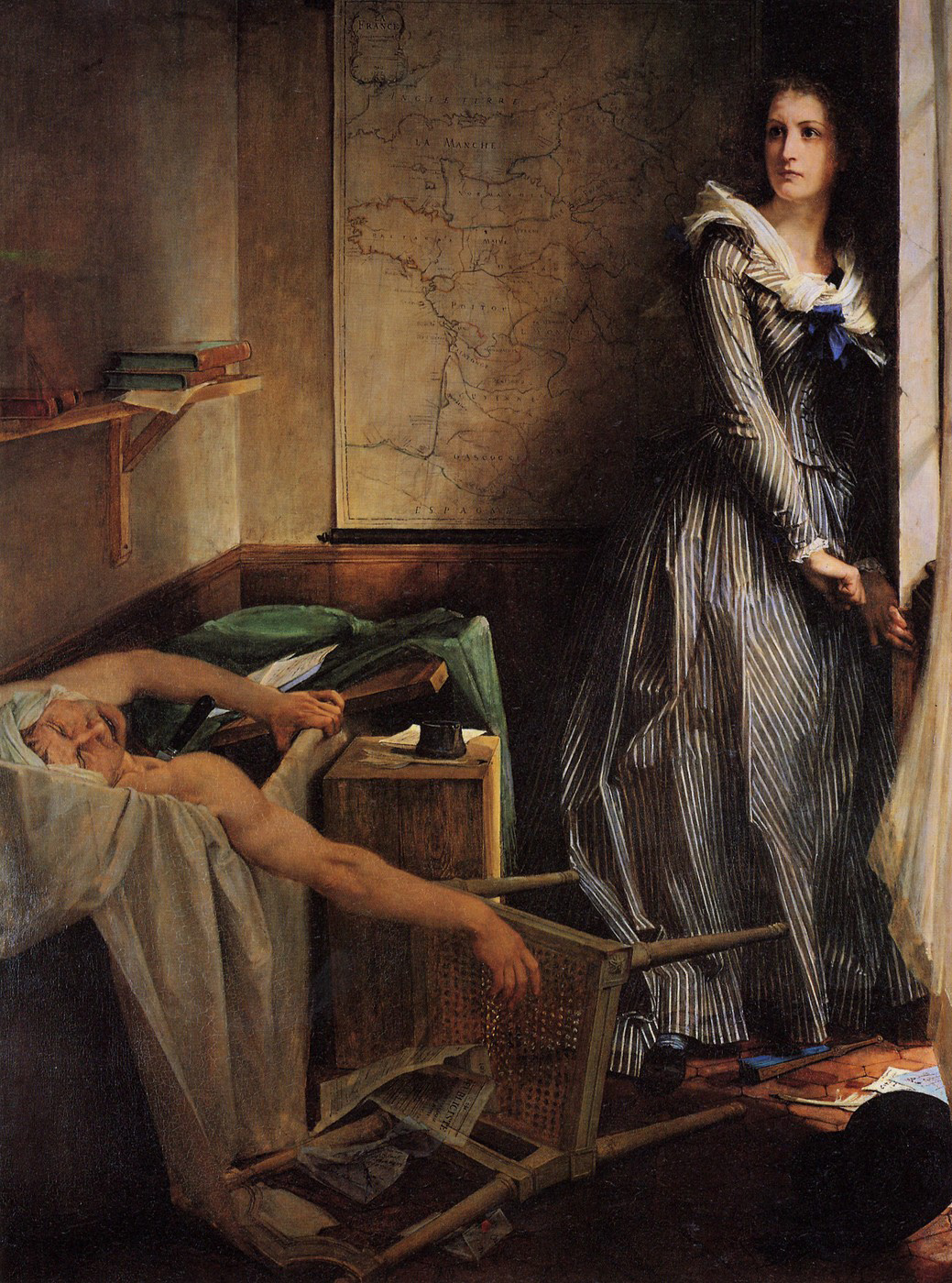
On 13 July 1793 Corday gained access to Marat’s lodgings by presenting herself as someone with information about counter‑revolutionaries. She stabbed him while he was in his bath; Marat died shortly afterward. Corday surrendered without violent resistance and was quickly arrested, tried, and sentenced to death. She was executed by guillotine on 17 July 1793. Contemporary accounts and later historians have debated whether her action was driven by individual conscience, political calculation, or a mixture of both.
Legacy and cultural depictions
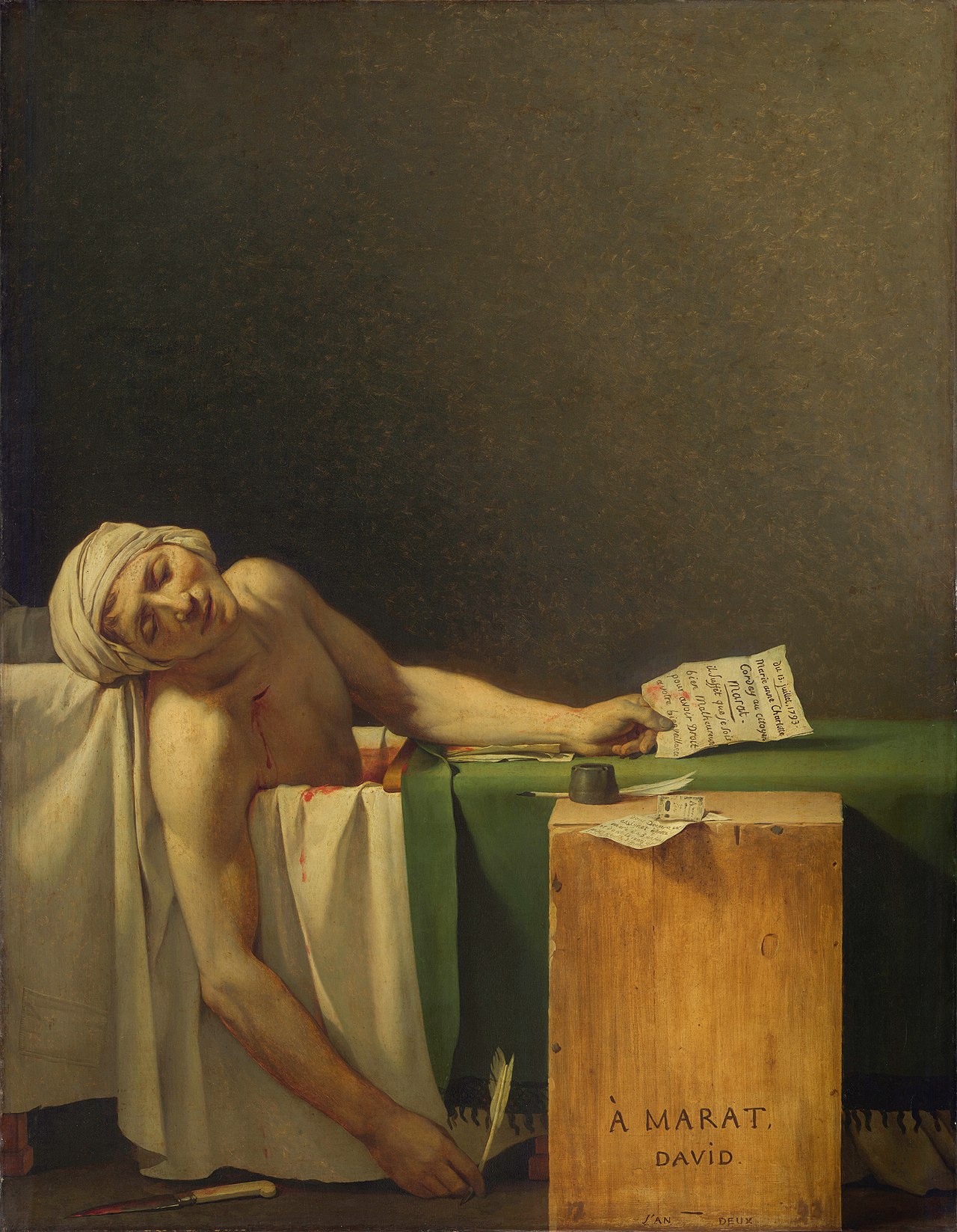
The assassination and Corday’s demeanor during her trial made her an enduring and polarizing figure. Some contemporaries and later writers portrayed her as a political martyr or a tragic heroine; others condemned her as a murderer. The episode was immortalized in artworks — most famously in Jacques‑Louis David’s depiction of Marat’s corpse — and in poems, plays, and biographies. In 1847 the poet and statesman Alphonse de Lamartine called her l'ange de l'assassinat ("the angel of assassination"), a phrase that underscores the ambivalence of her reception.
Notable facts and interpretations
- Her act removed a powerful radical voice but did not halt the momentum of revolutionary violence.
- She is often cited in discussions about political violence, moral responsibility, and the use of assassination for political ends.
- Historians continue to debate whether Corday sought to defend a republican ideal or to perform a symbolic gesture with unintended consequences.
Corday’s story continues to be studied as an example of how individual actions intersect with larger political movements. For readers seeking broader context about the events and factions of the period, see general works on the French Revolution and on Marat’s role in the radical press and Jacobin politics.
Questions and answers
Q: Who was Charlotte Corday?
A: Charlotte Corday was a figure of the French Revolution who was sent to the guillotine for the assassination of Jacobin leader Jean-Paul Marat.
Q: Why was Corday executed?
A: Corday was executed for the assassination of Jacobin leader Jean-Paul Marat.
Q: What was Corday's motive for assassinating Marat?
A: Corday blamed Marat for the more extreme course the French Revolution had taken and believed in the Girondins' cause.
Q: What role did Marat play in the French Revolution?
A: Marat played a large role in the takedown of the Girondins.
Q: What was Corday's nickname and who gave it to her?
A: Corday's nickname was "the Angel of Assassination" and it was given to her by writer Alphonse de Lamartine in 1847.
Q: When was Corday born and when was she executed?
A: Corday was born on July 27, 1768, and she was executed on July 17, 1793.
Q: What was the Girondins' cause?
A: The Girondins were a political faction during the French Revolution who favored a moderate approach to change and a decentralized government.
Tags
Related articles
Author
AlegsaOnline.com Charlotte Corday (Marie‑Anne Charlotte de Corday d'Armont) Leandro Alegsa
URL: https://en.alegsaonline.com/art/18823