
Charles Babbage: inventor of mechanical computing concepts
English mathematician and engineer who designed the Difference Engine and the Analytical Engine, early mechanical computers that anticipated modern programmable machines.
Overview
Sir Charles Babbage (26 December 1791 – 18 October 1871) was an English mathematician, analytical philosopher and mechanical engineer whose designs for automated calculation anticipated core ideas of modern computing. He formulated the concept of a programmable mechanical computer and described machines that could perform arithmetic operations and sequence instructions without continuous human guidance. Babbage's life combined scientific work, public controversy over funding, and an unusually wide range of interests in statistics, engineering and public administration.
Image gallery
10 Images





Major designs and technical ideas
Babbage proposed several interrelated machines. Two are most often cited:
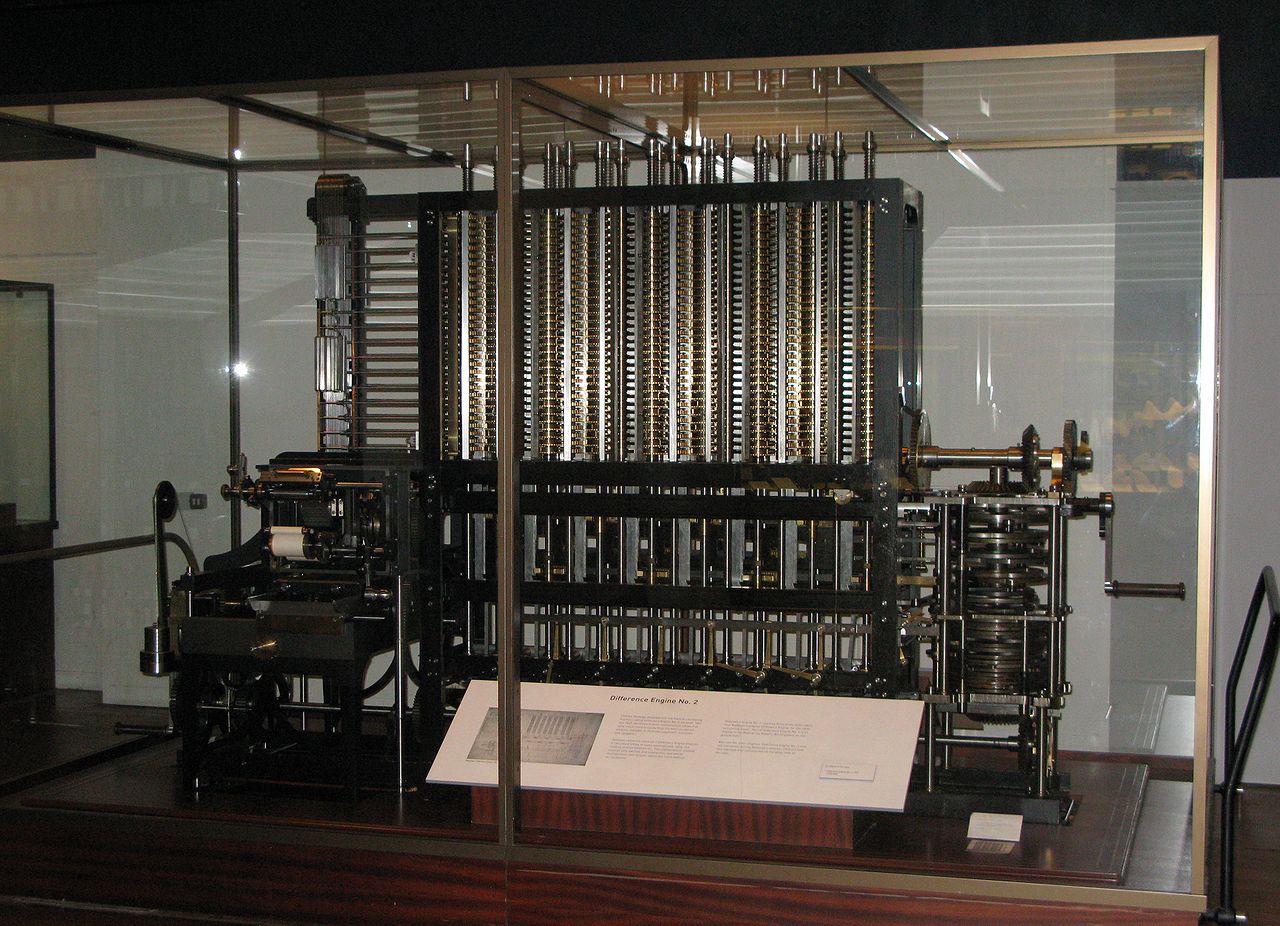
- Difference Engine: a purpose-built calculator for tabulating polynomial functions and producing error-free numerical tables. It used the method of finite differences and geared mechanisms to carry out repeated addition.
- Analytical Engine: a more ambitious, general-purpose design that separated calculation from storage and control. It included a "mill" (an arithmetic unit) and a "store" (memory), and it envisaged program instructions supplied by punched cards — an early articulation of programmability.
Characteristics and innovations
The Analytical Engine introduced several ideas now seen as fundamental to computing: the separation of processing and memory, conditional branching, and the use of recorded instructions to drive computation. Babbage also devised mechanical components for precision movement, data transfer and tabulation, and explored ways to reduce human error in printed tables used in navigation, finance and science.
History, development and reception
Babbage was born in London and spent part of his youth in Devon; his family home and property connections are documented in contemporary accounts, including references to London and the Bitton Estate near Teignmouth. He studied mathematics at Cambridge and later worked on scientific societies and public commissions. Despite detailed plans and parts manufactured to his specifications, neither the full Difference Engine nor the Analytical Engine was completed in Babbage's lifetime. Funding disputes, shifting priorities and the technical difficulty of producing precision parts constrained progress.
Legacy and examples
Although unfinished, Babbage's machines influenced later ideas about computing. Fragments and partial assemblies are conserved in the Science Museum in London, and later efforts by engineers and historians reconstructed working models based on his drawings. The work of collaborators and commentators — most notably Ada Lovelace, who developed extended notes on the Analytical Engine — helped interpret Babbage's concepts for future generations.
Notable facts and distinctions
- Babbage combined practical engineering with abstract analysis, publishing on topics from the economics of machinery to the accuracy of navigational tables.
- His use of punched cards drew on contemporary automated looms and indicated how control of a machine could be externalized from its moving parts.
- Physical parts and models associated with Babbage are held in museums and in private collections; visitors can learn about his machines through exhibitions and reconstructed models.
For further reading on Babbage's life and work, consult authoritative biographies and institutional collections that hold his surviving drawings and components. His blend of mathematical rigour and mechanical invention makes him a pivotal figure in the intellectual ancestry of computing and automation.
Computing overview · Mathematics · Philosophy · Engineering · Teignmouth connections · London life
Questions and answers
Q: Who was Sir Charles Babbage?
A: Sir Charles Babbage was an English mathematician, analytical philosopher, mechanical engineer and computer scientist.
Q: What was Sir Charles Babbage famous for?
A: Sir Charles Babbage was famous for inventing the idea of a computer that could be programmed.
Q: Where can you see the unfinished parts of Sir Charles Babbage's mechanisms?
A: The unfinished parts of Sir Charles Babbage's mechanisms are on display at the London Science Museum.
Q: Where was Sir Charles Babbage born?
A: Sir Charles Babbage was born at 44 Crosby Row, Walworth Road, London, England.
Q: What did Sir Charles Babbage's father do for a living?
A: Sir Charles Babbage's father, Benjamin Babbage, was a banker in London who owned the Bitton Estate in Teignmouth.
Q: Where did the Babbage family move to in 1808?
A: In 1808, the Babbage family moved into the old Rowdens house in East Teignmouth.
Q: Where is Sir Charles Babbage's brain on display?
A: Sir Charles Babbage's brain is on display in the Science Museum in London.
Related articles
Author
AlegsaOnline.com Charles Babbage: inventor of mechanical computing concepts Leandro Alegsa
URL: https://en.alegsaonline.com/art/18691