
Chandannagar: French colonial town on the Hooghly River
Chandannagar is a small city in West Bengal, India, on the Hooghly River. A former French settlement, it preserves colonial architecture, local festivals and civic institutions within the Kolkata metropolitan area.
Chandannagar is a riverside city in the Indian state of West Bengal, administered today as a municipal corporation. It lies on the eastern bank of the Hooghly River and is included in the wider Kolkata Metropolitan Area. The municipal area covers about 20 square kilometres and recorded a population of 166,867 in the 2011 Census. The town has also been recorded historically under the spelling Chandranagore.
Image gallery
10 Images





History
Chandannagar developed as a European trading post in the 17th century when the French established a presence on the Hooghly. Over the following centuries it formed part of the French settlements in India alongside places such as Puducherry, a well-known union territory. French control left a visible imprint on the town’s streets and public buildings. In the mid-20th century, following changes in public opinion after Indian independence and local referenda, the town moved from French rule toward Indian administration; these steps reflected the wider process by which territories under France in India were integrated after Independence.
Heritage and urban character
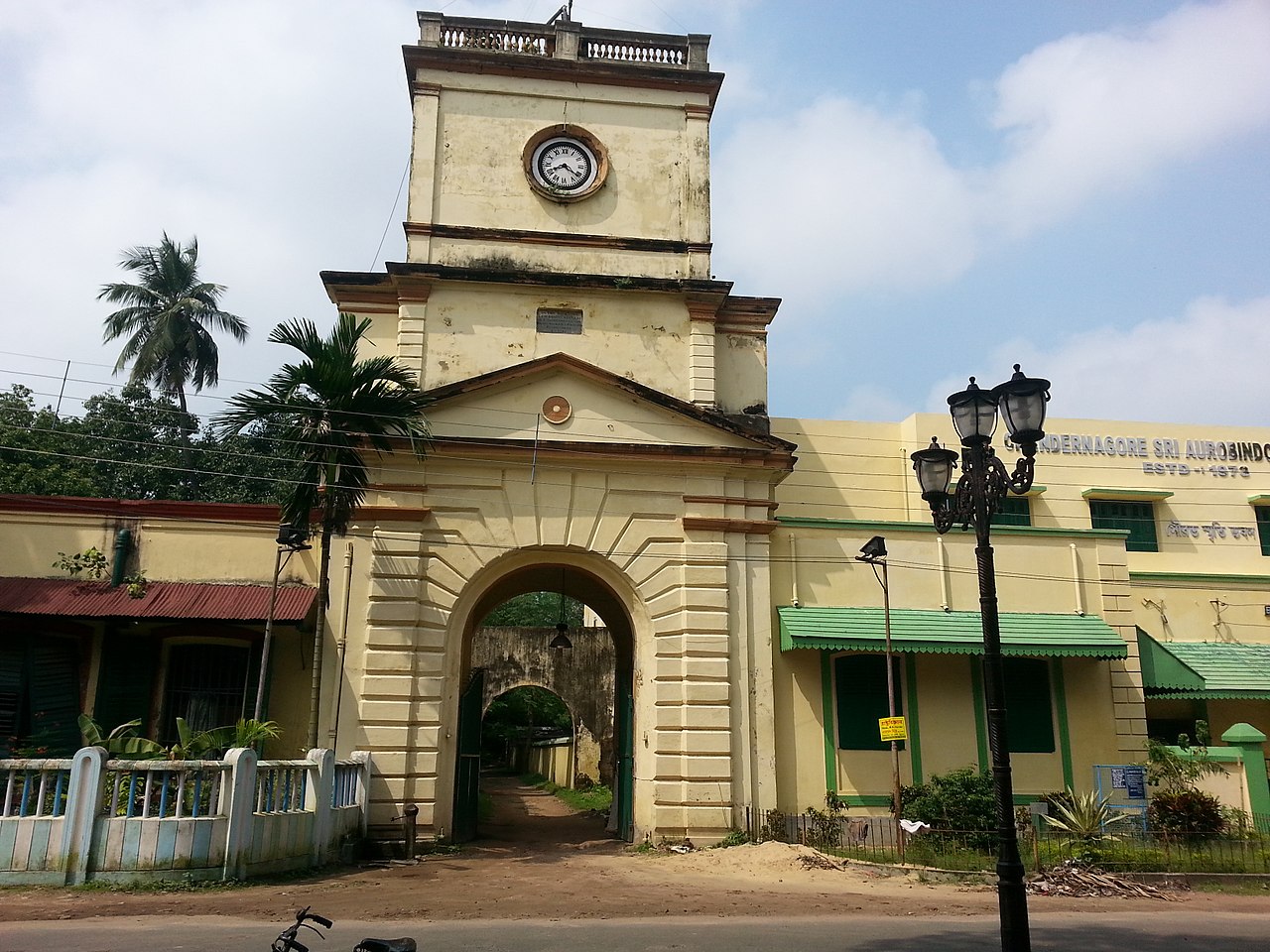
Chandannagar is often visited for its distinctive riverside promenade, colonial-era architecture and small civic museums that document Franco-Bengali connections. Narrow lanes, banyan-shaded squares and a number of old churches and administrative buildings recall the town’s layered past. Annual religious and cultural events, most notably the elaborate Jagaddhatri celebrations, draw regional attention and preserve local traditions.
Today the town combines historical conservation with everyday urban functions. It remains a local centre for commerce, education and light services within the greater Kolkata region. Transport links include suburban rail and ferry crossings that connect Chandannagar to neighbouring towns and the metropolitan core. Municipal responsibilities and planning have shifted over decades as the town came under the jurisdiction of modern Indian state authorities responsible for the area.
Places of interest
- Riverside Strand and riverfront promenades offering views of the Hooghly.
- Colonial-era civic buildings and heritage houses, some adapted as museums and institutes.
- Temples and churches linked to the town’s cultural calendar and public festivals.
As a compact urban locality within India, Chandannagar preserves a visible fusion of French colonial imprint and Bengali civic life. Its scale and historical character make it a point of interest for visitors studying colonial urbanism, regional festivals and conservation challenges in fast-changing metropolitan regions.
Municipal and cultural resources continue to document the town’s past and present, and guide local development amid pressures from the expanding Kolkata metropolitan area.
Questions and answers
Q: Where is Chandannagar located?
A: Chandannagar is located in the state of West Bengal, India.
Q: What was the former name of Chandannagar?
A: The former name of Chandannagar was Chandranagore.
Q: Was Chandannagar a former French colony?
A: Yes, Chandannagar was a former French colony along with present Puducherry, Union territory.
Q: What is the total area of Chandannagar?
A: The total area of Chandannagar is 20 square kilometers (7.7 sq mi).
Q: What is the population of Chandannagar according to the 2011 Census of India?
A: The population of Chandannagar according to the 2011 Census of India is 166,867.
Q: When did Chandannagar become a part of the Kolkata Metropolitan Area?
A: Chandannagar became a part of the Kolkata Metropolitan Area.
Q: When did Chandannagar come under the jurisdiction of West Bengal?
A: Chandannagar came under the jurisdiction of West Bengal in 1954 after India gained its independence from France in 1949.
Related articles
Author
AlegsaOnline.com Chandannagar: French colonial town on the Hooghly River Leandro Alegsa
URL: https://en.alegsaonline.com/art/18508