
Chancellor (academic office)
An academic chancellor is a university or college leader whose duties range from ceremonial representation to executive management. Usage and powers vary widely by country and institution.
Overview
A chancellor is a senior official associated with a university or college who serves as either a ceremonial figurehead or as the institution's chief executive, depending on the country and the institution's governance. The title is commonly used across Commonwealth countries but appears in varied forms elsewhere. In some systems the chancellor performs symbolic and ambassadorial duties; in others the chancellor leads day-to-day operations.
Image gallery
2 Images
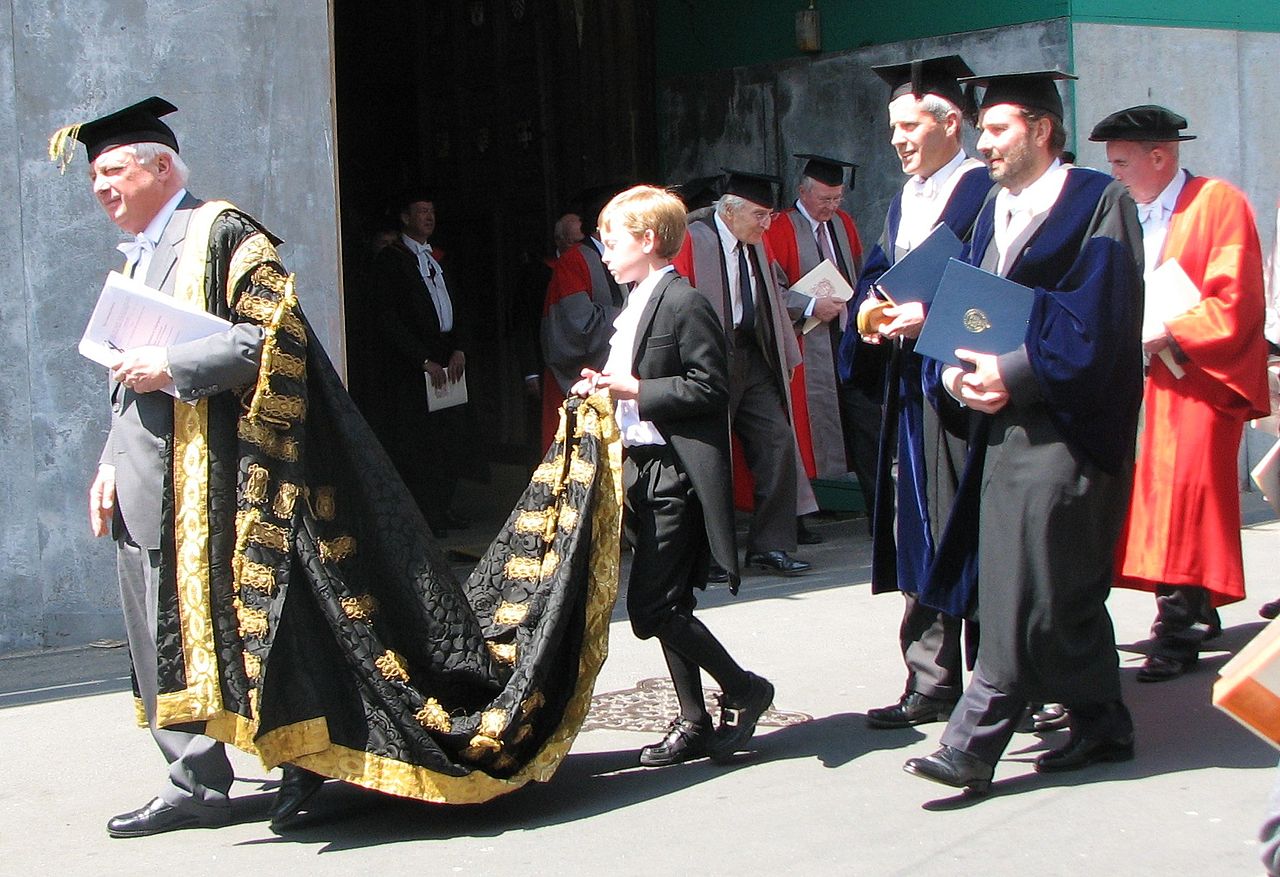
Names, equivalents and international variation
Terminology differs by region. In many Commonwealth countries the chancellor is distinct from the vice-chancellor: the chancellor is often ceremonial while the vice-chancellor acts as the chief executive. In the United States the comparable title is frequently "president," though some American university systems use "chancellor" for campus leaders or for the head of a multi-campus system. For examples and institutional usage see university and college pages; the pattern in Commonwealth countries is discussed on Commonwealth resources and contrasts with practices in the United States.
Common roles and responsibilities
Whether mainly ceremonial or executive, chancellors typically perform several recognizable functions. Common responsibilities include:
- presiding over formal ceremonies such as graduations and convocations;
- serving as a public representative and advocate for the institution;
- participating in major fundraising, outreach, or strategic events;
- in executive forms, overseeing academic strategy, budgets, and senior appointments.
When the role is ceremonial the chancellor may not be involved in daily management; a separate officer (often titled vice-chancellor, president, rector, or provost) handles operations.
History and origin
The title chancellor has medieval roots: it originated from a Latin term connected with a court or office that handled records and seals. Over centuries the meaning broadened and was adapted into university governance. Many modern universities preserved the historic title while assigning contemporary duties that reflect institutional needs and national traditions.
Examples and notable facts
At some distinguished institutions the chancellorship is an honorary role filled by a public figure or alumnus of prominence. For instance, the University of Cambridge traditionally appoints a chancellor as a ceremonial head; famously, Prince Philip served as Cambridge's chancellor for several decades. In contrast, other universities assign the chancellor executive authority, particularly where the title replaces or accompanies "president."
Distinctions and practical considerations
Important distinctions to note: the difference between chancellor and vice-chancellor (or president) is largely a matter of local custom and statutes; the same title can mean very different things from one country or campus to another. When learning about a specific institution, consult that university's governance documents to understand whether the chancellor's role is ceremonial, executive, or hybrid.
For further institutional descriptions, refer to official pages on governance and roles at individual universities or colleges, or comparative resources addressing higher education in the Commonwealth and the United States.
Questions and answers
Q: What is a chancellor?
A: A chancellor is a leader of a university or college.
Q: In which countries is the title of chancellor mainly used?
A: The title of chancellor is mainly used in Commonwealth nations.
Q: What is the more common title given to a leader of a university or college in the United States?
A: The more common title given to a leader of a university or college in the United States is the university president.
Q: What is the role of a chancellor in a university or college?
A: The role of a chancellor in a university or college is mainly ceremonial. They are chosen to represent the university at official events and with other organizations.
Q: Does a chancellor make many decisions inside the university?
A: No, a chancellor does not make many decisions inside the university.
Q: What is the Chancellor's requirements at the University of Cambridge?
A: At the University of Cambridge, the Chancellor is a person who has done something important in his life, and is in some way connected to the University.
Q: Who was the Chancellor at the University of Cambridge for 36 years?
A: Prince Philip, Duke of Edinburgh was the Chancellor at the University of Cambridge for 36 years.
Related articles
Author
AlegsaOnline.com Chancellor (academic office) Leandro Alegsa
URL: https://en.alegsaonline.com/art/18501
Sources
- admin.cam.ac.uk : "Vice-Chancellor's Office: The Chancellor"
- admin.cam.ac.uk : "The role of the Vice-Chancellor"