
Chaldean Christians
Christian community centered on the Chaldean Catholic Church, rooted in Syriac liturgy and Eastern Aramaic language, historically based in Iraq and spread through a global diaspora.
Overview
Chaldean Christians are members of the Chaldean Catholic tradition, an Eastern Catholic Church in full communion with Rome. Their liturgical and historical roots lie in Syriac Christianity and the Aramaic language. In liturgical and scholarly contexts the Syriac heritage is often emphasized; in everyday speech the community is commonly identified in Arabic as al-Kaldaniyoun. The Chaldean community has been a prominent Christian presence in Iraq and has established significant diaspora communities abroad. The Chaldean Catholic Church maintains bishops, parishes and institutions that provide pastoral care, education and cultural activities for faithful both in the Middle East and overseas. See also the Syriac tradition: Syriac.
Image gallery
10 Images


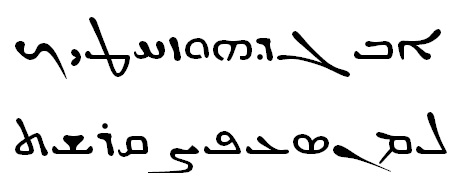


History and identity
The modern Chaldean identity emerged from Christian communities of Mesopotamia. The name "Chaldean" was adopted by a group that entered union with Rome in the 16th and 17th centuries, forming what is now called the Chaldean Catholic Church. This ecclesiastical history coexists with broader local identities tied to language, region and family. Debates over ethnonyms—whether to identify as Chaldean, Assyrian, Syriac or simply Iraqi Christian—reflect complex historical, religious and cultural factors rather than a single uniform ethnicity.
Language, worship and culture
Worship in the Chaldean Church follows the East Syrian rite and uses Classical Syriac for parts of the liturgy. Many communities continue to speak varieties of Eastern Neo-Aramaic (often referred to as Chaldean Neo-Aramaic) in daily life, while modern national languages are also widely used. Sacred rites include the Eucharist, baptism and marriage, celebrated with Syriac chants, distinctive liturgical calendars and local devotional practices. Parish life, hymnody, traditional foods and communal celebrations contribute to a rich cultural life that preserves language and memory across generations.
Demographics and diaspora
The largest historic concentration of Chaldean Catholics has been in Iraq, particularly in urban centers and on the Nineveh Plains. In recent decades political instability, conflict and economic pressures have prompted significant emigration. Large diaspora communities have formed in North America, Europe, Australia and neighboring Middle Eastern countries. Notable communities outside Iraq include those in the United States and in countries such as Turkey, Syria, Iran and Lebanon. Within Iraq the community remains connected to national life and civic institutions: see general context on Iraq.
Organization and leadership
The Chaldean Catholic Church is governed by a patriarch and a synod of bishops, with dioceses or eparchies established where pastoral need exists. Church institutions operate schools, charitable organizations and cultural centers that support language preservation and social welfare. The Chaldean hierarchy engages in ecumenical and interfaith dialogue with other Christian traditions and with governments and international organizations to protect minority rights and support displaced populations.
Distinctive features
- Liturgical tradition: East Syrian rite and use of Classical Syriac in worship.
- Language: use and preservation of forms of Eastern Neo-Aramaic alongside national languages.
- Institutions: parishes, schools and charities that sustain communal life in homeland and diaspora.
Contemporary challenges and contributions
Chaldean Christians have historically contributed to commerce, education and public service in their home countries. Conflict, targeted violence and economic hardship in parts of the Middle East have reduced local populations and increased the importance of diaspora communities for cultural survival. Many in the diaspora work to preserve language and heritage, provide humanitarian support to relatives remaining in the Middle East, and participate in ecumenical efforts. For institutional background, see the Chaldean Catholic Church as an international body: Chaldean Catholic Church.
Relations with other communities
Chaldean Christians share many cultural and linguistic ties with other Syriac-speaking communities and maintain varying forms of cooperation with other Christian denominations and local religious groups. Relations are shaped by shared history, overlapping identities and common concerns about minority rights, cultural preservation and pastoral care for displaced persons. The Arabic form of the community name is used in many public and administrative contexts: al-Kaldaniyoun.
Further reading and resources
For general background and statistical overviews consult church publications and reputable studies on Middle Eastern Christians. Resources on migration, diaspora community life and contemporary pastoral challenges are available from church offices and academic centers that focus on Syriac Christianity and Middle Eastern minorities. Additional country-specific resources include information on communities in Syriac studies and national overviews for the United States and other host countries.
Questions and answers
Q: Who are the Chaldean Christians?
A: The Chaldean Christians are adherents of the Chaldean Catholic Church and are the largest Christian community in Iraq, estimated at between 400,000–600,000.
Q: How have the Chaldeans been integrated into Iraqi society?
A: The Chaldeans have generally been well integrated into Iraqi society and have always been an important part of it. Many of their members are businessmen and technocrats, and a few have held high government positions.
Q: Have the Chaldeans sought the establishment of a separate state?
A: The Chaldeans have not actively sought the establishment of a separate state.
Q: Where can migrant Chaldean communities be found?
A: Migrant Chaldean communities can be found in the United States, Turkey, Syria, Iran, and Lebanon.
Q: What is the language of the Chaldean Catholics?
A: The Chaldean Catholics speak Syriac, which is a dialect of Aramaic.
Q: How does the Chaldean Catholic Church differ from the Assyrian Church of the East?
A: The Chaldean Catholic Church differs from the Assyrian Church of the East in that it recognizes the authority of the Pope and is in communion with the Roman Catholic Church.
Q: Are Chaldeans only found in Iraq?
A: No, Chaldeans can also be found outside of Iraq in migrant communities in the United States, Turkey, Syria, Iran, and Lebanon.
Related articles
Author
AlegsaOnline.com Chaldean Christians Leandro Alegsa
URL: https://en.alegsaonline.com/art/18377
Sources
- news.bbc.co.uk : "Who are the Chaldean Christians?"
- books.google.com : Historical Dictionary of Iraq