
Chaetognatha (arrow worms): marine predatory planktonic animals
Chaetognaths, or arrow worms, are small, mostly transparent marine predators common in plankton worldwide. This article covers their form, ecology, evolution, diversity and scientific significance.
Overview
Chaetognatha, commonly called arrow worms, are a distinct phylum of mostly marine predators known for their streamlined, arrow‑like shape. They occur in enormous numbers within oceanic plankton and also as benthic forms that cling to substrates. Although abundant in many seas, modern diversity is modest: there are roughly a hundred or so described species distributed among several genera. Many chaetognaths are nearly transparent, which helps conceal them as they hunt in the water column.
Image gallery
10 Images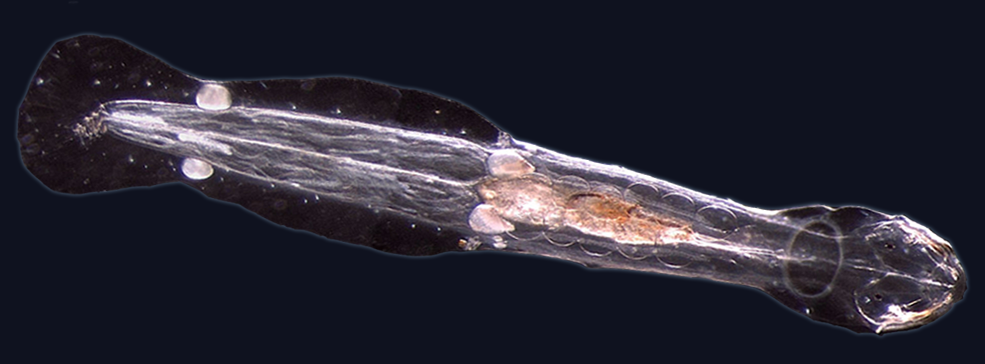


Morphology and anatomy
Arrow worms have a simple, elongate body typically divided into head, trunk and tail regions. Key anatomical features include grasping spines or hooks on the head for seizing prey; a muscular pharynx and straight gut; a set of lateral fins and a caudal fin used for swimming and stabilization; and a compact nervous system. Sizes range from a few millimetres to over 10 centimetres in the largest species.
- Head: armed with chitinous spines or teeth-like structures used to capture copepods and other small animals.
- Trunk and fins: lateral fins and a tail aid in rapid, darting locomotion.
- Soft tissues: a simple gut and concentrated nervous ganglia; many species are largely transparent.
Distribution, ecology and diet
Most chaetognaths are planktonic and occur from surface waters to the deep sea, in tropical to polar regions. About one-fifth of species live on or near the sea floor and may attach to algae or rocks. As active predators they capture and consume copepods, other small crustaceans, fish larvae and various planktonic animals, exerting strong top-down control in many planktonic food webs. Their presence and abundance are commonly monitored in marine ecological surveys because they can indicate changes in plankton community structure.
Examples of habitats and behaviour are often summarized in monitoring guides and marine keys; see resources such as plankton surveys or regional species lists for local records. Benthic occurrences are reported attached to algae or rocks, while open-ocean records emphasize pelagic swarms.
Reproduction and life cycle
Chaetognaths are typically hermaphroditic, possessing both male and female reproductive organs. Most species mate by mutual cross-fertilization and produce eggs that may be laid into the water column in gelatinous masses or brooded, depending on species. Juveniles resemble miniature adults rather than having a radically different larval form; growth proceeds by gradual increase in size and development of reproductive structures.
History, fossils and evolution
Molecular and fossil evidence indicates that chaetognaths are an ancient lineage, with putative relatives appearing in Cambrian deposits. Well-preserved specimens interpreted as early chaetognaths have been reported from Cambrian localities, including sites in China and the Middle Cambrian Burgess Shale of British Columbia. The long fossil history highlights their early role in marine ecosystems and contributes to debates about the origins of small, soft-bodied predators in the early Paleozoic.
Classification and notable facts
Chaetognaths are usually treated as protostomes within the broader grouping of bilaterian animals, though their exact affinities have been debated and refined as molecular data accumulate. Taxonomically they form the phylum Chaetognatha, containing about a hundred to a few hundred described species in roughly twenty genera. Several species have been reported to contain potent neurotoxins such as tetrodotoxin, which may assist in subduing prey. For general accounts of their biology consult accessible overviews on marine animals and specialized planktonic resources at species lists or identification keys (Cambrian origins summaries and protostome discussions provide broader evolutionary context).
Further reading and identification tools can be found through curated biodiversity pages and regional marine surveys (substrate records, algal associations, and ongoing plankton monitoring at plankton portals). The combination of simple body plan, active predation and ancient lineage makes Chaetognatha a subject of interest in studies of marine ecology and early animal evolution.
Questions and answers
Q: What are Chaetognatha?
A: Chaetognatha is a phylum of small predatory marine animals commonly known as arrow worms.
Q: Where are Chaetognatha found?
A: Chaetognatha are found in all marine waters from surface tropical waters and shallow tide pools to deep sea and polar regions.
Q: What percentage of Chaetognatha are benthic?
A: About 20% of the known species of Chaetognatha are benthic and can attach to algae or rocks.
Q: What is the size range of Chaetognatha?
A: Chaetognatha range in size from 2 to 120 millimetres (0.079 to 4.724 inches).
Q: How many modern Chaetognatha species are there?
A: There are only about 120 modern species of Chaetognatha in 20 genera.
Q: What is the neurotoxin used by some Chaetognatha species?
A: Some Chaetognatha species are known to use the neurotoxin tetrodotoxin to subdue their prey.
Q: When did Chaetognatha originate?
A: Chaetognatha appear to have originated in the Cambrian Period. Complete body fossils have been described from China and the Middle Cambrian Burgess Shale of British Columbia.
Related articles
Author
AlegsaOnline.com Chaetognatha (arrow worms): marine predatory planktonic animals Leandro Alegsa
URL: https://en.alegsaonline.com/art/18311