
Central business district
A central business district (CBD) is a city's principal commercial zone, often its financial and professional core, shaped by transport, land value, zoning and history and varying from single cores to multiple clustered centres.
Overview
A central business district (CBD) is the principal commercial and professional heart of a city where corporate offices, banks, retailing and services concentrate. The term often overlaps with "financial district" or, in North American usage, "downtown." A CBD is not defined solely by geography; it results from a combination of high land values, transport connectivity and concentrated economic activity. In planning literature the CBD is frequently described as the commercial center of a city, containing dense offices, shops and civic institutions.
Image gallery
2 Images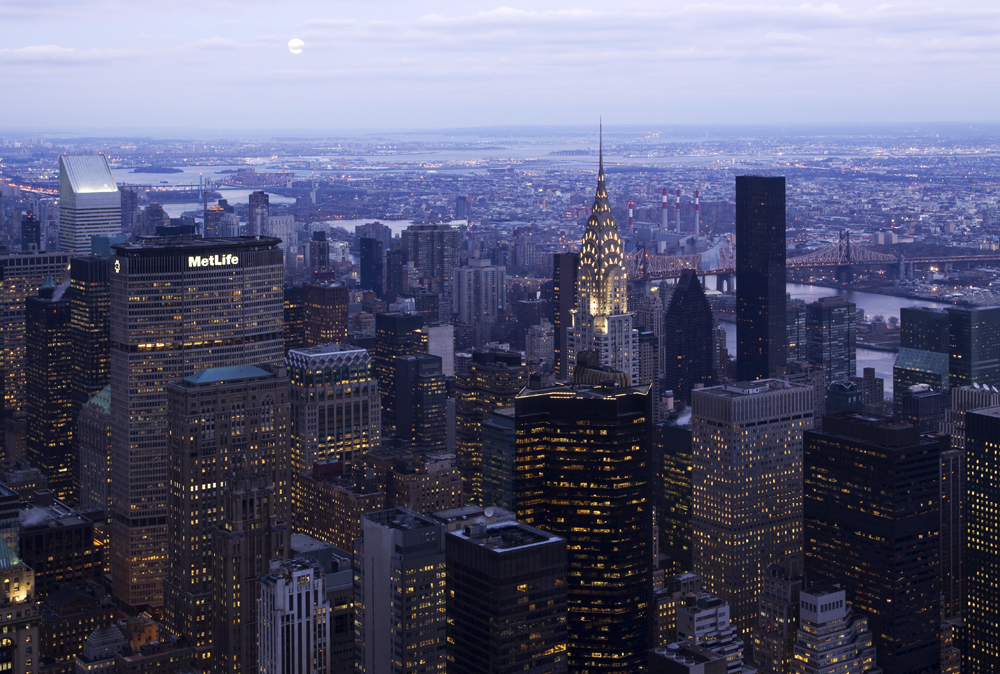

Typical characteristics
CBDs share a set of physical and economic traits that distinguish them from surrounding neighbourhoods. These include high-rise buildings to maximize limited land, a strong daytime population of workers, extensive public transport links and a dense street network. Other common features are the presence of headquarters, major retail corridors and a mix of land uses oriented to business and consumption.
- Concentration of financial and professional services
- High land values and intensive land use
- Strong transport accessibility by rail, bus, tram or road
- Clustered retail, entertainment and cultural amenities
History and spatial development
The form and location of a CBD reflect a city's history, technology and planning rules. Older European cities frequently retain low skylines and dispersed commercial activities because of conservation policies and historic urban fabrics; examples often cited include Paris and Vienna. By contrast, many cities in the New World developed a compact, tall core where zoning and economic growth permitted skyscrapers, and the CBD became synonymous with the metropolitan centre: for example Midtown Manhattan, often described as the largest CBD in New York City. In some Asian cities the planned commercial sector—such as the Xinyi Planned Area in Taipei—was deliberately developed as a modern CBD.
Functions and importance
CBDs serve multiple economic and social roles. They concentrate financial services, legal and accounting firms, corporate headquarters and government offices, which in turn generate employment, commuter flows and demand for retail and hospitality. The agglomeration of businesses can create productivity gains through knowledge spillovers and efficient matching of services. Transport nodes in CBDs also make them central to metropolitan mobility and to the identity and skyline of a city.
Variations, planning and contemporary trends
Not all cities have a single dominant CBD. Urban growth and increasing urbanization have produced polycentric metropolitan structures with multiple centres or edge cities. In rapidly expanding regions of Asia, for example, several high-rise business clusters may coexist across a megacity. The distinction between a traditional CBD and satellite commercial centres matters for transport planning, land-use regulation and housing policy. Some places maintain height limits or preservation rules that shape a CBD's form; others encourage densification to capture economic benefits.
Examples and notable distinctions
Worldwide, CBDs range from single historic cores to networked clusters across metropolitan areas. Typical examples highlight differences in development patterns: an established financial quarter in a historic city center, a dense skyscraper cluster in an American downtown, or a purpose-built district in a planned Asian city. The CBD remains central to how cities function economically and symbolically, yet its shape and role continue to evolve as transport, technology and planning priorities change across the New World and older urban regions alike. Effective policy toward CBDs balances commercial growth with livability across the wider metropolitan area.
Related reading and resources: urban planning texts and case studies often treat the CBD alongside concepts such as centrality, agglomeration economies and edge cities; for an introduction see specialist guides or municipal plans available through local authorities and planning organizations (see commercial center overviews and transport-focused sources at city portals).
Questions and answers
Q: What is a central business district (CBD)?
A: A central business district (CBD) is the commercial and business center of a city.
Q: What are some examples of CBDs?
A: Examples of CBDs include Midtown Manhattan which is the largest central business district in New York City or the Xinyi Planned Area in Taipei.
Q: Is the CBD always located in the city center?
A: No, the CBD is often located in the city center but not always.
Q: How does a city's history influence the way its CBD looks?
A: A city's history influences the way its CBD looks by strong laws that forbid tall buildings, to retain the character of the history and culture.
Q: Which cities commonly have such strong laws?
A: This is quite common for European cities such as Paris or Vienna.
Q: What distinguishes CBDs in cities in the New World?
A: In cities in the New World, a single central area or downtown will often contain most of the metropolitan area's tallest buildings and act both as the CBD and the commercial and cultural city centre.
Q: What has increasing urbanization in the 21st century led to?
A: Increasing urbanization in the 21st century has created megacities, particularly in Asia, that will often have multiple CBDs scattered across the urban area.
Related articles
Author
AlegsaOnline.com Central business district Leandro Alegsa
URL: https://en.alegsaonline.com/art/18017