
Censorship of YouTube: reasons, methods, history, and responses
Overview of why and how access to YouTube is restricted or removed, common blocking techniques, historical patterns, impacts on information flow, and ways people and institutions respond.
YouTube is a global video-hosting platform widely used for entertainment, education, news and political speech. Because it hosts user-generated and professional content across many topics, access to YouTube is sometimes limited by schools, workplaces and governments. Restrictions range from network-level blocking to content removal under terms of service or legal orders.
Image gallery
4 Images
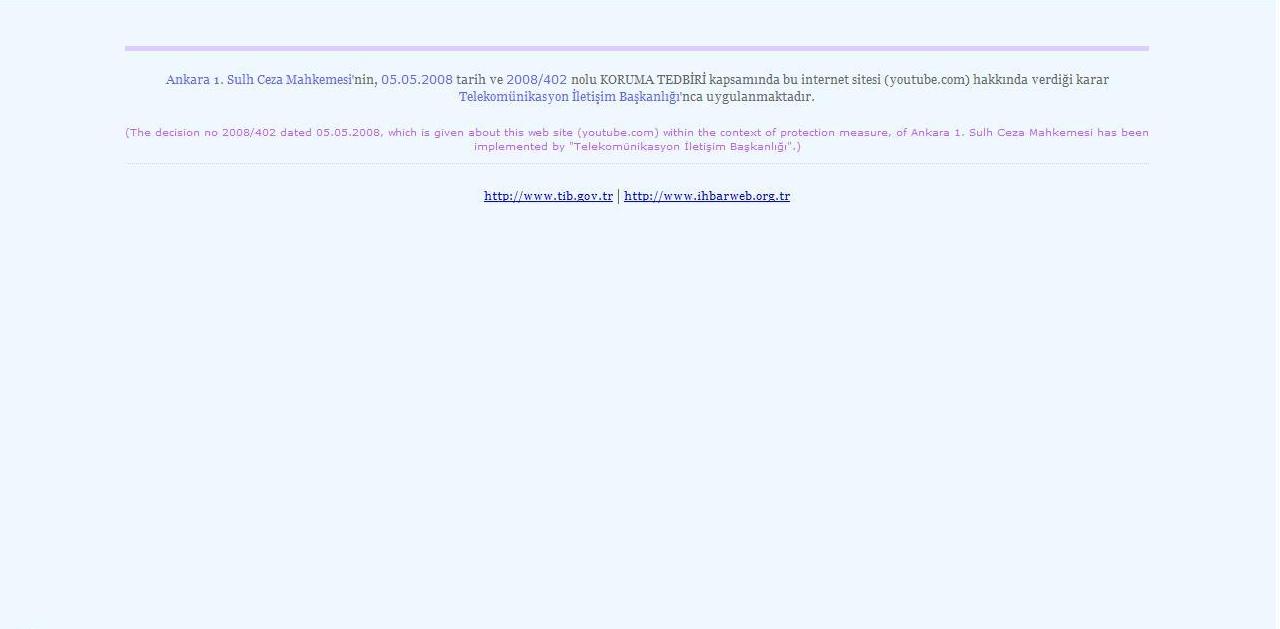


Why YouTube is blocked or censored
Reasons for restricting YouTube vary. Educational and workplace administrators commonly limit access to reduce distractions and preserve bandwidth. Governments may block or restrict access for political, religious, moral or national security reasons, or to comply with local laws on defamation, obscenity, or copyright. Platforms also remove or restrict videos to enforce community guidelines or respond to court orders and copyright takedown requests.
Common methods of restriction
- Network filtering: schools and workplaces block domains or categories at routers or firewalls.
- ISP or national-level blocking: Internet service providers can block IP addresses, DNS records or throttle access under regulatory orders.
- Geoblocking and account limits: some videos are restricted to certain countries or require sign-in and age verification.
- Platform moderation: video removal, strikes, demonetization, or algorithmic downranking by the service itself.
History and notable patterns
Restrictions on YouTube have appeared in different forms across countries and over time. Some nations have imposed temporary or long-term blocks following politically sensitive events, religious controversies, or legal disputes. Elsewhere, governments negotiate with platforms to remove specific content rather than block the whole site. In many institutions, categorical filtering continues as policy to manage attention and network load.
Impacts and common responses
Censorship of YouTube affects access to information, civic discussion, education and creative distribution. Users and organizations often respond by using virtual private networks (VPNs), proxy services, mirror sites, cached copies, or alternative platforms. Content creators adapt by changing hosting locations, modifying content to meet local rules, or pursuing legal remedies where available.
Distinctions and considerations
It is important to distinguish platform moderation from state censorship: moderation enforces a service’s rules and terms, while state censorship is driven by law or policy and may apply to all services. Both have legal and ethical implications, including free expression, public safety and intellectual property rights. For more about the service itself see YouTube.
Understanding the varied motives and mechanisms behind YouTube restrictions helps clarify debates about digital rights, platform responsibility and the balance between open access and local regulation.
Questions and answers
Q: Why is YouTube blocked in many schools?
A: YouTube is blocked in schools because it allows students to search for videos that could distract them from their lessons.
Q: Are social networking sites and game sites also blocked in schools?
A: Yes, social networking sites and game sites are also blocked in schools for the same purpose as YouTube.
Q: What is the reason for blocking YouTube access in workplaces?
A: YouTube is blocked in workplaces to ensure that employees stay focused on their job responsibilities and to prevent distractions.
Q: Has YouTube access been blocked by some governments?
A: Yes, some governments have blocked YouTube access to their country's public.
Q: Why do some governments block YouTube access?
A: The reasons for blocking YouTube access by governments can vary.
Q: Is YouTube the only website that is blocked in schools and workplaces?
A: No, YouTube is not the only website that is blocked in schools and workplaces.
Q: What is the purpose of blocking YouTube access in schools and workplaces?
A: The purpose of blocking YouTube access in schools and workplaces is to prevent distractions and ensure that students and employees stay focused on their tasks.
Tags
Related articles
Author
AlegsaOnline.com Censorship of YouTube: reasons, methods, history, and responses Leandro Alegsa
URL: https://en.alegsaonline.com/art/17948
Sources
- guardian.co.uk : "Censorship fears rise as Iran blocks access to top websites"
- guardian.co.uk : "Turkey pulls plug on YouTube over Atatürk 'insults'"
- variety.com : "Turkey bans YouTube"
- theage.com.au : "Turkey revokes YouTube ban"
- 2bangkok.com : "YouTube seems blocked in Thailand 2bangkok.com"
- facthai.wordpress.com : "YouTube Blocked Again"
- bangkokpost.co.th : "For some users, YouTube disappears"
- bangkokpost.com : "YouTube to help block web access to pages insulting King"
- economist.com : "Whose Tube?"
- mashable.com : "Mashable.com Banned in Thailand"
- totalsecurity.com.br : totalsecurity.com.br
- radiofandango.com.br : radiofandango.com.br
- tecnologia.terra.com.br : "Justiça determina liberação do YouTube"
- globalvoicesonline.org : "Morocco blocks access to YouTube"
- rsf.org : "YouTube again accessible via Maroc Telecom"