
Cellulite: appearance, causes, and clinical distinctions
Cellulite is the dimpled or lumpy skin appearance caused by fat pushing on connective tissue. It is a common cosmetic pattern, influenced by sex, age, genetics and hormones, and distinct from infection.
Cellulite describes a dimpled, undulating texture of the skin most often seen on the thighs, buttocks and hips. The term refers only to the surface appearance and not to a disease. The effect arises when subcutaneous fat lobules press against and deform the fibrous connective tissue beneath the skin, producing visible puckering. For general information about appearance see appearance and about fat tissue see fat cells.
Image gallery
1 Image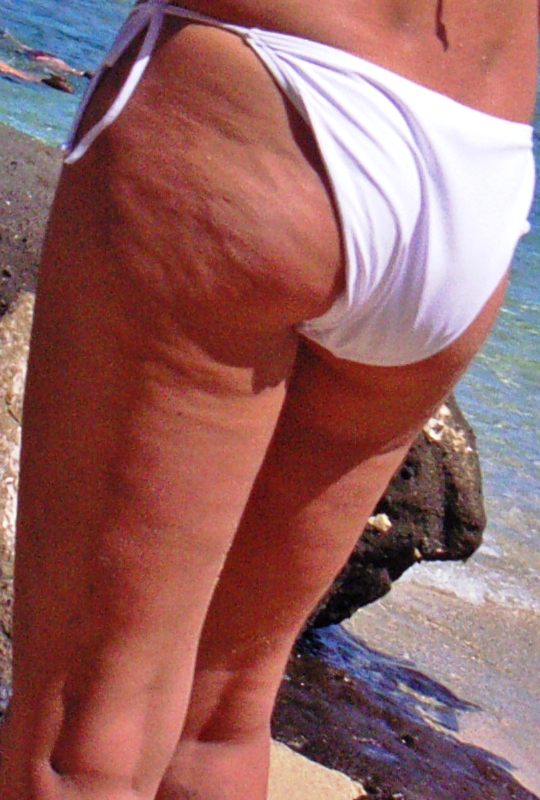
Anatomy and visible features
Under the skin, fat is arranged in lobules separated by strands of connective tissue. Differences in the thickness, orientation and elasticity of these fibrous septae help determine how pronounced the surface irregularities will be. Changes in skin thickness, loss of elasticity with age, and fluid shifts in the superficial layers can make cellulite more noticeable. The connective tissue itself is described in anatomical literature; further structural context can be found at connective tissue.
Causes and contributing factors
Cellulite reflects a combination of physical and biological influences rather than a single cause. Common contributing factors include:
- Sex and hormones: it is far more common in women, particularly after puberty.
- Genetics: inherited traits affect fat distribution, skin structure and circulatory factors.
- Age and skin changes: thinning or reduced elasticity of the dermis can accentuate dimpling.
- Body fat and muscle tone: both the volume of subcutaneous fat and the support of underlying muscle matter.
Treatments and evidence
A wide range of approaches aim to reduce the appearance of cellulite, from topical creams and manual massage to energy-based devices, injectable techniques and minor surgical procedures. Results vary and are often temporary; scientific support ranges from limited to moderate depending on the method. Lifestyle measures such as exercise and weight management may help appearance but will not eliminate the condition for everyone.
History, terminology and important distinctions
The word has been used in cosmetic and lay contexts since the 20th century. It is important to distinguish cellulite from true infectious or inflammatory skin disorders. For example, cellulitis is an acute bacterial condition that involves spreading bacterial invasion and infection of the skin and subcutaneous tissues; its causes, signs and treatments are entirely different.
In summary, cellulite is a common, non-pathological pattern of skin surface irregularity influenced by anatomy, biology and ageing. While many cosmetic therapies exist, expectations should be realistic and informed by clinical evidence.
Questions and answers
Q: What is cellulite?
A: Cellulite is a condition of the skin where it has a dimpled appearance caused by fat cells pushing against the body's connective tissue.
Q: Is cellulite a medical condition?
A: No, cellulite is not a medical condition.
Q: How is cellulite different from cellulitis?
A: Cellulite is different from cellulitis. While cellulite is a condition of the skin, cellulitis is a spreading bacterial infection of the skin.
Q: What causes cellulite?
A: Cellulite is caused by fat cells pushing against the body's connective tissue.
Q: Is cellulite dangerous?
A: No, cellulite is not dangerous.
Q: Can cellulite be treated?
A: Yes, there are treatments for cellulite, such as massages, creams, and laser therapy.
Q: Can diet and exercise get rid of cellulite?
A: While diet and exercise can help reduce the appearance of cellulite, they cannot completely get rid of it.
Related articles
Author
AlegsaOnline.com Cellulite: appearance, causes, and clinical distinctions Leandro Alegsa
URL: https://en.alegsaonline.com/art/17911
Sources
- nlm.nih.gov : Cellulite
- doi.org : 10.1080/14764170410003057
- pubmed.ncbi.nlm.nih.gov : 16020201
- nytimes.com : New York Times, Treating Cellulite?