
Cecilia: Memoirs of an Heiress — Frances Burney's comic novel of manners
Cecilia (1782), subtitled Memoirs of an Heiress, is Frances Burney's second novel. A comic, satirical study of an heiress negotiating love, reputation, and the conventions of 18th‑century society.
Overview
Cecilia, published in 1782 as Cecilia, or Memoirs of an Heiress, is a long comic novel by Frances Burney (often known as Fanny Burney). Unlike her earlier epistolary debut, Evelina, Cecilia adopts a more conventional third‑person narrative and follows the social trials and moral choices faced by its young heroine, an heiress whose fortune and feelings place her at the centre of competing family expectations and public scrutiny.
Image gallery
2 Images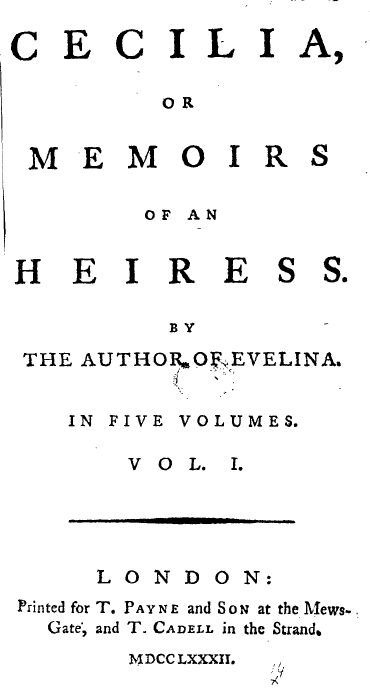

Characteristics and themes
The novel blends comedy of manners, social satire and serious moral reflection. Burney examines themes common to late 18th‑century fiction: marriage and property, social rank and reputation, female sensibility and personal integrity. Her prose balances witty dialogue and vivid scene‑setting with psychological insight into how social pressures shape behaviour.
Historical context and development
Written during the height of the novel's rise as a dominant literary form, Cecilia reflects the period's anxieties about money, class and the limited legal and social options available to women. Burney's careful plotting and attention to social detail helped to consolidate the novel of manners as a vehicle for both entertainment and social critique.
Reception and legacy
Contemporary readers and later critics admired Cecilia for its comic energy and moral seriousness. It attracted praise from prominent figures of the era and influenced the broader conversation about literature and society. The work remains studied for its combination of satirical observation and sympathetic characterisation.
Further reading
Questions and answers
Q: Who wrote the novel Cecilia?
A: Frances Burney wrote the novel Cecilia.
Q: What is the subtitle of Cecilia?
A: The subtitle of Cecilia is "Memoirs of an Heiress".
Q: In which century was Cecilia written?
A: Cecilia was written in the 18th century.
Q: What is the genre of Cecilia?
A: The genre of Cecilia is a comical, satirical love story.
Q: Who were some of the people who admired Cecilia?
A: Some of the people who admired Cecilia were Edmund Burke, Mary Wollstonecraft, and Choderlos de Laclos.
Q: What type of story is Cecilia?
A: Cecilia is a love story that is also comical and satirical.
Q: What is the full title of the novel Cecilia?
A: The full title of the novel Cecilia is "Cecilia, Memoirs of an Heiress".
Related articles
Author
AlegsaOnline.com Cecilia: Memoirs of an Heiress — Frances Burney's comic novel of manners Leandro Alegsa
URL: https://en.alegsaonline.com/art/17805