
Ceawlin of Wessex
Ceawlin (d. c. 593) was an early king of the Gewisse, later called Wessex, credited with territorial expansion in southern Britain and named by Bede as an early Anglo-Saxon overlord.
Overview
Ceawlin (variants: Ceaulin, Caelin) was a sixth-century ruler associated with the Gewisse, the dynasty that became known as the West Saxons or Wessex. He is traditionally dated to the mid-to-late 500s and is recorded in later sources as one of the early kings who extended Anglo-Saxon control over much of southern Britain. Some accounts describe him as an overlord of other English rulers south of the River Humber, though exact boundaries and titles reflect later chroniclers' perspectives.
Image gallery
2 Images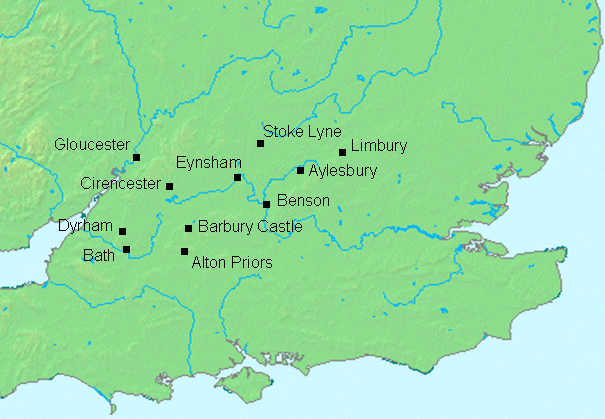

Reign and achievements
Ceawlin is commonly credited with military successes that enlarged his realm and weakened native British power in parts of what are now southwestern and central England. A notable campaign attributed to his reign is a victory conventionally dated to 577 at Deorham, which is said to have brought the towns of Gloucester, Cirencester and Bath under Anglo-Saxon control. These gains have been interpreted as important in separating southwestern British groups from those in Wales and in consolidating Germanic settlement.
Sources and historic reliability
Knowledge of Ceawlin comes mainly from later compilations: the Anglo-Saxon Chronicle and Bede's Ecclesiastical History, among other genealogical lists. These texts were written generations after the events they describe and mix oral tradition, political motive and fact. Modern historians treat specific dates and details with caution, accepting the broad picture of expansion while recognizing uncertainty about exact chronology, family relationships, and the scale of Ceawlin's authority.
Legacy and significance
Bede lists Ceawlin among rulers described by the Latin term often translated as "overlord" or bretwalda, indicating a degree of preeminence among Anglo-Saxon kings. His career is seen as an early stage in the formation of a West Saxon identity and territorial base that later became central to English political development. Tradition holds that he lost power in the early 590s and died around 593.
Key points
- Associated with the dynasty of the Gewisse and with the kingdom called Wessex.
- Reputed victor at Deorham (c. 577), expanding Anglo-Saxon influence in the west.
- Named by later writers as an overlord of the English south of the River Humber.
- Principal evidence comes from the Anglo-Saxon Chronicle and Bede; details are debated by historians.
Because surviving records are fragmentary, Ceawlin remains a partly legendary but influential figure in the story of early Anglo-Saxon England.
Questions and answers
Q: Who was Ceawlin?
A: Ceawlin was the King of the Gewisse, also called the King of Wessex, who ruled from 560 to 592.
Q: When did Ceawlin rule?
A: Ceawlin ruled from 560 to 592.
Q: Was Ceawlin the first king to rule over all the English south of the River Humber?
A: No, Ceawlin was the second king to be overlord over all the English south of the River Humber.
Q: How is Ceawlin's name spelled in different ways?
A: Ceawlin's name is also spelled Ceaulin and Caelin.
Q: When did Ceawlin die?
A: Ceawlin's date of death is unknown, but it is believed to be in 593.
Q: What was the Gewisse?
A: The Gewisse was the name of the tribe or people that Ceawlin ruled over.
Q: What was the significance of Ceawlin being overlord over all the English south of the River Humber?
A: Ceawlin's overlordship meant that he had control over a large portion of England and was considered a powerful and influential ruler.
Related articles
Author
AlegsaOnline.com Ceawlin of Wessex Leandro Alegsa
URL: https://en.alegsaonline.com/art/17790