
Cayenne: capital city of French Guiana
Cayenne is the principal city and administrative center of French Guiana, an overseas department of France in northern South America. It is a coastal town with tropical climate, diverse culture, and colonial history.
Cayenne is a commune that serves as the capital and administrative prefecture of French Guiana, an overseas region and department of France located in northern South America. The town occupies what was once an island (former island) at the mouth of the Cayenne River and fronts the Atlantic Ocean. As the region's chief city, Cayenne functions as a political, commercial and cultural hub.
Image gallery
10 Images


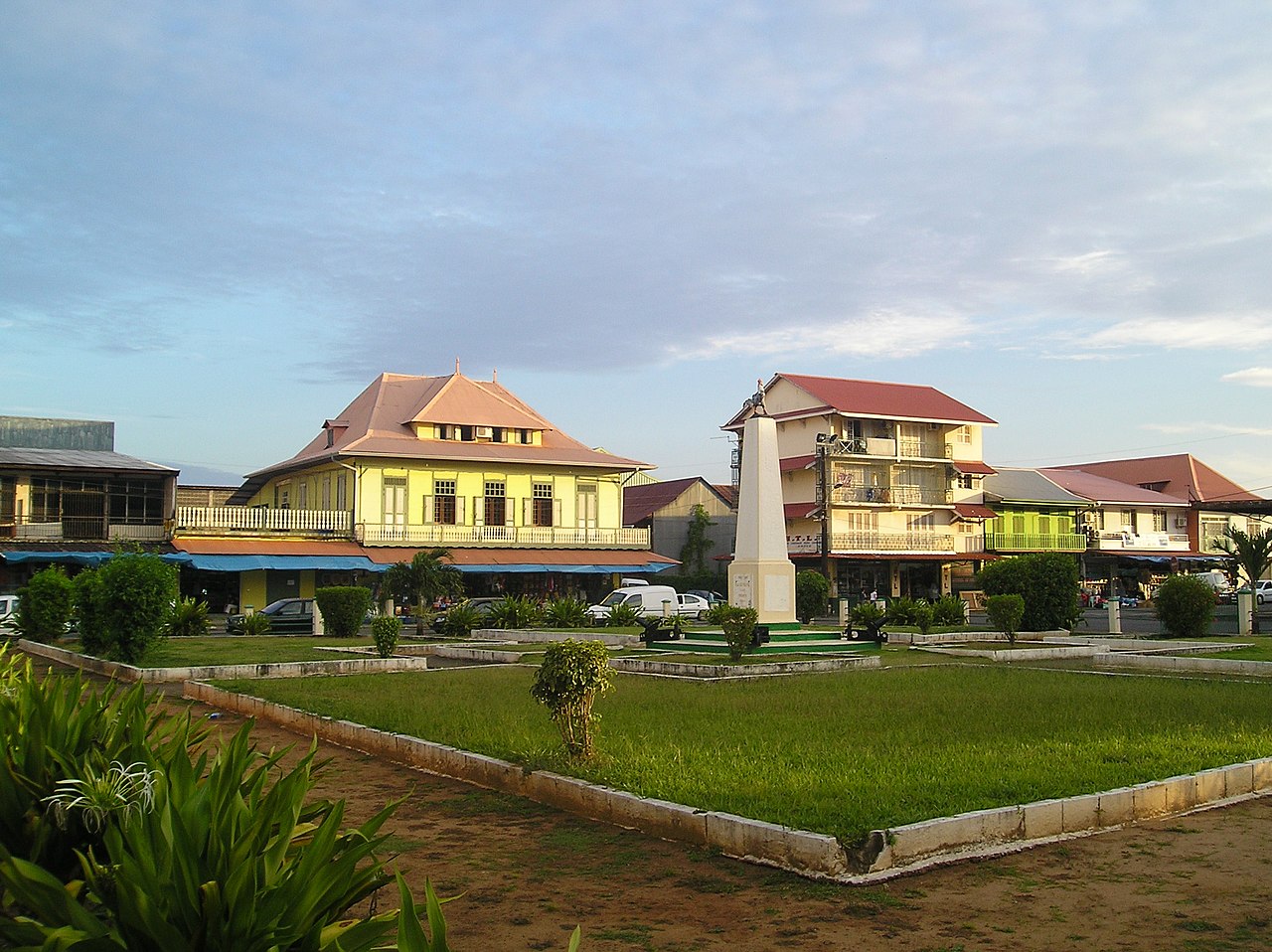


Geography and climate
Cayenne lies on low-lying coastal land where mangroves and waterways meet the sea. The setting gives the city a mix of riverine and maritime landscapes with nearby wetlands. The climate is tropical: consistently warm and humid, with a pronounced rainy season and abundant vegetation year round.
History and development
The area was inhabited by Indigenous peoples before European contact and was settled by the French during the colonial era. Over time Cayenne grew from an early port and trading post into the administrative center for the territory. Its history is marked by colonial architecture, the legacy of plantation economies, and the broader history of French Guiana as an overseas department of France.
Economy and culture
Cayenne's economy centers on government services, commerce, and port activities, supported by local markets, fisheries and small industry. The city is culturally diverse: populations of Creole, Maroon, Amerindian and immigrant communities contribute to a rich mix of languages, cuisine and festivals. The name "cayenne" is also widely known through the spicy pepper named after the region.
Sights and transport
- Historic districts and colonial-era buildings, public gardens and markets.
- Local museums and cultural centers presenting regional history and traditions.
- Transport links: an international airport serving the region, a regional port and roads connecting to inland areas; nearby Kourou hosts the Guiana Space Centre, a major regional facility.
Cayenne plays a central role in the administration and identity of French Guiana. Visitors and residents alike encounter a blend of tropical environment, multicultural life and the visible imprint of both local traditions and French governance.
Questions and answers
Q: Where is Cayenne located?
A: Cayenne is located in French Guiana, an overseas region and department of France that is in northern South America.
Q: What is the capital of French Guiana?
A: The capital (prefecture) of French Guiana is Cayenne.
Q: What river does Cayenne sit on?
A: Cayenne sits on the mouth of the Cayenne River on the Atlantic coast.
Q: Is French Guiana part of France?
A: Yes, French Guiana is an overseas region and department of France.
Q: Is Cayenne a commune?
A: Yes, Cayenne is a commune.
Q: What continent does French Guiana belong to?
A: French Guiana belongs to South America.
Q: Is the city of Cayenne situated on an island?
A: Yes, the city of Cayenne is situated on a former island at the mouth of the river.
Related articles
Author
AlegsaOnline.com Cayenne: capital city of French Guiana Leandro Alegsa
URL: https://en.alegsaonline.com/art/17752
Sources
- insee.fr : "Historique des populations par commune depuis 1961"
- insee.fr : "Base des unités urbaines 2012"
- insee.fr : "Base communale des aires urbaines 2012"
- map-france.com : "Cayenne"
- weatherbase.com : "Cayenne, France - Köppen Climate Classification"
- habitants.fr : "Guyane"
- insee.fr : "Régions, départements, arrondissements, cantons et communes"