
Cave of the Patriarchs (Cave of Machpelah / Ibrahimi Mosque)
Ancient religious complex in Hebron revered by Jews, Christians and Muslims as the burial place of the patriarchs and matriarchs; combines a subterranean tomb, Herodian enclosure and later religious structures.
Overview
The Cave of the Patriarchs, often called the Cave of Machpelah in Jewish tradition and the Ibrahimi Mosque in Islamic tradition, is a multi-layered sacred site located in the city of Hebron. Its geographic coordinates are given as 31°31′29″N 35°06′39″E. The place is venerated across Judaism, Christianity and Islam as the traditional burial place of key ancestral figures, and it has been a focus of worship, architecture and contested claims for millennia.

Image gallery
10 Images




Names and traditions
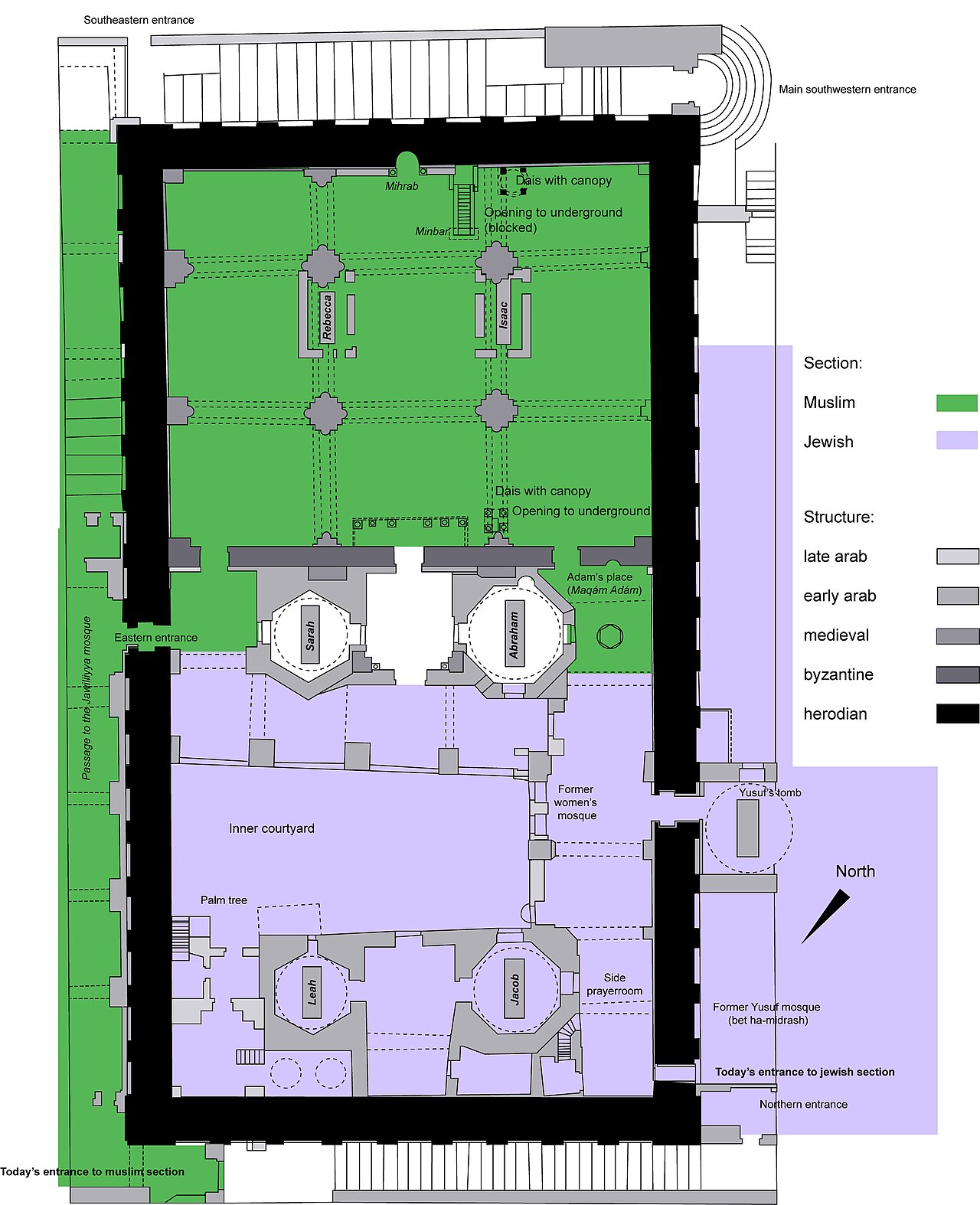
The site is known by several names that reflect different languages and faith communities. In Hebrew it is called Me'arat ha-Makhpela, commonly translated as "cave of the double tombs". In Arabic it is referred to as al-Haram al-Ibrahimi, the Sanctuary of Abraham. Tradition associates the cave beneath the structure with the graves of the ancestral couples listed in scripture:
Structure and archaeological character
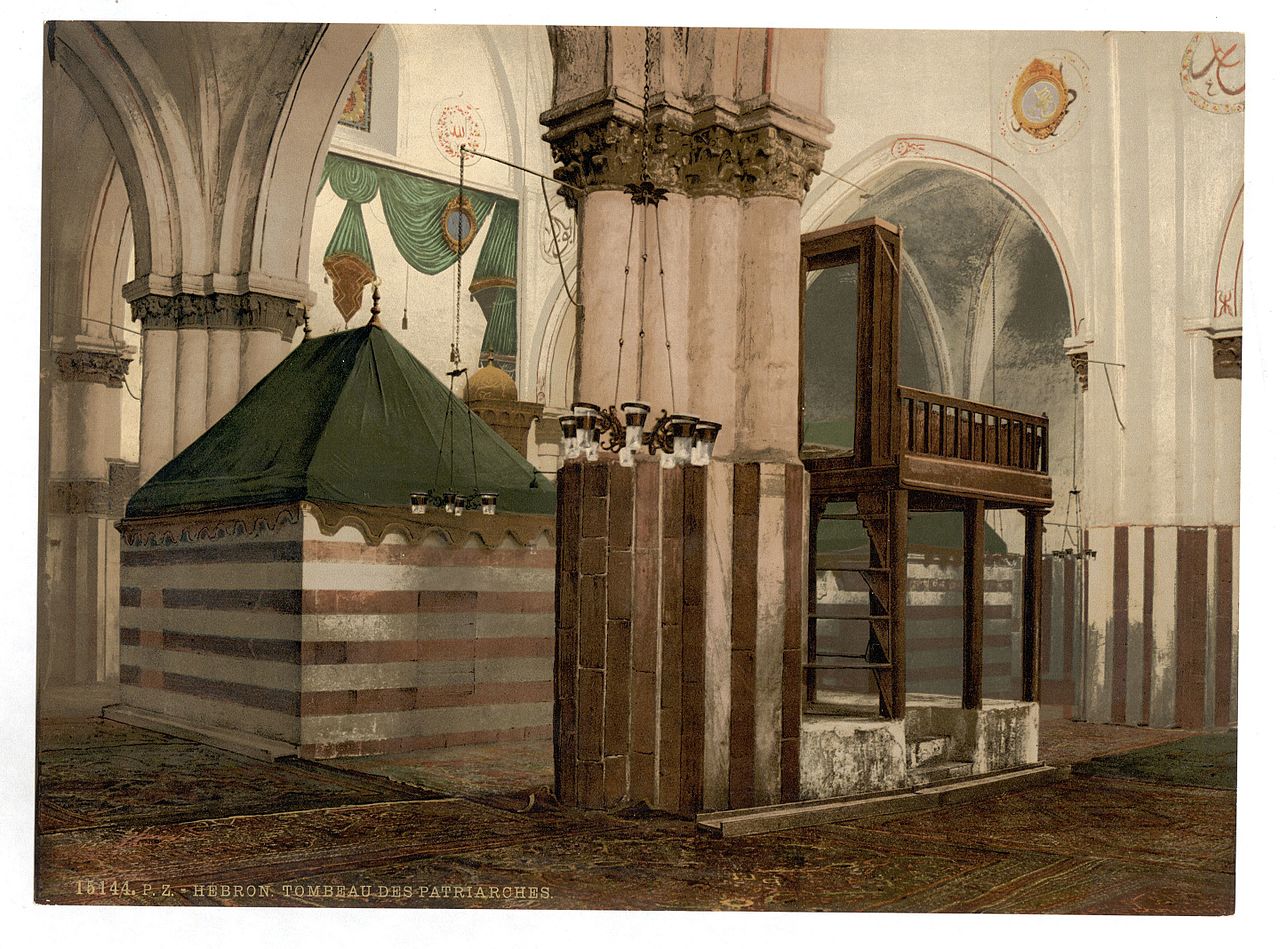
At ground level the precinct is dominated by a rectangular enclosure that dates in form to the late Second Temple period and was modified by later builders. Historical layers include a subterranean rock-cut chamber traditionally treated as the tomb, a Herodian-era enclosure that framed the plateau, a Byzantine-era church built above the cave, and later Islamic additions when the complex served as a mosque. The building therefore presents an amalgam of stonework, ritual space and adapted architectural elements from different eras. Visitors and scholars distinguish between the subterranean chamber, the aboveground prayer hall, and the surrounding courtyard complex.
History and development
References to the site appear in a range of religious texts and early pilgrimage accounts. Over time its function shifted with changes in political and religious control: it was a Jewish and Christian pilgrimage destination in antiquity, later an important mosque after the Islamic conquest, and it underwent restorations and reconstructions in successive periods. Archaeologists and historians note the Herodian and Byzantine phases, while many later medieval and Ottoman additions altered the visible appearance. The layering of uses has made the complex an important source for the study of sacred architecture in the region.
Religious significance and access
The Cave of the Patriarchs remains a major religious site. Jewish tradition regards it as one of the ancient burial places of the patriarchs and matriarchs; Muslims revere it for its association with Abraham (Ibrahim) and as a mosque for communal prayer; many Christians also venerate the location for its biblical connections. Because the site is located in the southern West Bank near Israel, arrangements for worship and visitor access are shaped by contemporary administrative and security agreements and vary over time. The complex continues to be a place of pilgrimage, study and public interest.
Distinctive facts and contemporary relevance
The Cave of the Patriarchs is notable for its combination of an exposed ritual building and a rock-cut tomb beneath, for the coexistence of multiple religious traditions converging on a single place, and for its prominent role in the historical memory of the region. It is the subject of ongoing scholarly research in archaeology, history and religious studies, and it remains a sensitive symbol in local and international discussions about heritage, access and intercommunal relations. For readers seeking more detailed archaeological, liturgical or historical accounts, further resources can be consulted via general references and institutional pages: archaeological overview, the site entry for Ibrahimi Mosque, and additional local and textual sources linked to the city of Hebron and to the ancestral figures Abraham, Isaac and Jacob.
For quick reference on names and language forms see entries for the Hebrew designation (Me'arat ha-Makhpela) and the Arabic form (al-Haram al-Ibrahimi), and consult translation notes such as "cave of the double tombs" for the traditional meaning. Additional curated materials and site reports can be found through linked institutional pages: coordinates and mapping, descriptive resources at archaeological overview, local histories (Hebron) and contextual material relating to regional governance (Israel).
Other named biblical figures associated by tradition are listed in standard religious commentaries: Sarah, Rebecca, and Leah. These traditions, architectural remains and modern stewardship together make the Cave of the Patriarchs a uniquely layered and internationally significant heritage site.
Questions and answers
Q: What are the coordinates of the Cave of the Patriarchs?
A: The coordinates are 31°31′29″N 35°06′39″E / 31.5247°N 35.1107°E / 31.5247; 35.1107
Q: What is another name for the Cave of the Patriarchs?
A: Another name for the Cave of the Patriarchs is the Cave of Machpelah (Hebrew: מערת המכפלה, Me'arat ha-Makhpela).
Q: What do Muslims call this archaeological site?
A: Muslims call this archaeological site Sanctuary of Abraham or Ibrahimi Mosque (Arabic: الحرم الإبراهيمي, al-Haram al-Ibrahimi).
Q: Who is buried at this archaeological site according to Jewish tradition?
A: According to Jewish tradition, Abraham and Sarah, Isaac and Rebecca, Jacob and Leah are buried at this archaeological site.
Q: When was a church built on top of these graves?
A: A church was built on top of these graves in the Byzantine Period in Israel.
Q: What is currently located on top of these graves?
A: Currently a mosque is located on top of these graves.
Related articles
Author
AlegsaOnline.com Cave of the Patriarchs (Cave of Machpelah / Ibrahimi Mosque) Leandro Alegsa
URL: https://en.alegsaonline.com/art/17732