
Causality: Understanding Causes, Effects, and Causal Reasoning
An overview of causality: what it means, how it is analyzed, its history, common distinctions like correlation vs causation, and applications in science, law, and technology.
Causality is the concept that links events in a directional way: one event (the cause) brings about another event (the effect). At its simplest, causality answers questions of "why" and "how"—why did B happen after A?—but careful treatment shows that apparent relationships can be complex. For a practical sense of cause-and-effect in everyday contexts, see related explanations.
Image gallery
4 Images


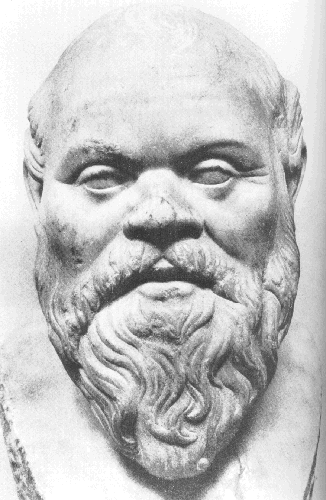
Core ideas and types
Philosophers and scientists distinguish several notions of causation. Commonly discussed types include:
- Deterministic causation: a cause that, in suitable conditions, produces an effect reliably and predictably.
- Probabilistic causation: a cause that raises the likelihood of an effect without guaranteeing it.
- Counterfactual causation: reasoning about what would have happened if the cause had not occurred.
- Mechanistic causation: explanation by describing the physical or biological mechanism linking cause and effect.
Historical development
Ideas about causation appear in ancient philosophy and natural inquiry, and have evolved through modern science and analytic philosophy. Thinkers have debated whether causes are observable regularities, hidden mechanisms, or claims about counterfactual alternatives. In the 19th and 20th centuries, methods from statistics and experimental design clarified how to test causal claims, and later formal tools—such as directed graphical models and formal tests used in econometrics and time-series analysis—offered new ways to represent and infer causal structure.
Methods and practical considerations
Inferring causality typically requires more than observing associations. Common approaches include randomized experiments, statistical controls to reduce confounding, longitudinal designs, and formal models that encode assumptions explicitly. In many fields researchers combine data with substantive knowledge of mechanisms to strengthen causal claims. Techniques vary from controlled trials in medicine to instrumental-variable methods in economics and algorithmic approaches in machine learning.
Applications and examples
Causal reasoning is central across disciplines. Medicine uses randomized trials to test treatments; public policy relies on causal estimates to design effective interventions; law examines cause in liability and responsibility; and data science develops algorithms to predict and manipulate outcomes. A familiar warning is "correlation does not imply causation": two variables may move together for reasons that do not involve one causing the other.
Challenges and distinctions
Key difficulties include confounding (hidden common causes), selection bias, reverse causation, and the challenge of generalizing from studied settings to new ones. Important conceptual distinctions are between necessary and sufficient causes, proximate versus ultimate explanations, and observation versus intervention. Modern causal frameworks emphasize making assumptions explicit so that empirical claims can be tested, debated, and refined.
Causality remains an active area of research and practical concern: improving methods to identify causal effects, clarifying philosophical foundations, and applying causal ideas to new domains such as artificial intelligence and policy evaluation.
Questions and answers
Q: What is causality?
A: Causality is a way to describe how different events relate to one another.
Q: How do people determine the cause and effect relationship between two events?
A: If B happens because A happened, then people say that A is the cause of B, or that B is the effect of A.
Q: Why is determining causality a difficult problem?
A: Determining causality is a difficult problem because it is not always clear which event is the cause and which is the effect.
Q: Have people tried to solve the problem of determining causality?
A: Yes, many people have tried to solve the problem of determining causality.
Q: Did different people come up with different solutions?
A: Yes, different people have come up with different solutions to the problem of determining causality.
Q: Can you give an example of causality?
A: Yes, if a plant dies because it didn't receive enough water, we can say that the lack of water (A) is the cause of the plant's death (B).
Q: Is causality an important concept in many fields?
A: Yes, causality is an important concept in many fields such as science, history, philosophy, and law.
Tags
Related articles
Author
AlegsaOnline.com Causality: Understanding Causes, Effects, and Causal Reasoning Leandro Alegsa
URL: https://en.alegsaonline.com/art/17706
Sources
- simple.wikisource.org : Hume, Treatise 1.3.2
- simple.wikisource.org : Hume, Enquiry 4.1