
Catalysis: principles, types, and applications
Catalysis is the acceleration or deceleration of chemical reactions by substances (catalysts) that provide alternative pathways and are not consumed. Overview, types, mechanisms, history, and major uses are explained.
Catalysis is the process by which the rate of a chemical reaction is altered through the presence of a catalyst — a substance that participates in the reaction mechanism but is not permanently changed by it. Catalysts change how quickly equilibrium is reached by lowering the activation energy or by providing an alternative reaction pathway, and they may either accelerate (positive catalysts) or retard (negative catalysts or inhibitors) reaction rates.
Image gallery
8 Images



How catalysts work
Catalysts operate by stabilizing transition states or intermediates, changing reaction coordinates so fewer high-energy steps are required. They are not consumed overall, although their activity can be reduced by strong binding of impurities, structural change, or surface fouling. Substances that enhance a catalyst’s effectiveness are called promoters; those that reduce its activity are called catalytic poisons.
Major types
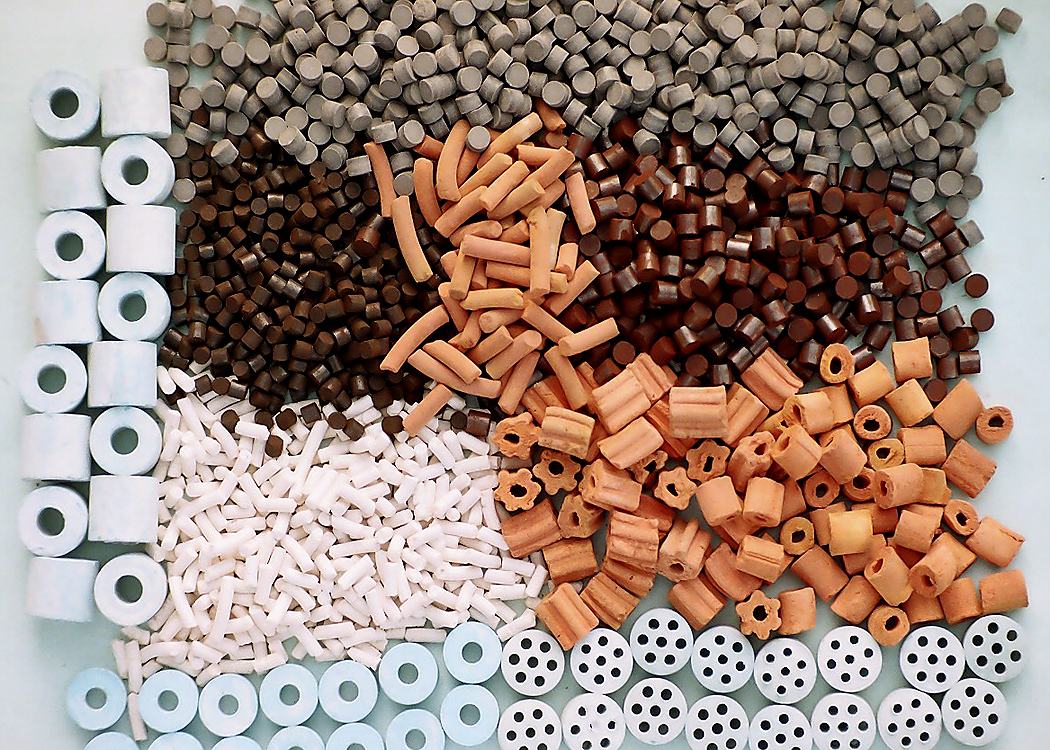
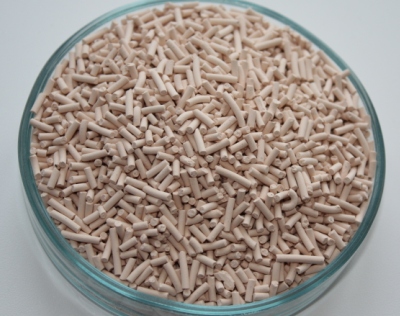
- Heterogeneous catalysts: solid catalysts that act on reactants in a different phase, often gases or liquids, via surface adsorption and reaction.
- Homogeneous catalysts: catalysts in the same phase as the reactants, common in solution-phase organic and organometallic chemistry.
- Biocatalysts (enzymes): specialized proteins that catalyze biochemical reactions with high specificity and efficiency.
- Organocatalysts: small organic molecules that catalyze reactions without metals, increasingly important in green chemistry.
History and development
The concept of catalysis dates to observations of accelerated processes such as fermentation and combustion; the term itself was introduced in the early 19th century by chemists who recognized that some substances modify reaction speeds without being consumed. Since then, advances in surface science, spectroscopy and molecular catalysis have driven the design of catalysts for industrial synthesis, pollution control and biochemical applications.
Applications and importance
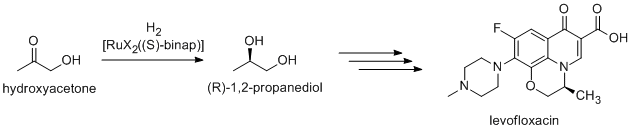
Catalysis underpins many large-scale industrial processes — from ammonia synthesis and petroleum refining to the reduction of vehicle emissions in catalytic converters — and is central to producing chemicals, fuels and pharmaceuticals more efficiently. In biology, enzymes catalyze nearly all cellular reactions. Catalysis is also a focus of sustainable chemistry: improved catalysts can reduce energy use, increase selectivity and minimize waste.
Key concepts and distinctions
Important performance measures include selectivity (preference for one product over others), turnover number (total cycles before deactivation) and turnover frequency (cycles per time). Other phenomena related to catalysis include autocatalysis (where a product accelerates the reaction) and cooperative catalysis (multiple catalysts or sites working together). Understanding these ideas helps guide catalyst selection and design for laboratory and industrial settings.
Questions and answers
Q: What is catalysis?
A: Catalysis is the change in speed (rate) of a chemical reaction due to the help of a catalyst.
Q: Is a catalyst consumed by the reaction itself?
A: A catalyst is not consumed by the reaction itself.
Q: How many chemical reactions can a catalyst participate in?
A: A catalyst may participate in many chemical reactions.
Q: What are positive catalysts?
A: Catalysts that speed the reaction are called positive catalysts.
Q: What are negative catalysts or inhibitors?
A: Catalysts that slow the reaction are called negative catalysts, or inhibitors.
Q: What are promoters?
A: Substances that increase the activity of catalysts are called promoters.
Q: What are catalytic poisons?
A: Substances that deactivate catalysts are called catalytic poisons.
Related articles
Author
AlegsaOnline.com Catalysis: principles, types, and applications Leandro Alegsa
URL: https://en.alegsaonline.com/art/17578