
Castorocauda: Jurassic semi‑aquatic mammaliaform of the Docodonta
Castorocauda, a Jurassic mammaliaform from the Daohugou Beds of Inner Mongolia, shows early semi‑aquatic adaptations, fur, and dental specializations that illuminate mammal evolution and ecological diversity.
Castorocauda is a genus of early mammaliaform known from the Middle to Late Jurassic. Fossils show it was a small, semi‑aquatic animal with a combination of features that resemble modern swimming mammals. Paleontologists consider it a member of the broader group of near‑mammals; it is often discussed in reviews of early proto‑mammals and Mesozoic life.
Image gallery
9 Images
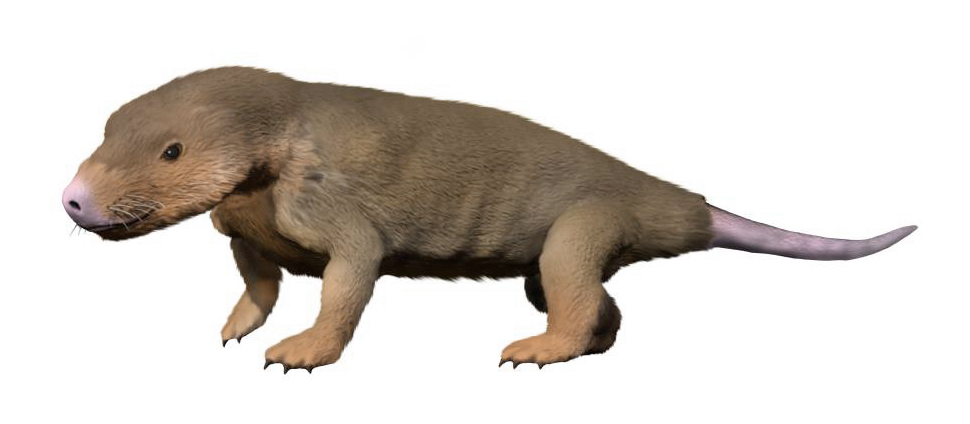
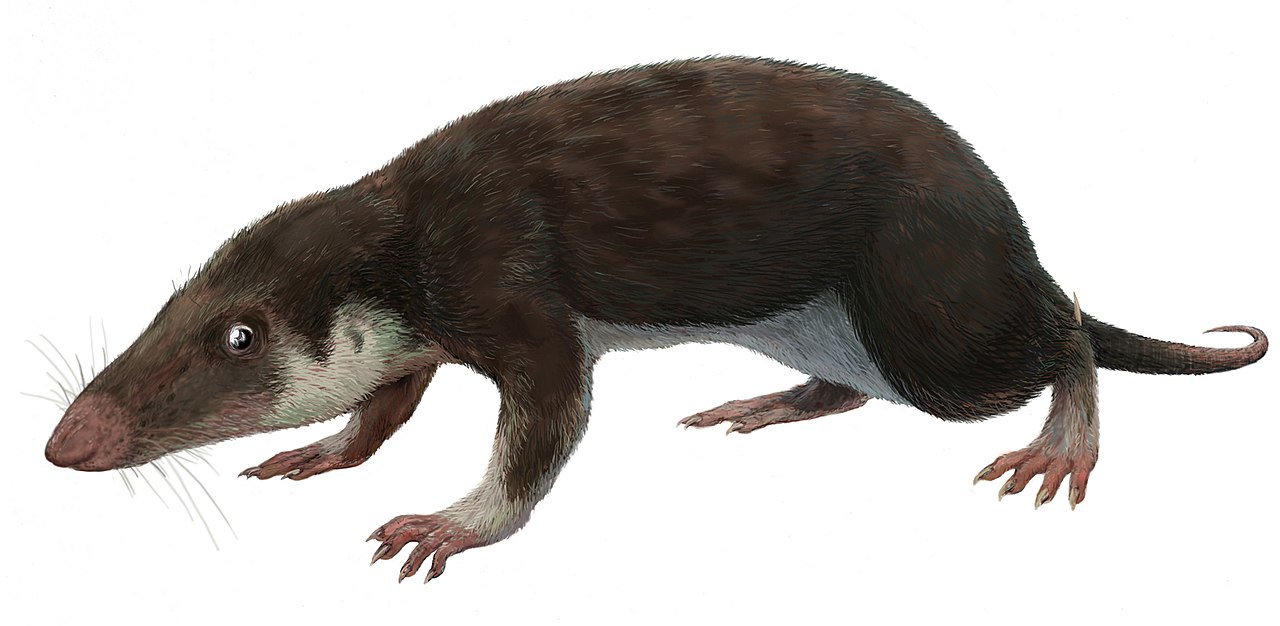


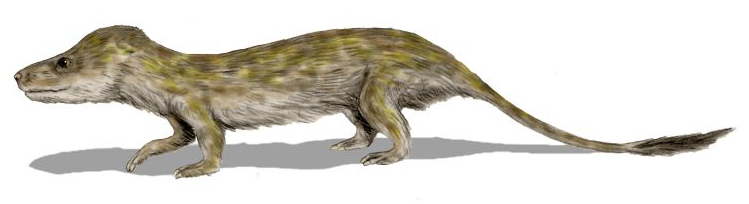
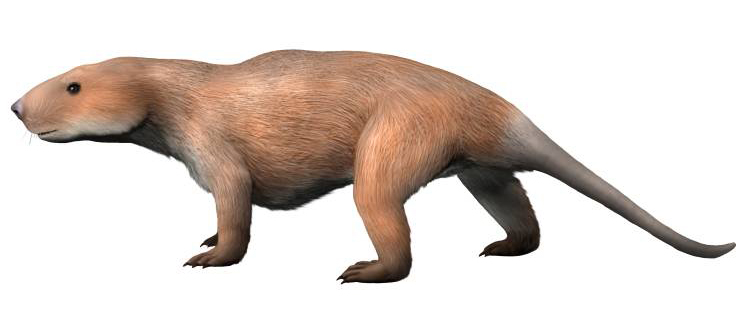
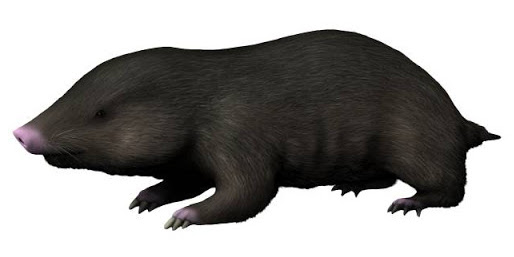
Description and notable features
The skeleton of Castorocauda reveals a body adapted for life in and around water. Its overall shape has been compared to modern semi‑aquatic species such as beavers, otters and the platypus in the sense that similar body plans evolved independently through convergent evolution. Key characteristics include a flattened, paddle‑like tail, limb proportions that suggest powerful swimming strokes, and teeth specialized for a diet that included aquatic prey.
- Fur: Impressionary evidence in the fossil shows dense fur covering the body, making Castorocauda one of the earliest known fossils preserving this trait and indicating thermoregulation and water repellence (fur).
- Teeth and diet: Dental morphology indicates adaptations for catching and processing fish and other aquatic animals rather than a strictly insect‑based diet.
- Locomotion: Tail and limb anatomy point to an ability to swim effectively, and broad feet suggest possible webbing or at least adaptations for propulsion in water.
Discovery and geological context
The primary fossil specimen was recovered from lakebed deposits in the famous Daohugou site of Inner Mongolia. The specimen itself is a nearly complete skeleton preserved in fine‑grained sediments from a lacustrine environment: researchers reported the fossil (the specimen) coming from lakebed deposits within the Daohugou Beds. These layers are dated to the Jurassic and place Castorocauda at roughly the same interval as other diverse vertebrate assemblages from that region, about 154 million years ago in broad terms (Jurassic).
Classification and evolutionary importance
Castorocauda belongs to the Docodonta, a clade of non‑crown mammaliaforms with complex molars and a mix of primitive and derived skeletal traits (Docodonta). Although it is not part of the modern mammal crown group (crown group), its anatomy provides important data on the range of ecological roles early mammaliaforms occupied. The find challenged the longstanding idea that Mesozoic mammal relatives were uniformly tiny, nocturnal insectivores by documenting a larger, specialized, semi‑aquatic lifestyle.
Significance and broader implications
Castorocauda is widely cited for three main reasons: the preservation of fur, the clear suite of aquatic adaptations, and the relatively complete skeleton that allows detailed functional interpretations. These attributes expand our understanding of early mammaliaform diversity and show that ecological experimentation—feeding styles, locomotor habits, and integumentary specializations—was well underway long before the rise of modern mammal groups. For additional general information on related topics see resources on the genus and broader discussions of early mammals and their environments (convergence).
Researchers continue to compare Castorocauda with modern analogues such as beavers and otters, and with monotremes like the platypus, to tease apart which similarities reflect shared function and which are coincidental. The specimen remains an important reference for studies of Mesozoic ecosystems and the evolutionary pathways that led to true mammals.
Primary literature and museum reports describing the specimen and its context can be consulted for further technical detail; some popular summaries and database entries also reproduce images and discussion of the fossil (fossil) and its stratigraphic source in the Daohugou sequence.
Questions and answers
Q: What is Castorocauda?
A: Castorocauda was a genus of small, semi-aquatic proto-mammals which lived in the Jurassic period.
Q: When did Castorocauda exist?
A: Castorocauda existed about 154 million years ago in the Jurassic period.
Q: Where was Castorocauda's fossil found?
A: Castorocauda's fossil was found in lakebed sediments of the Daohugou Beds of Inner Mongolia.
Q: What adaptations did Castorocauda have?
A: Castorocauda had adaptations like those of modern semi-aquatic mammals such as beavers, otters, and the platypus.
Q: What is special about Castorocauda's fur?
A: Castorocauda is the earliest animal found with fur.
Q: What is the significance of Castorocauda in the study of mammal evolution?
A: Although Castorocauda was not a crown group mammal, it is important in the study of how mammals evolved because it was the first find with an almost complete skeleton.
Q: Was Castorocauda a small nocturnal insectivore?
A: No, Castorocauda was "not a small nocturnal insectivore".
Related articles
Author
AlegsaOnline.com Castorocauda: Jurassic semi‑aquatic mammaliaform of the Docodonta Leandro Alegsa
URL: https://en.alegsaonline.com/art/17537
Sources
- news.nationalgeographic.com : "Jurassic "beaver" found; rewrites history of mammals"
- sciencemag.org : "A swimming mammaliaform from the Middle Jurassic and ecomorphological diversification of early mammals"
- doi.org : 10.1126/science.1123026
- pubmed.ncbi.nlm.nih.gov : 16497926