
Cassandra of Troy — prophetess in Greek myth
Cassandra, daughter of Priam and Hecuba, is the prophetic figure from Troy whose true warnings were reputedly never believed; she appears across Greek tragedy and later literature as a symbol of ignored foresight.
Cassandra (also Kassandra or Alexandra) is a figure of Greek myth remembered for the tragic paradox of accurate prophecy that goes unheeded. She is traditionally named as a daughter of King Priam and Queen Hecuba of Troy. Ancient sources differ about details—her exact number of siblings and some episodes vary—but most accounts agree that she possessed the power to foresee future events and that, for reasons given in several versions of the tale, her warnings failed to change what came to pass. The name and variants are discussed in standard treatments of classical names and etymology (name entries), and she appears in general surveys of Greek mythology.
Image gallery
10 Images
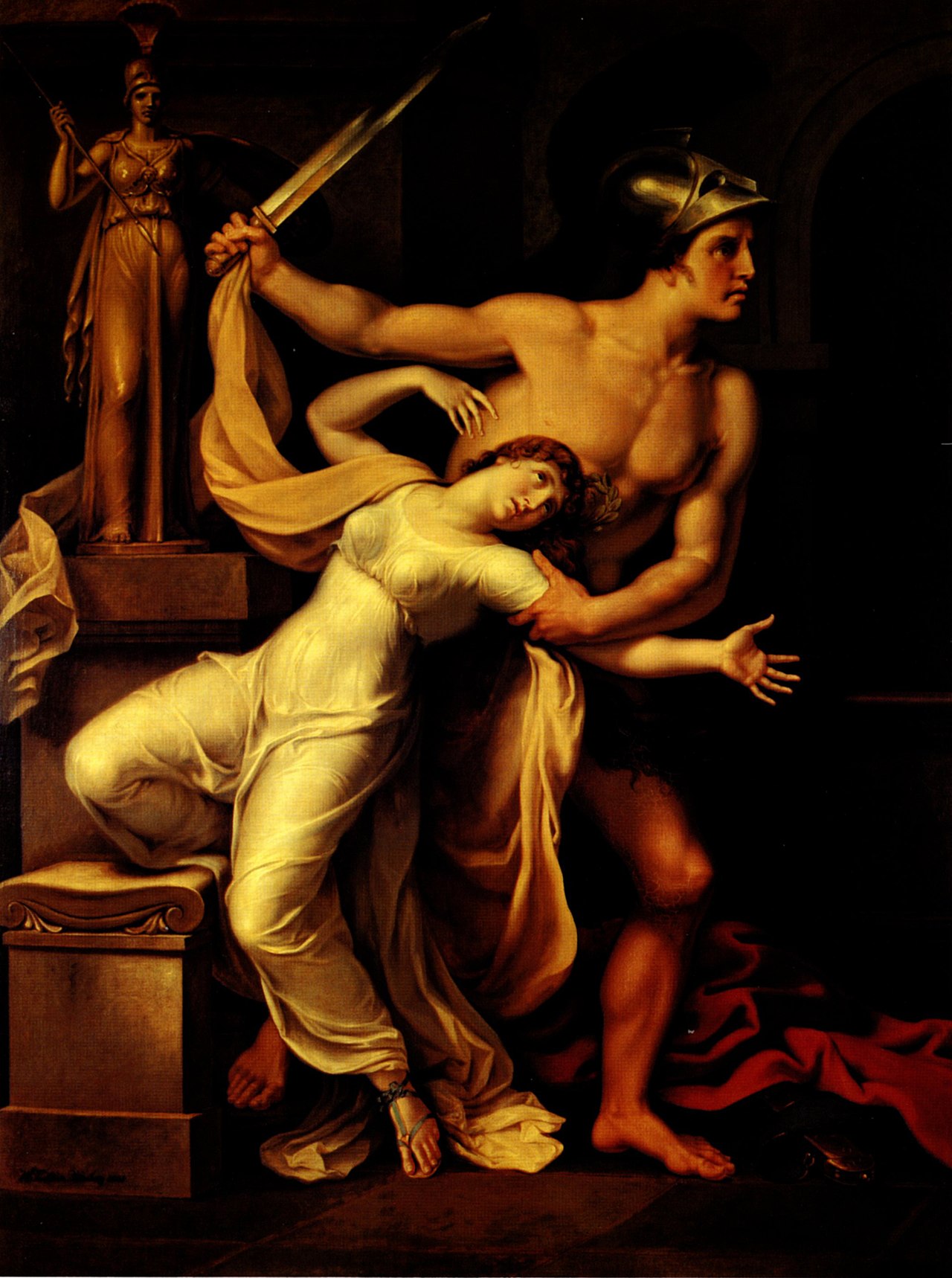




Gift, rejection, and the curse
In the better-known tradition the god Apollo granted Cassandra the ability to prophesy. The common motif describes a promise or attempt by Apollo to win her favour; when she refused or failed to return his love, he is said to have ensured that although she would continue to see the truth, others would not believe her. That paradox—accurate vision combined with social disbelief—shapes Cassandra’s role as witness and tragic messenger. The motif is tied to wider practices and beliefs about prophecy in the ancient world, and appears in varied literary accounts (accounts of the gift and its reversal).
Role in the Trojan War and aftermath
Cassandra is closely connected to narratives of the Trojan War. Most famously she is said to have foreseen the deception of the Trojan Horse and urged the Trojans not to bring the wooden horse into the city; her warnings were ignored and the city fell. After the sack of Troy she was taken captive and became attached to the household of the Greek commander Agamemnon. In accounts that follow her to Greece she again predicts violence at the palace—particularly Agamemnon’s murder by his wife Clytemnestra—but her voice is not trusted. These episodes underline recurring themes of exile, vulnerability, and the limits placed on prophetic speech in public and domestic spheres.
Literary transmission and surviving texts
Cassandra appears in multiple genres: tragedy, epic summaries, later Hellenistic poetry, and Roman retellings. Her quarrel with fate and her final scenes are central passages in the surviving tragedies that draw on the Troy cycle. A separate and later Hellenistic poem usually titled Alexandra (often identified with Cassandra) is attributed to Lycophron and survives as a dense, allusive monologue in iambic trimeter; it is an important witness to how the figure was read and reworked in the Hellenistic period. Archaeological finds such as painted vases and funerary art, together with narrative summaries and scholia, helped preserve versions of her story for later antiquity and Byzantine compilers.
Thematic importance and modern reception
As a literary and cultural figure Cassandra functions on several levels. She embodies the burden of knowledge unsought or unaccepted, the social dynamics that silence or discredit certain speakers, and the tragic consequences when accurate warning is ignored. From Aeschylus and other tragedians to modern novels, plays, and psychological discussions, her name serves as a shorthand for ignored prophecy and the frustration of veridical insight. Scholarly work on prophetic roles, gendered vulnerability, and the reception of the Trojan tradition frequently treats Cassandra as a focal example (myth surveys, studies of prophecy, and analyses of Troy and its legacy).
Further reading and context
Readers seeking primary passages and commentary can consult editions and translations of the Greek tragedians and compilations of mythic narratives, annotated treatments of the Trojan cycle, and studies of the Hellenistic poem Alexandra. Discussions of the role of Apollo, archaeological reports on Troy, and genealogical notes on the house of Priam and Hecuba also illuminate the figure. For concise introductions see entries on classical names (name entries), surveys of Greek myth, and focused studies of prophetic practice and cult (prophecy studies). Further references can be pursued in bibliographies linked to modern commentaries and annotated translations (treatment of the Trojan Horse, Agamemnon, and literary reception essays on the motif).
Cassandra’s story continues to be a subject of scholarly interest and public imagination: she is an emblem of the moral and political questions raised when warning goes unheeded, and a touchstone for debates about authority, gender, and the cultural uses of prophecy across antiquity and later ages.
Questions and answers
Q: Who was Cassandra in Greek mythology?
A: Cassandra was the daughter of King Priam of Troy and Hecuba, and twin sister of Helen. She was famous for her prophesies of bad events.
Q: What gift did the god Apollo give to Cassandra?
A: Apollo gave Cassandra the gift of prophecy so that she would love him.
Q: Why was Apollo angry with Cassandra?
A: Apollo was angry with Cassandra because she did not want to love him.
Q: What did Apollo change about his gift to Cassandra?
A: Apollo made it that Kassandra could only foresee bad things, and that no one would ever believe her.
Q: What did Cassandra know about the Trojan War?
A: Cassandra knew of the trick with the Trojan Horse.
Q: Why was Cassandra unable to prevent the destruction of Troy?
A: No one believed Cassandra's prophecy about the Trojan Horse, so she was unable to prevent the destruction of Troy.
Q: What happened to Cassandra after the Trojan War?
A: After the Trojan War, Cassandra became a slave of Agamemnon. She warned him that his wife Klytaimnestra would kill him, but he did not believe her. As a result, Agamemnon was killed, and Cassandra shortly after him.
Related articles
Author
AlegsaOnline.com Cassandra of Troy — prophetess in Greek myth Leandro Alegsa
URL: https://en.alegsaonline.com/art/17432