
Cash McCall (1960 film)
A concise encyclopedia entry on the 1960 romantic drama Cash McCall: origins, plot, principal cast and crew, production context, themes, reception and legacy.
Cash McCall is a 1960 American romantic drama film directed by Joseph Pevney, adapted from the novel by Cameron Hawley. The picture pairs a commercial storyline about corporate dealings with a romantic plot, and it features a prominent studio cast. The film was released by Warner Bros. and reflects mid-20th-century Hollywood approaches to business-centered melodrama.
Image gallery
1 Image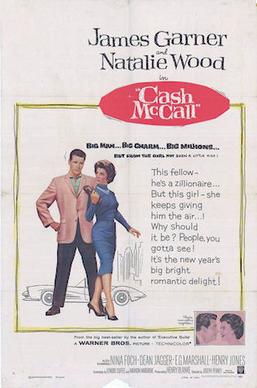
Plot and principal characters
The narrative follows a self-made corporate raider known as Cash McCall, whose business practices bring him into contact and conflict with a wealthy heiress. Their interactions shift between professional bargaining and romantic attraction, producing ethical dilemmas about loyalty, honesty and the interplay of money and affection. The screenplay compresses elements of the source novel to emphasize the relationship at the story's core.
Cast and roles
- James Garner as the title character, a charismatic businessman whose methods conceal personal uncertainty.
- Natalie Wood as the female lead, whose social position and emotional needs complicate the central romance.
- Nina Foch, Dean Jagger, and E. G. Marshall in supporting parts that represent family, legal and corporate interests within the plot.
- Other credited players include Otto Kruger and Henry Jones in smaller but narratively significant roles.
Casting highlighted two popular screen personalities of the era whose on-screen chemistry and star images shaped audience expectations. Performances were generally presented within the studio system's conventional styles rather than experimental acting approaches.
Production, source and release
The film is adapted from Cameron Hawley’s novel, which explores industrial life and personal relationships in a corporate context. Director Joseph Pevney guided the transition from page to screen, concentrating on dialog and character interaction. Production followed typical studio-era schedules and resources, with Warner Bros. handling distribution. The adaptation streamlines some plot subthreads while preserving the novel’s central moral tensions.
Themes, reception and legacy
Cash McCall examines themes of commerce versus conscience, the negotiation of power in intimate relationships, and the emotional costs of business ambition. Contemporary reviews noted the film’s glossy production values and star casting; later commentary places it among mainstream studio romances that incorporate corporate intrigue. While not usually ranked among the most influential films of its decade, it remains of interest to readers and viewers studying screen depictions of mid-century American business culture and star-driven melodrama.
Questions and answers
Q: Who directed the movie Cash McCall?
A: Joseph Pevney directed the movie Cash McCall.
Q: What is the movie Cash McCall based on?
A: The movie Cash McCall is based on the novel of the same name by Cameron Hawley.
Q: Who are the main actors in the movie Cash McCall?
A: Natalie Wood, James Garner, Nina Foch, Dean Jagger, E. G. Marshall, Otto Kruger, and Henry Jones are the main actors in the movie Cash McCall.
Q: When was the movie Cash McCall released?
A: The movie Cash McCall was released in 1960.
Q: What is the genre of the movie Cash McCall?
A: The movie Cash McCall is a romantic drama.
Q: Who distributed the movie Cash McCall?
A: The movie Cash McCall was distributed by Warner Bros.
Q: Is the movie Cash McCall based on a true story?
A: It is not stated that the movie Cash McCall is based on a true story.
Related articles
Author
AlegsaOnline.com Cash McCall (1960 film) Leandro Alegsa
URL: https://en.alegsaonline.com/art/17398