
Cash crop
A cash crop is a farm crop grown primarily for sale, not for the grower’s own use. This article explains types, history, economic role, environmental and social impacts, and sustainable responses.
A cash crop is an agricultural crop cultivated primarily for sale on a market, rather than for the grower’s own consumption. The term contrasts with subsistence crops, which are produced mainly to feed the household or livestock of the farmer. Cash crops range from staple grains raised for export to specialty products such as coffee or cotton; they may be annual or perennial and serve food, industrial, fiber, fuel, or stimulant purposes.
Image gallery
10 Images
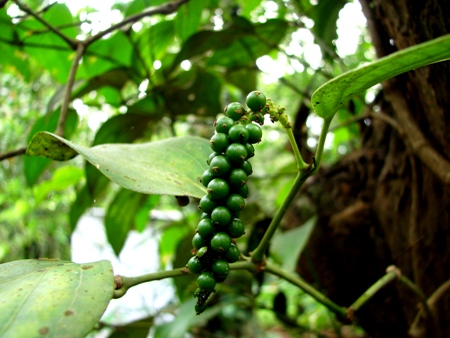







Characteristics and common types
Cash crops are usually chosen for their market demand and ability to generate income. They commonly occupy large areas, favor monoculture or specialized production systems, and often require inputs such as fertilizers, irrigation, or processing facilities. Typical examples include:
- Food and oilseeds: soybeans, maize (corn) grown for sale, sugarcane
- Stimulants and beverages: coffee, tea, cocoa
- Fiber and industrial crops: cotton, rubber, flax
- Specialty and plantation crops: palm oil, tobacco, cut flowers
History and development
Commercial cultivation of crops for sale has existed for millennia, but cash cropping expanded dramatically with colonial trade networks and the rise of global commodity markets. Plantation systems concentrated production of a few export crops, while technological changes in the 20th century — mechanization, irrigation, improved varieties — increased yields and the scale of commercial farming.
Economic role and value chains
Cash crops can provide important income, employment, and export earnings for farmers and national economies. They form part of larger value chains that include harvesting, processing, transport, trading, and retail. Price volatility on commodity markets, however, can create income uncertainty; many farmers respond by diversifying crops, adding value locally, or participating in cooperatives and certification schemes.
Environmental and social impacts
While cash crops can raise living standards, intensive production has environmental costs: soil depletion, pesticide use, water stress, and habitat loss where forests or grasslands are converted to single-crop systems. Social concerns include land tenure disputes, inequitable benefits between smallholders and large agribusiness, and reduced local food security if food crops are displaced.
Responses and sustainability
Policy and practice have sought to reduce risks and impacts through crop diversification, agroecological methods, integrated pest management, sustainable certification (e.g., organic or fair trade), and support for smallholder access to markets and finance. These approaches aim to balance income generation with ecological resilience and community well‑being.
Questions and answers
Q: What is a cash crop?
A: A cash crop is a crop that is grown specifically to be sold in the market.
Q: How is a cash crop different from a subsistence crop?
A: A cash crop is different from a subsistence crop because it is grown for sale in the market, whereas a subsistence crop is grown for personal use or for feeding the farmer's animals.
Q: Why do farmers grow cash crops?
A: Farmers grow cash crops as a means of generating income.
Q: What are the different categories of cash crops?
A: There are several different categories of cash crops, including industrial crops, export crops, and specialty crops.
Q: What is an industrial crop?
A: An industrial crop is a type of cash crop that is used for the production of raw materials for the manufacturing of other products.
Q: What is an export crop?
A: An export crop is a type of cash crop that is grown specifically for export to other countries.
Q: What is a specialty crop?
A: A specialty crop is a type of cash crop that is grown for a specific purpose, such as for use in gourmet cooking or for making high-end products.
Related articles
Author
AlegsaOnline.com Cash crop Leandro Alegsa
URL: https://en.alegsaonline.com/art/17397
Sources
- 99businessideas.com : "20+ Highly Profitable Cash Crop Plants To Grow"
- dailycal.org : "Spicing things up: 10 common kitchen spices and how to use them | The Daily Californian"
- ncbi.nlm.nih.gov : Raw Material Resource Base
- muvsi.in : "20 Most Profitable Medicinal Herbs Growing With Small Investment"
- kapsenbergdesign.com : "Plant list ordered by common name with pictures from Vitoria Garden"