
Cascade: meanings, forms, and significance across nature and systems
Cascade describes a stepped waterfall and, by analogy, any sequence that flows or triggers from one element to the next in music, biology, engineering, computing, and social systems.
Overview
A cascade most commonly denotes a small, stepped waterfall: water tumbling in a series of drops down a slope. By extension the word is used metaphorically in many fields to describe any process where elements flow or trigger sequentially. That broader sense covers musical figures, chains of events, biological reaction sequences, engineering components and failure modes, and patterns in data and design.
Image gallery
1 Image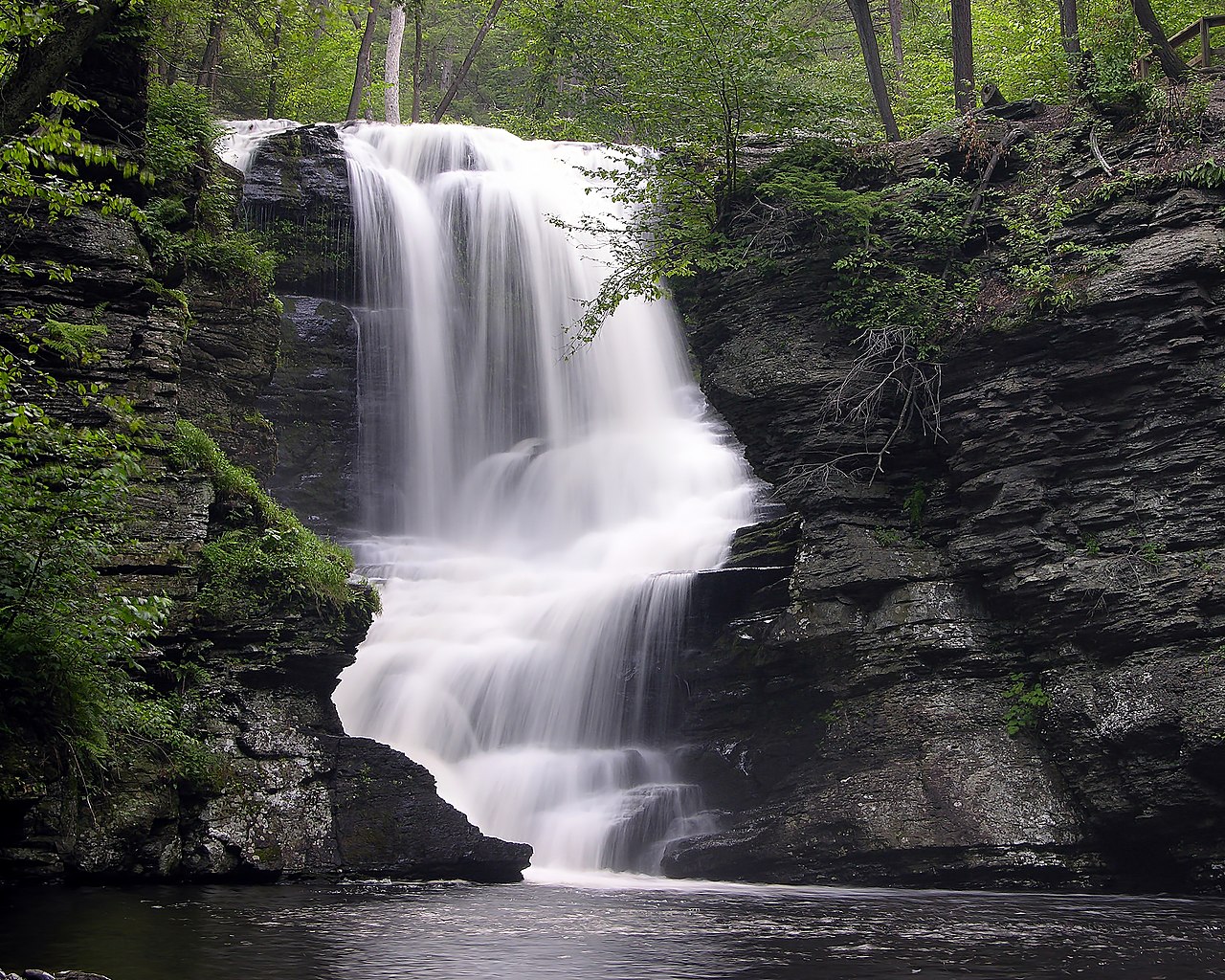
Forms and characteristics
Cascades share a few characteristic features: a directional flow, repeated stages or steps, and transfer of energy, information, or matter from one stage to the next. Natural cascades — the familiar, scenic kind — are formed where water descends over variations in bedrock or moraine. In music a musical cascade often refers to rapid arpeggios or sequences of notes that appear to pour from one register to another. In systems thinking a series of events that accelerates or amplifies is often called a cascade.
History and terminology
The term entered English from Romance languages with the literal meaning of falling water. Its visual and dynamic qualities made it a convenient metaphor, so scholars and practitioners adapted the word to describe sequential and amplifying processes in many disciplines. Over time, specific technical senses developed (for example, electrical "cascade" stages or biochemical "enzyme cascades").
Examples and uses
- Natural: a small waterfall that descends in steps is a classic cascade seen in mountains and rivers.
- Musical: pianistic figures and orchestral textures that create flowing, overlapping notes are sometimes labelled cascades.
- Biological: signaling pathways can operate as cascades where one protein activates the next, producing an amplified response.
- Engineering & computing: cascaded amplifiers, pipeline stages, or cascading failures describe linked components whose outputs feed subsequent stages.
Notable distinctions and considerations
"Cascade" is sometimes used interchangeably with "waterfall" in casual speech, but in technical contexts the word emphasizes sequential stages and propagation. It is also related to but distinct from a "domino effect": a domino chain often implies equal, discrete failures, whereas a cascade can involve amplification, branching, and feedback. Understanding whether a cascade is desirable (controlled signal cascade) or hazardous (uncontrolled cascade failure) is important in design, management, and analysis.
Across disciplines the cascade metaphor helps describe how small changes at an early stage can yield large downstream effects, making the concept useful for explaining ripple effects in nature, technology, and society.
Questions and answers
Q: What is a cascade?
A: A cascade is a small splashing waterfall that tumbles down a mountainside in a series of steps.
Q: What else can cascade refer to?
A: Cascade can also refer to a series of musical notes or a series of events which follow each other rapidly, each of which triggers the next.
Q: Could you provide an example of a cascade?
A: Yes, an example of a cascade could be a series of dominoes falling one after another.
Q: What is the sound of a cascade like?
A: The sound of a cascade is typically a gentle rush of water and a soft splashing sound.
Q: Are cascades typically found in urban areas?
A: No, cascades are typically found in natural outdoor settings, such as mountainsides and forests.
Q: What is the difference between a cascade and a large waterfall?
A: A cascade is a smaller waterfall that tumbles down in a series of steps, while a large waterfall typically has a single, massive drop.
Q: Can a cascade be used as a source of energy?
A: Yes, cascades can be used as a source of hydroelectric power.
Related articles
Author
AlegsaOnline.com Cascade: meanings, forms, and significance across nature and systems Leandro Alegsa
URL: https://en.alegsaonline.com/art/17380