
Carmen Amaya: Barcelona-born Romani Flamenco Dancer and Singer
Overview of Carmen Amaya (1913–1963), a Barcelona Romani flamenco artist celebrated for powerful footwork, genre-defining stage presence, international tours, film roles and enduring influence on flamenco dance.
Carmen Amaya (1913–1963) was a Spanish Romani artist whose dancing and singing helped to reshape 20th‑century flamenco. Born in the Somorrostro neighbourhood of Barcelona, she began performing as a child and rose to international prominence through a combination of prodigious footwork, dramatic presence and collaborations with leading musicians. Scholars, critics and fellow artists have described her as one of the most influential flamenco performers of her generation.
Image gallery
3 Images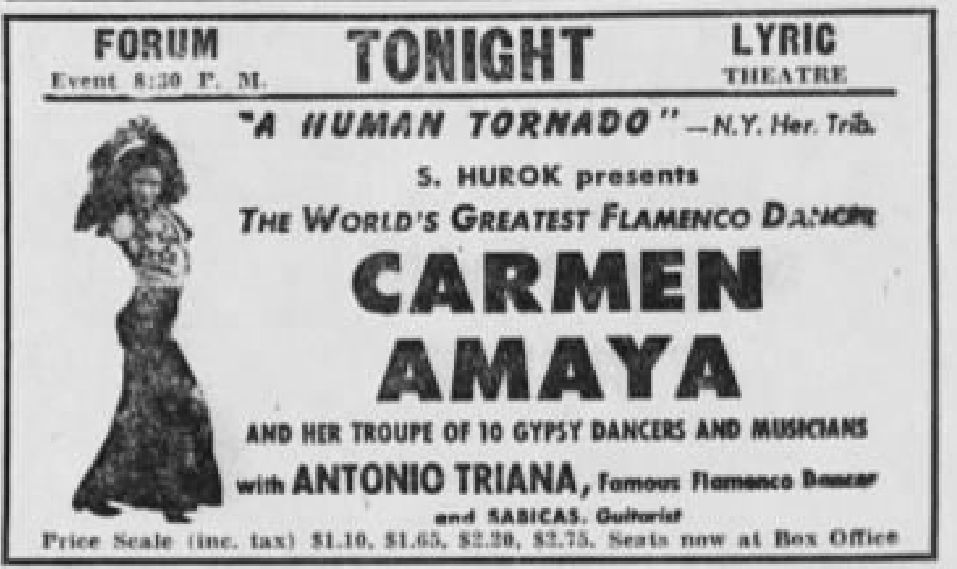


Artistic profile and technique
Amaya's stage persona emphasized stamina, percussive invention and a bold, often androgynous image. Unlike many female dancers of her era, she frequently appeared in trousers rather than the multilayered skirts associated with traditional female flamenco costume; proponents suggest this choice showcased her complex zapateado (footwork) and allowed a wider range of percussive steps. Observers praised the speed and clarity of her feet, the intensity of her rhythmic accents and a dramatic sense of phrasing that could combine lyrical singing with abrupt, powerful pulses of movement.
- Footwork: fast, precise and central to her style.
- Costume and silhouette: trousers and a compact frame that favored percussive display.
- Musical collaboration: worked closely with leading flamenco guitarists and singers to fuse movement and music tightly.
Career highlights and public reception
Amaya began performing in Barcelona's working‑class venues and attracted the attention of musicians who later became important partners in her career. One of the most renowned collaborators was the guitarist Sabicas, with whom she recorded and toured; their work together helped transmit a modern, concert‑style flamenco to wider audiences. She made an early international appearance in Paris and subsequently toured across Europe and the Americas. In the United States and elsewhere she appeared in films and recorded commercial sides that introduced many listeners to flamenco beyond Spain.
Her film work included short and feature productions that used her dance as a central dramatic element; titles associated with her stage and screen career brought flamenco into cinema audiences and helped to establish her reputation outside Spain. She also received notable invitations to perform in prestigious venues, including appearances at the White House, which underscored her status as a cultural ambassador.
Legacy and influence
Carmen Amaya's influence is felt in the evolution of female flamenco technique, especially in the expanding role of vigorous footwork and assertive stage presence for women. Later generations of dancers cite her as an inspiration for pushing expressive and technical boundaries. While some critics noted a limited repertoire, most analyses emphasize her ability to embody and intensify core flamenco elements—compás (rhythmic cycle), duende (emotional intensity) and a muscular, theatrical execution that demanded attention.
Background and final years
Born into a Romani family in Barcelona, Amaya's formative years were spent performing in local bars and small theatres, often accompanied by close family members on the guitar. Her early environment and community shaped both her musical sense and her connection to the flamenco tradition. During a long career she recorded with prominent artists and made celebrated appearances in European capitals and in the Americas. Notable invitations included performances at the White House, received during periods when flamenco drew diplomatic and cultural interest, and later events that brought her before national leaders such as President Truman.
Further reading and context
For general context on the art form she practised see resources on flamenco and on flamenco's vocal tradition via cante. Her Romani heritage and its relationship to flamenco are discussed in literature on Romani people and regional studies of Barcelona and Spain. Specific works and films linked to her career include recordings and adaptations such as a cinematic Romeo and Juliet variant sometimes referenced in biographies (Los Tarantos) and short dance films like Danzas Gitanas. Her characteristic costume choices — notably her preference for trousers over traditional skirts on stage — remain a recurring point of discussion in studies of flamenco gender and performance practice.
Carmen Amaya died in 1963 and was buried in Barcelona; her grave and memory remain points of interest for flamenco historians and admirers who continue to study her recordings and films to understand her contribution to the artform.
Questions and answers
Q: Who was Carmen Amaya?
A: Carmen Amaya was a flamenco dancer and singer of gypsy origin, born in the Somorrostro slum of Barcelona, Spain. She has been called "the greatest Spanish gypsy dancer of her generation" and "the most extrardinary personality of all time in flamenco dance".
Q: When did she start dancing?
A: She started dancing from the time she was 4 years old.
Q: Who accompanied her on guitar?
A: Her father accompanied her on guitar when she danced in waterfront bars in Barcelona. A young person who saw her dance as a girl was the Spanish guitarist Sabicas (Agustín Castellón Campos). He later recorded Queen of the Gypsies (1959) and Flamenco! with Amaya.
Q: Where did she make her debut performance?
A: In 1929, she made her debut performance in Paris to warm acclaims and admiration for her dancing skill.
Q: What movies did she act in?
A: She moved to America in 1936, where she went on to act in several movies that broke box office records, including the Romeo and Juliet adaptation Los Tarantos, and the short movie Danzas Gitanas (Gypsy dances).
Q: Why did Amaya often dance wearing trousers instead of skirts?
A: One theory is that she wore trousers instead of skirts to give more scope to her footwork which was exceptional, and rather like a flamenco male dancer. Apparently, early flamenco women didn't do much footwork so male dancers used to fill in steps while sitting unseen on chairs offstage.
Q: How many times did President Roosevelt invite Amaya to perform at The White House?
A: President Roosevelt invited Amaya to perform at The White House twice; once in 1944 and again 1953.
Related articles
Author
AlegsaOnline.com Carmen Amaya: Barcelona-born Romani Flamenco Dancer and Singer Leandro Alegsa
URL: https://en.alegsaonline.com/art/17121
Sources
- bdebarna.net : Vila Olímpica
- flamenco-world.com : flamenco-world.com