
Carl Gustav Jung: life, ideas and influence
Swiss psychiatrist Carl G. Jung (1875–1961) founded analytical psychology. He introduced concepts such as the collective unconscious, archetypes, introversion and extraversion and influenced psychology, culture and the arts.
Overview
Carl Gustav Jung (26 July 1875 – 6 June 1961) was a Swiss psychiatrist and writer whose work established the school of psychological thought commonly called analytical psychology. His writings explored the structure of the human psyche, symbolism in myth and religion, and the role of unconscious processes in personal development. Jung's ideas have been applied beyond clinical practice to literature, religion, anthropology and popular culture, and continue to be a reference point in discussions of personality and meaning.
Image gallery
10 Images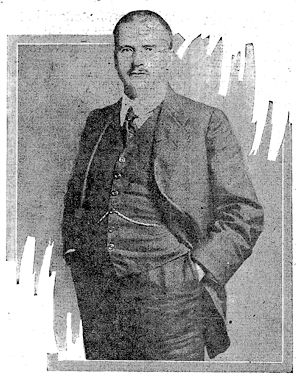


Major concepts
Jung proposed a number of influential theoretical constructs that sought to describe universal and personal dimensions of mental life. Central among them are:
- Collective unconscious — a proposed layer of the unconscious shared across humanity, containing inherited forms and potentials.
- Archetypes — recurring symbolic figures or motifs (such as the Shadow, the Anima/Animus, the Wise Old Man) that arise from the collective unconscious and shape myth, dreams and imagination. See also archetypes.
- Introversion and extraversion — broad orientations toward inner experience or the external world that influence perception, thinking and behavior.
- Individuation — a lifelong process of psychological integration and maturation in which conscious and unconscious elements are reconciled.
Career, influences and methods
Trained as a psychiatrist, Jung pursued clinical work and research while reading widely in philosophy, religion, anthropology and the history of ideas. Early in his career he collaborated with Sigmund Freud, but the two split professionally in the 1910s owing to theoretical disagreements about the nature and sources of psychic life. Jung combined clinical observation with careful attention to dreams, myths, symbols and cultural material, including studies of ritual, alchemy and comparative religion. He believed that symbolic traditions could reveal organizing patterns of the psyche; for example, he drew on the history of alchemy as a symbolic precursor to inner transformation and noted its relation to proto-chemistry and early natural philosophy.
Works and dissemination
Jung wrote extensively in academic German and published clinical studies, essays and long theoretical treatises. For general readers, introductions such as Man and His Symbols and the autobiographical Memories, Dreams, Reflections (compiled with Aniela Jaffé) are commonly recommended starting points. His ideas were popularized and adapted in many applied contexts: personality assessment tools (the Myers–Briggs Type Indicator and other typologies derive in part from his work), art therapy, literary criticism and spiritual practice. Jungian analytic practice emphasizes dialogue, dream interpretation and attention to symbolic content as routes to understanding and change.
Influence, controversies and legacy
Jung's influence extends across psychology, theology, anthropology and the arts. He inspired generations of clinicians, writers and thinkers who found in his vocabulary a way to talk about myth, ritual and creativity. At the same time, some of his claims—such as the psychological reality of a collective unconscious—have been criticized as difficult to test empirically. Scholars also debate aspects of his cultural interpretations and historical readings. Despite these debates, many of Jung's descriptive terms (for example, archetypes, introversion and extraversion) remain in everyday use and have shaped popular and professional understandings of personality.
Personal life and final years
Jung spent much of his life in Switzerland, conducting clinical work, teaching and writing. He drew on cross-cultural material and kept a large personal library to support comparative study. In later years he lived and worked near Zürich and died in Küsnacht, Canton of Zürich, in 1961. His collected writings continue to be studied in academic and clinical settings, and his ideas are preserved in translations, secondary literature and organizations dedicated to analytical psychology.
Selected themes and further reading
- Key themes: unconscious processes, symbol and myth, personality typology, psychological development.
- Introductions for non-specialists: Man and His Symbols, Memories, Dreams, Reflections.
- Related fields and concepts: modern clinical psychology (psychology), general scientific context (science) and historical studies of thought.
For readers wishing to explore primary texts and commentaries, many collections of Jung's essays and case studies remain in print, and institutions devoted to analytical psychology maintain resources for clinicians, students and the curious. His work is best approached as a blend of clinical observation, symbolic interpretation and cross-disciplinary reflection.
Further online and library resources for study may be found via institutional and scholarly portals: for example, directories of Jungian societies, archives of his writings and academic treatments of his concepts can provide structured entry points into this extensive body of work. See also references to Jung's role in the development of analytical psychology (analytical psychology) and his early professional association with Freud (Freud).
Note: this article summarizes widely known aspects of Jung's life and thought and links to general topics and source collections using placeholder references such as psychiatrist, writer, psychology, science, alchemy, and historical context in German and biographies (biography).
Questions and answers
Q: Who was Carl Gustav Jung?
A: Carl Gustav Jung was a Swiss psychiatrist and writer who created many theories and ideas that are still used in psychology today.
Q: What is psychology?
A: Psychology is the science of how people think and feel.
Q: How did Jung's work influence personality tests?
A: Jung's work was important for measuring what kind of personality people have, and the Myers Briggs Type Indicator test is based on his ideas.
Q: What topics did Jung research to understand psychology?
A: Jung researched philosophy, science, anthropology, religion, literature, art, historical books relating to alchemy and the occult to understand psychology.
Q: What book can be used as an introduction to his work?
A: Man and His Symbols or Memories Dreams Reflections can be used as introductions to his work.
Q: What terms did he create related to psychology?
A: He created important terms such as collective unconscious, archetypes, extraversion (outer world) and introversion (internal world).
Q: Where did he die?
A: He died a widower in his mid-eighties in Kusnacht, Canton of Zurich Switzerland.
Related articles
Author
AlegsaOnline.com Carl Gustav Jung: life, ideas and influence Leandro Alegsa
URL: https://en.alegsaonline.com/art/17006