
Carl Friedrich Gauss: Life, Work, and Legacy (1777–1855)
Overview of Carl Friedrich Gauss, the German mathematician and scientist, covering his major contributions in number theory, statistics, astronomy, geodesy, and his lasting scientific legacy.

Image gallery
10 Images


Overview of contributions
Gauss made foundational advances across several disciplines. He established rigorous methods in pure mathematics and developed practical techniques used in astronomy and surveying. His influence appears in named concepts and tools that remain standard in education and research.
- Number theory: His book Disquisitiones Arithmeticae organized and advanced the subject, influencing future generations of mathematicians and making deep results accessible; see number theory.
- Statistics and probability: The Gaussian (normal) distribution and the method of least squares bear his stamp and are central to error analysis and data fitting.
- Astronomy: He developed computational methods to determine orbits and applied them successfully to newly discovered bodies, contributing practically to observational astronomy.
- Geometry and analysis: Work on curvature and on the foundations of complex analysis and algebra left lasting theoretical legacies.
Life, work, and impact
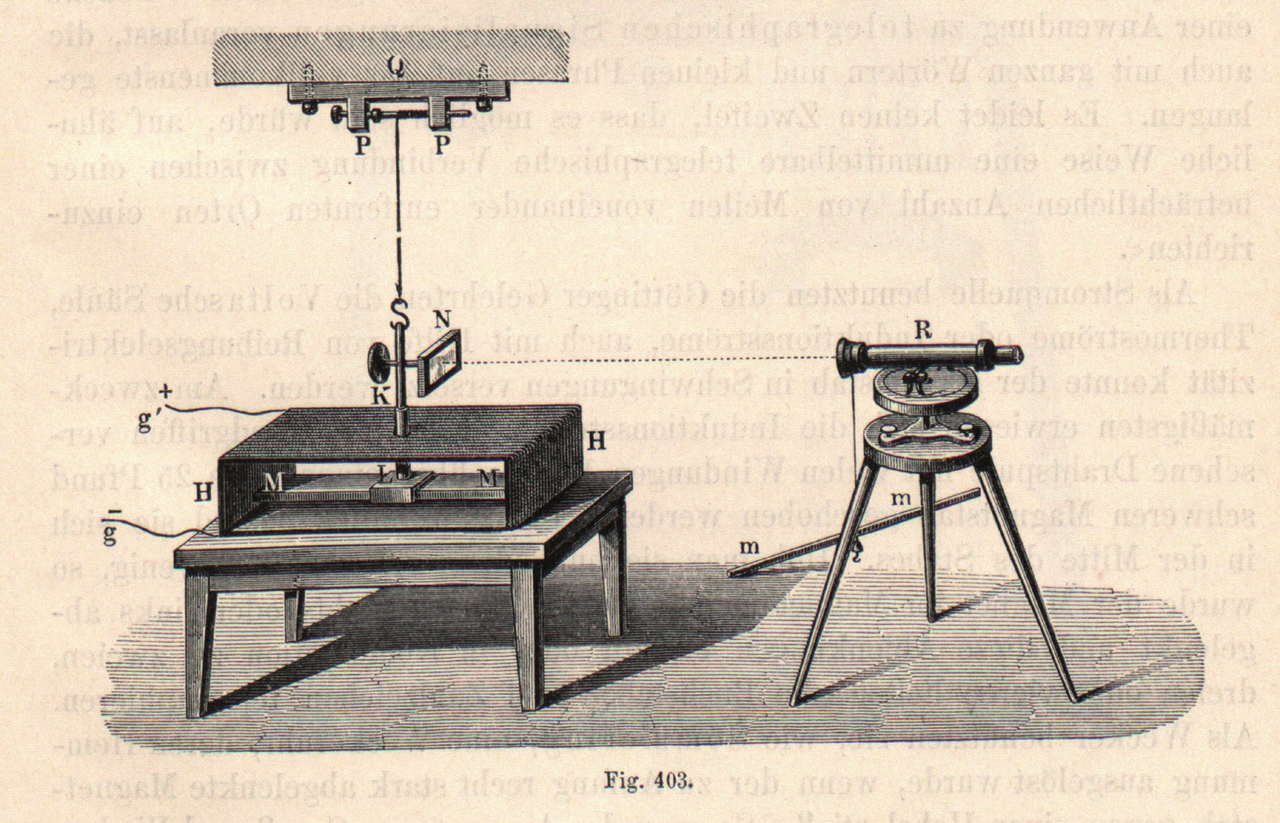
Gauss showed exceptional promise from youth and was supported to pursue advanced studies. He spent most of his career at university observatories and institutions where he combined rigorous theory with careful measurement. His style balanced elegant proofs with attention to empirical problems, such as surveying the Earth and improving instruments for measuring magnetic fields. He collaborated with contemporaries on practical electrical and geophysical projects late in life.
Beyond individual theorems, Gauss shaped how mathematics is practiced: he systematized methods, provided clear expositions, and left a rich correspondence that circulated ideas widely across Europe. Many mathematical terms, procedures, and results—ranging from Gaussian elimination to the Gaussian curvature—carry his name, reflecting the wide adoption of his methods.
Gauss's legacy endures in textbooks, scientific practice, and the names attached to fundamental objects and techniques. His work remains a central reference point for students and researchers in mathematics, physics, and engineering, and his blend of theoretical depth with applied concern exemplifies a model of scientific scholarship.
Questions and answers
Q: Who was Carl Friedrich Gauss?
A: Carl Friedrich Gauss was a famous mathematician from Göttingen, Germany.
Q: When was he born and when did he die?
A: He was born on April 30th 1777 and died on February 23rd 1855.
Q: What areas of learning did Gauss contribute to?
A: He contributed to many areas of learning, most notably number theory and astronomy.
Q: How is his name pronounced?
A: His name is pronounced "Carl Friedrich Gauß".
Q: Where did he live?
A: He lived in Göttingen, Germany.
Q: What type of work did Gauss specialize in?
A: He specialized in number theory and astronomy.
Q: Is there any other information about him that is widely known?
A: Not much else is widely known about him besides his contributions to mathematics and astronomy.
Related articles
Author
AlegsaOnline.com Carl Friedrich Gauss: Life, Work, and Legacy (1777–1855) Leandro Alegsa
URL: https://en.alegsaonline.com/art/17002