
Carisbrooke Castle (Isle of Wight)
Medieval shell keep and multi-period fortress on the Isle of Wight with Roman origins, Tudor artillery works, Charles I imprisonment and later royal connections; now a preserved historic site and museum.
Overview
Carisbrooke Castle stands near the centre of the Isle of Wight as the island's most complete medieval fortress. The site has a long strategic history, with occupation in Roman times and major redevelopment after the Norman Conquest. The surviving complex presents a compact stone shell keep, later curtain walls and artillery-era bastions, and a substantial gatehouse with round towers.
Image gallery
9 Images





Architecture and principal elements
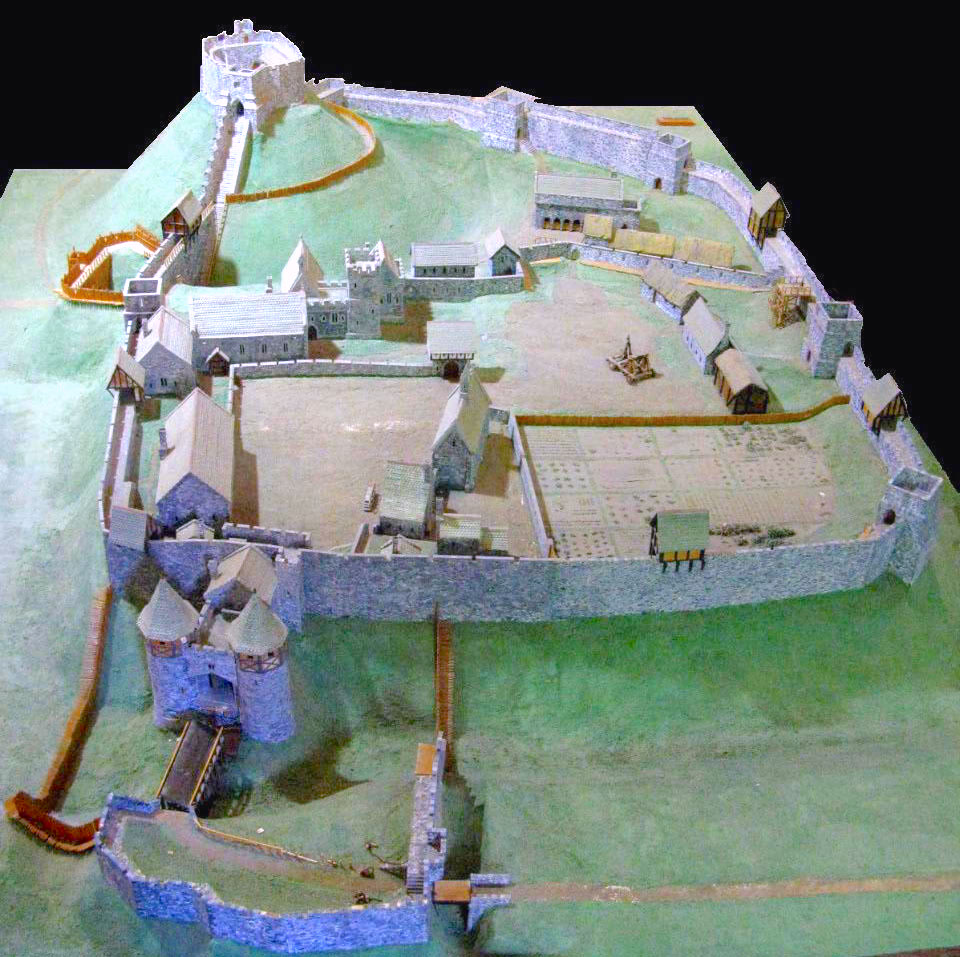
The principal feature is the circular or oval stone shell keep, a form that replaced earlier timber defences on the motte and provided a continuous fighting wall rather than a single tall tower. Surrounding the keep are curtain walls and earthen bastions that were heightened and remodelled as artillery became decisive in warfare. The gatehouse, flanked by drum towers from the later medieval period, provided the principal defended entrance. Much of the castle's domestic range has not survived above ground, but foundations and excavated remains show where halls, service rooms and storerooms once stood.
History and development
The first substantial earthworks on the site date from the decades after the Norman Conquest, when a motte-and-bailey layout was established. A stone shell keep followed in the 12th century, replacing timber defences and consolidating the castle's position. Over the later Middle Ages and into the early modern era the castle was repeatedly altered to meet evolving military needs. In the 14th and 15th centuries the gatehouse was rebuilt with drum towers; in Tudor times outer lines of defence were added and the curtain walls adapted to resist gunpowder artillery.
Notable events
- Archaeological evidence links the site to Roman use and long-standing strategic occupation (Roman).
- In 1377 raiding forces landed on the Isle of Wight, though Carisbrooke itself was not captured; the event emphasised the need for improved coastal and inland defences (1377 landings).
- During the late 16th century, under the threat posed by Spain, the castle's outer works were strengthened to cope with cannon and other gunpowder weapons; this period sits alongside England's defence against the Spanish Armada and wider Spanish maritime power (Spanish, artillery).
- In 1647 King Charles I was held at Carisbrooke during the English Civil War; a popular story records an attempt to escape in which he became briefly trapped in the castle's bars.
Royal connections and later use
After the Civil War the fortress continued to have an official role as the occasional residence of the island's governor. In the late 19th and early 20th centuries the castle became associated with Princess Beatrice, the youngest daughter of Queen Victoria, who lived at Carisbrooke during her time as governor. These royal and official links contributed to the conservation and public interest that preserved the site into the modern era.
Archaeology, conservation and interpretation
Excavations and careful conservation work have revealed Roman remains, Norman foundations and later structural phases; these layers make Carisbrooke a useful case study in the long life of a fortified site. Conservation efforts have focused on stabilising masonry, preserving earthworks and presenting the sequence of development to the public while respecting the site's fabric.
Visitor experience
Today the castle is managed as a heritage attraction with museum displays, interpreted rooms and public access around the ramparts. Visitors can examine the shell keep, climb sections of the curtain wall, inspect the gatehouse and explore the surrounding grounds. Practical information on opening times, events and guided tours is provided by local visitor services and heritage bodies (Isle of Wight, castle information).
Significance
Carisbrooke Castle illustrates how a single site was adapted across many centuries — from Roman use through Norman consolidation, medieval rebuilding, Tudor artillery modification and later preservation. Its compact ensemble of keep, gatehouse and bastions offers a clear demonstration of changing military architecture and the continuing role of fortified places in local governance and royal life (medieval castle, Princess Beatrice).
Questions and answers
Q: What is Carisbrooke Castle?
A: Carisbrooke Castle is the only remaining medieval castle on the Isle of Wight.
Q: When were the castle earthworks begun?
A: The castle earthworks were begun in 1070.
Q: What is the shell keep?
A: The shell keep is a type of castle design in which an inner wall is built within the existing walls.
Q: When was the gatehouse with its drum towers built?
A: The gatehouse with its drum towers was built in the 14th and 15th centuries.
Q: What threat was avoided during Elizabethan times?
A: The threat of a Spanish invasion was avoided when the Spanish Armada was turned away at a nearby battle.
Q: Who was held prisoner at the castle in 1647?
A: Charles I was held as a prisoner at the castle in 1647.
Q: Who made the castle their home?
A: Princess Beatrice, youngest daughter of Queen Victoria, made the castle her home when she was governor of the Isle of Wight.
Related articles
Author
AlegsaOnline.com Carisbrooke Castle (Isle of Wight) Leandro Alegsa
URL: https://en.alegsaonline.com/art/16989