
Care Bears
Care Bears is a media and toy franchise created in the early 1980s around colourful teddy-bear characters with distinctive belly symbols that represent emotions, virtues and caring behaviour.
Overview
The Care Bears are a family of brightly coloured, anthropomorphic teddy-bear characters created as a commercial and media property in the early 1980s. Originally developed for greeting cards and related stationery, the concept was licensed into a wide range of products including plush toys, books, television programmes and feature films. The characters are recognised by unique names and a belly badge or emblem that symbolises a particular emotion, role or caring quality. The franchise has been managed and licensed in various forms over decades and remains a frequent example of 1980s character merchandising and later revival efforts. For corporate and licensing context see franchise history.
Image gallery
3 Images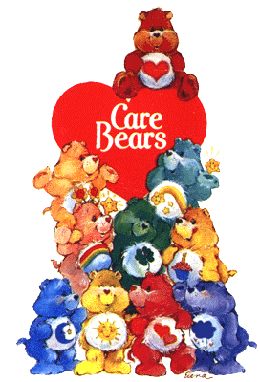


Creation and design
The idea began with illustrated characters used on greeting cards in the early 1980s and was developed by a team at a greeting-card publisher with artwork contributed by artists such as Elena Kucharik and others. The bears were designed to be visually simple and appealing to children: rounded shapes, expressive faces and a prominent belly badge. The badges—symbols like hearts, suns, rainbows and stars—serve as a shorthand for each character’s theme. Early promotional material and licensing notes document the greeting-card origins; see general background at original releases.
Characters and themes
Each Care Bear has a distinct name and personality trait, often framed as a caring role: for example, Cheer Bear, Tenderheart Bear and Funshine Bear, the latter commonly shown with a sun emblem and associated with cheerfulness and helping others wake up. The cast expanded beyond the core bears to include the Care Bear Cousins—other animal-shaped characters—and occasional supporting figures. Character lists and emblem descriptions are commonly collected in fan guides and reference materials; selected profiles appear at character guides and emblem overviews at badge symbolism. Individual bear profiles are discussed in dedicated entries such as single-character pages.
Media and films
The popularity of the toys and cards led to animated specials, a television series and theatrical feature films in the mid-1980s that brought the characters to a wider young audience. Notable theatrical titles from that era include several feature films that were distributed internationally and helped establish the brand on screen; see film lists and credits at film catalogues. Television production involved different companies at different times: early episodes and specials were associated with producers such as DIC and later Nelvana; production and broadcast information is summarised at television listings and studio histories at studio records. Additional animated specials and made-for-TV features are catalogued at animated specials.
Toys, merchandise and commercial reach
Plush bears, playsets, figurines and printed materials formed the core merchandise. In the mid-1980s the franchise sold many millions of toys worldwide during its initial wave of popularity. Licensing deals covered stationery, apparel and seasonal items aimed at children and gift buyers. Over time product lines were reissued in anniversary runs and collector editions; summaries of product lines and licensing arrangements are available at licensing summaries and product histories at merchandise records. For collectors and nostalgic shoppers, retrospectives and market entries are often referenced at merchandise and game tie-ins.
Revivals and modern adaptations
The franchise has been periodically revived for new generations. In the twenty-first century there have been new animated releases and direct-to-video/DVD titles, including computer-animated productions aimed at preschool audiences; distribution notes and home-video releases can be found at DVD release listings and discussions of CGI adaptations at CGI adaptations. Modern reboots and merchandising strategies are described in contemporary summaries and reboot notes at reboot coverage. Interactive and digital tie-ins such as licensed video games and apps have also appeared as part of the brand’s extended presence; see interactive media and product indexes.
Audience, themes and legacy
The Care Bears have been positioned primarily for young children, emphasising social and emotional lessons such as sharing, friendship, empathy and kindness. Their visual simplicity and clear, positive messages make them suitable for early childhood entertainment and as tools for discussing feelings with young children. The franchise is often cited as a model for successful character licensing and cross-media adaptation: starting from printed greeting cards, it expanded into toys, television and film while maintaining a recognisable visual identity. For further reading and archival material consult curated references and historical overviews at character examples and general reference pages at reference entries.
Note: This article summarises the origins, design, media history and cultural role of the Care Bears franchise. For more detailed episode lists, production credits and complete product catalogues consult specialist reference works and archival databases maintained by collectors and entertainment historians.
Questions and answers
Q: What is the Care Bears franchise?
A: The Care Bears are a very successful toy franchise from the 1980s. They are stuffed teddy bears with a variety of colors, each with its own name, job, and symbol.
Q: Who created the original artwork for the toys?
A: The original artwork for the toys was done by James Lewis in 1981.
Q: What other toys were introduced alongside the Care Bears?
A: Alongside the Care Bears, other toys called the Care Bear Cousins were also introduced.
Q: How many movies have been made featuring the Care Bears?
A: Three animated movies for cinema were released in mid-1980s as well as two DVD movies (both computer-animated) and a few video games.
Q: When did they bring back these toys again?
A: The Care Bear toys were brought back in a new edition for the twenty-first century.
Q: What kind of media has featured them since their comeback? A: Since their comeback, they have appeared in their first two DVD movies (both computer-animated), as well as a few video games.
Related articles
Author
AlegsaOnline.com Care Bears Leandro Alegsa
URL: https://en.alegsaonline.com/art/16955