
Carbon nanotube
Hollow cylindrical molecules of carbon with exceptional strength, electrical and thermal properties; used in composites, electronics, sensors and advanced materials research.
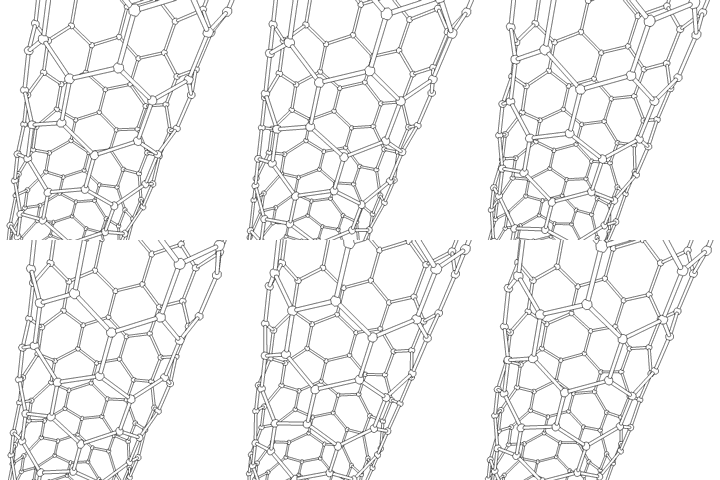
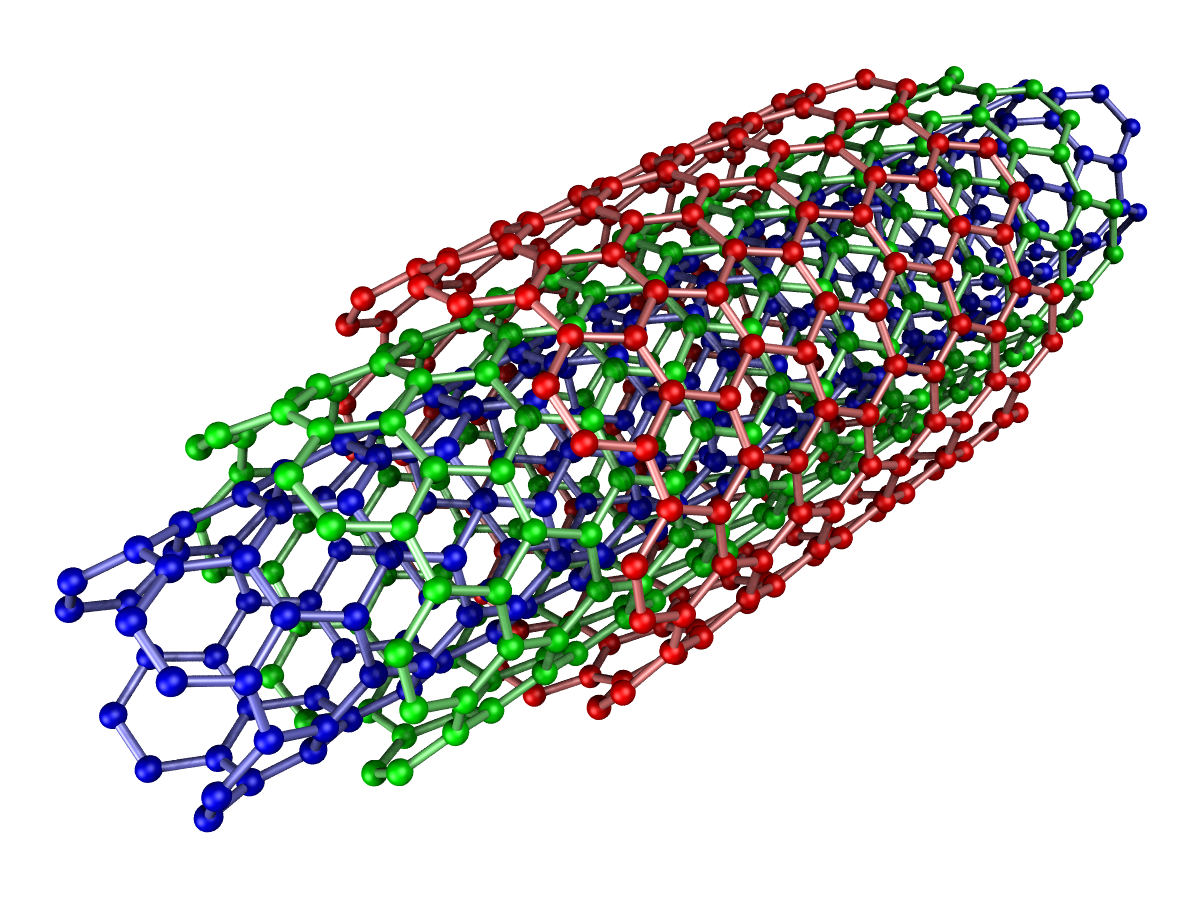
A carbon nanotube is a cylindrical form of carbon composed of rolled graphene sheets and classified as an allotrope of carbon. Its atoms form a hexagonal lattice around a hollow core, producing a long, thin structure with an extremely high length-to-diameter ratio. Nanotubes combine low mass with remarkable mechanical stiffness and toughness, and their electronic character ranges from metallic to semiconducting depending on how the graphene sheet is rolled.
Image gallery
10 Images




Structure and key properties
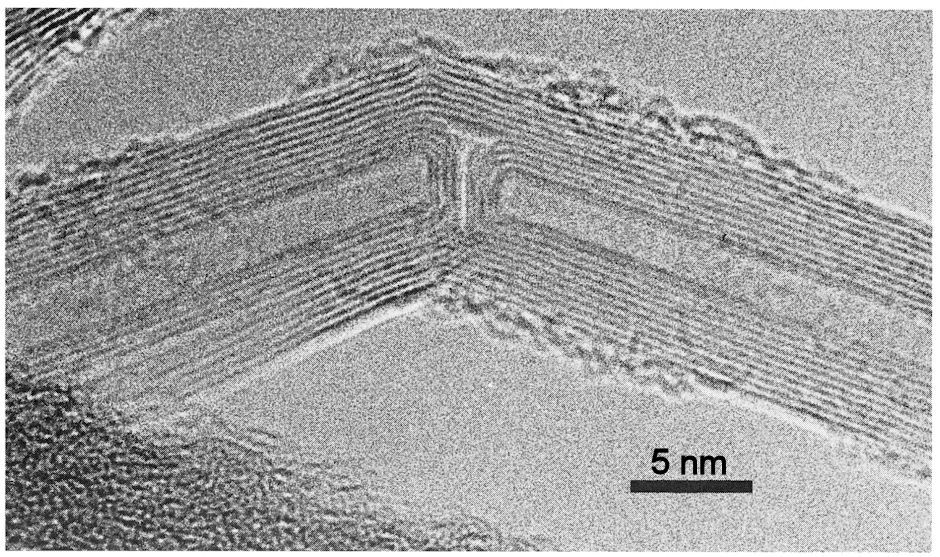
Carbon nanotubes come mainly in two morphological classes: single-walled nanotubes (SWNTs), consisting of a single graphene cylinder, and multi-walled nanotubes (MWNTs), formed by several concentric cylinders. Important attributes include very high tensile strength, large specific surface area, high thermal conductivity and unusual electrical behavior. Some carbon nanotubes exhibit exceptional electrical conductivity, and in laboratory comparisons have been noted to outperform common conductors such as copper and silver under certain conditions. Electronic and optical properties depend sensitively on tube diameter and chirality (the angle of the graphene roll).
History and production
Carbon nanotubes were first observed in the early 1990s and spurred intensive research because of their novel properties. Typical synthesis techniques include arc-discharge, laser ablation and chemical vapor deposition (CVD). Each method produces material with different yields, purity and structural control; post-synthesis steps often separate and purify tubes and sort them by type for specific applications.
Applications and examples
Because of their mix of strength, lightness and electronic variability, carbon nanotubes are explored in many fields. Common and proposed uses include:
- Reinforcement in polymer, metal and ceramic composites for lighter, stronger components.
- Nanoscale electronic devices, interconnects and transistors that exploit semiconducting or metallic tubes.
- Sensors and field-emission devices that use the high surface area and sharp tips of tubes.
- Energy devices such as electrode materials for batteries and supercapacitors.
Other ideas, from ballistic-resistant materials to futuristic proposals like tethers for space structures, illustrate the broad interest but also the speculative nature of some uses.
Challenges and outlook
Practical limits remain: making large quantities with consistent, defect-free structure and integrating nanotubes into macroscopic materials are active technical hurdles. Health, environmental and manufacturing-cost concerns also affect deployment. Research continues on scalable synthesis, controlled placement, chemical functionalization and safer handling. Overall, carbon nanotubes remain a focal point in nanomaterials science for their distinctive combination of mechanical, thermal and electronic properties.
Questions and answers
Q: What is a carbon nanotube?
A: A carbon nanotube is an allotrope of carbon that is shaped like a tube of carbon atoms.
Q: How durable and strong are carbon nanotubes?
A: Carbon nanotubes are very tough and hard to break, but still relatively light.
Q: What are some potential uses for carbon nanotubes?
A: Carbon nanotubes may one day be used for bulletproof armour and other uses needing hard, lightweight materials.
Q: Do carbon nanotubes conduct electricity?
A: Yes, a few carbon nanotubes also let electricity through them.
Q: How does the electrical conductivity of carbon nanotubes compare to metals like copper and silver?
A: Some carbon nanotubes may be up to 1,000 times better at conducting electricity than metals like copper and silver.
Q: Are all carbon nanotubes the same length?
A: No, some carbon nanotubes are very long.
Q: What makes carbon nanotubes particularly useful for certain applications?
A: The high strength and lightweight nature of carbon nanotubes make them particularly useful for certain applications.
Related articles
Author
AlegsaOnline.com Carbon nanotube Leandro Alegsa
URL: https://en.alegsaonline.com/art/16886