
Capuchin monkey
Capuchin monkeys are intelligent New World primates from Central and South America, known for their dexterous tails, social groups, varied diet, and notable tool use; taxonomy divides them into gracile and robust genera.
Overview
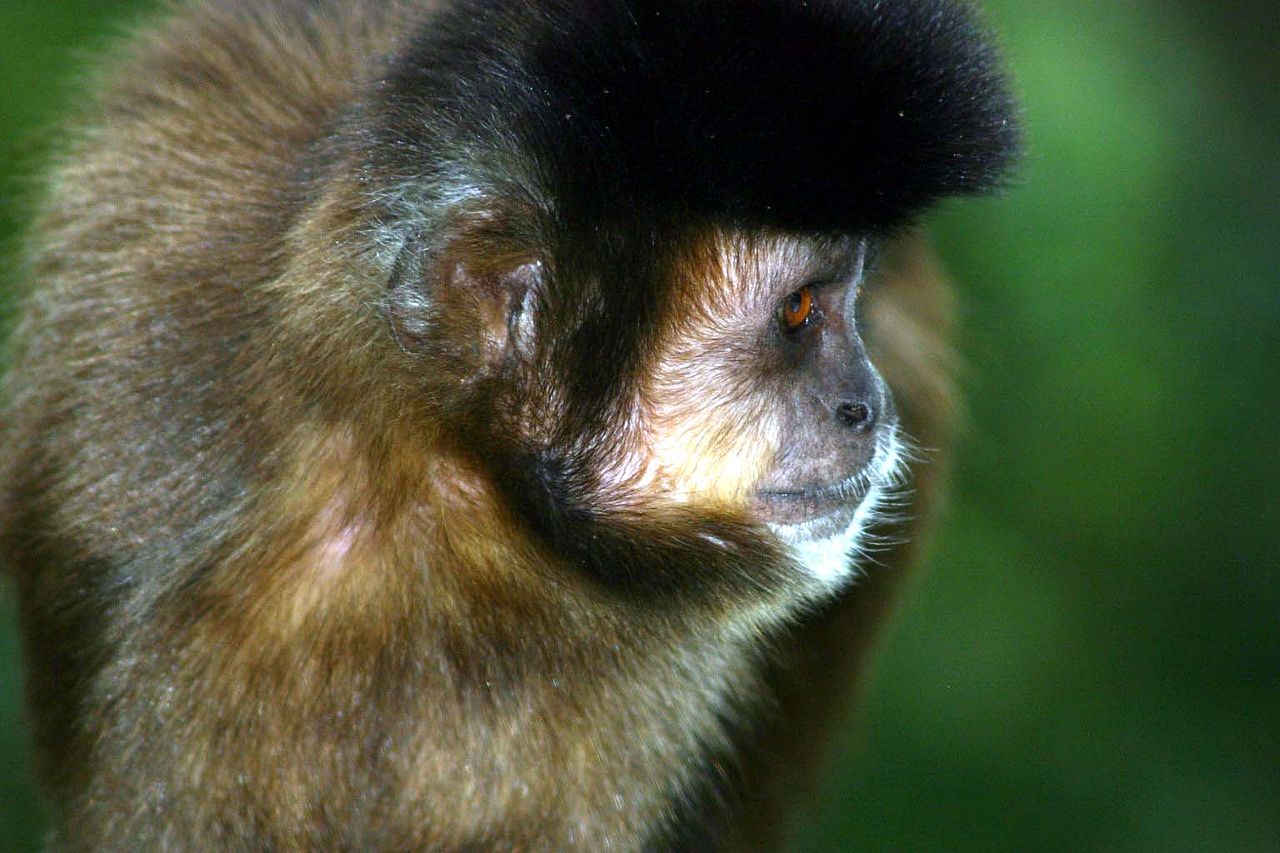
Capuchin monkeys are a group of small to medium-sized New World primates belonging to the subfamily Cebinae. Native to tropical and subtropical forests of Central America and South America, they are diurnal and largely arboreal, moving actively through the canopy. The common English name “capuchin” refers to the hood-like coloration some species show, reminiscent of the cowls worn by Capuchin friars.
Image gallery
9 Images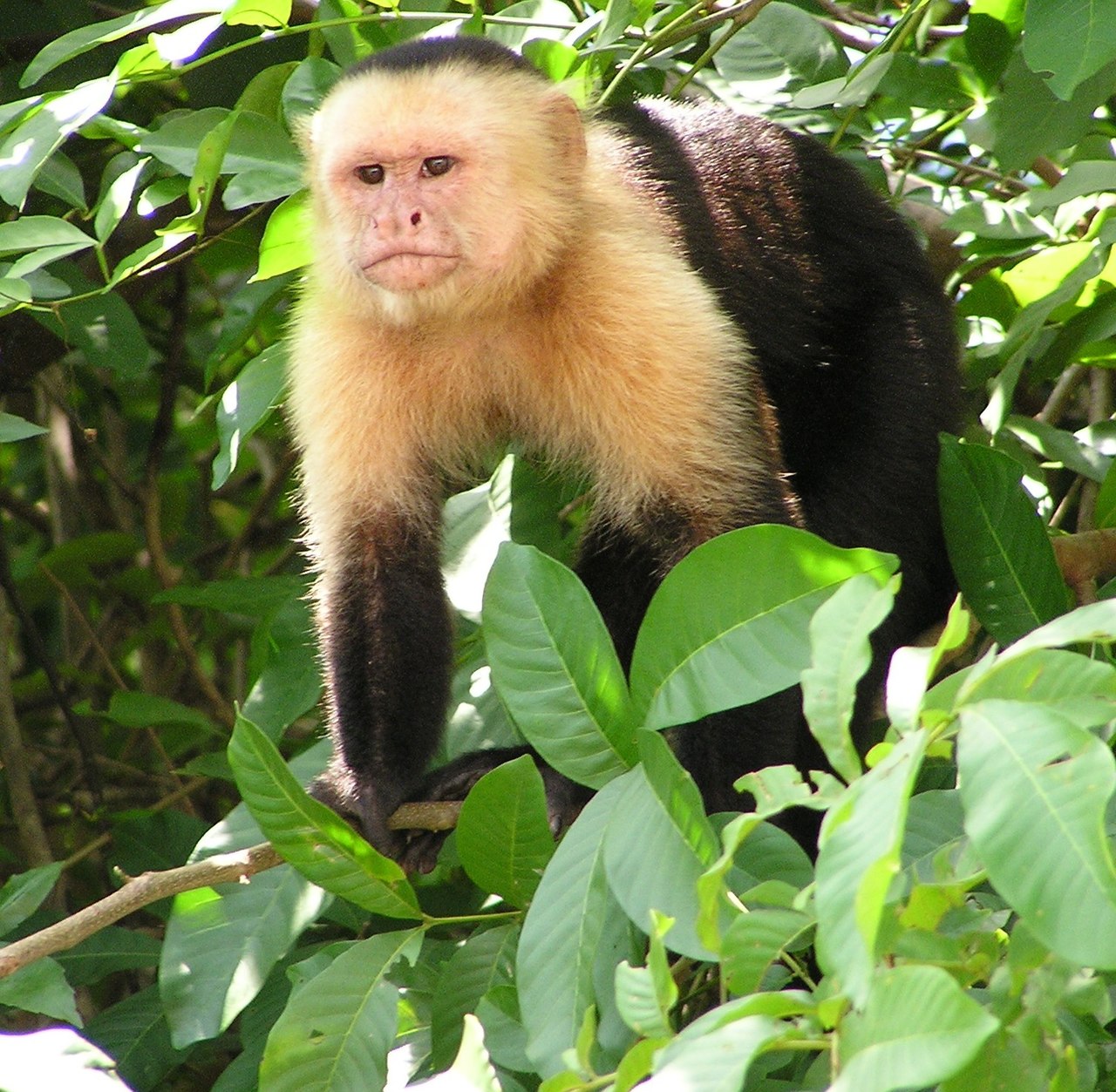


Taxonomy and development
The group is conventionally split into two genera: the gracile capuchins (traditionally Cebus) and the more robust capuchins (Sapajus). This division reflects differences in skull form, body build, and behaviour observed by researchers. Taxonomy has been revised several times as genetic and morphological studies have clarified relationships, and some species limits remain under discussion among primatologists.
Characteristics
- Body and tail: Capuchins are agile, with long limbs and a prehensile tail used for balance and grasping branches.
- Size and appearance: They show varied fur patterns and facial markings; coloration ranges from light to dark depending on species.
- Social structure: They typically live in multimale–multifemale groups with complex social interactions, grooming, and cooperative behaviours.
- Intelligence: Capuchins are noted for problem-solving skills, manual dexterity, and learning capacity.
Behaviour, diet and tool use
Capuchins are omnivorous: their diet includes fruit, insects, small vertebrates, eggs, and plant material. Foraging strategies are flexible; some populations show specialized extractive techniques. Notably, wild robust capuchins have been observed using stones and other objects as tools to crack nuts or access food — a behaviour that highlights their cognitive abilities and capacity to learn and transmit techniques socially.
Human interactions and conservation
Capuchins have been used in research, featured in media, and sometimes kept as pets or trained as assistance animals, which raises welfare and legal concerns. Conservation status varies by species: habitat loss, hunting and capture for the pet trade threaten several populations. Monitoring and habitat protection are important to maintain healthy wild populations.
Notable distinctions
The principal distinction within the group is between the gracile and robust forms, which differ in skull morphology, strength and some behavioural tendencies. For broader context about New World primates, see New World monkeys. Capuchins illustrate how adaptability, social learning and ecological opportunity shape primate behaviour across diverse Neotropical environments.
Questions and answers
Q: What are Capuchin monkeys?
A: Capuchin monkeys are a subfamily of New World monkeys, specifically the Cebinae.
Q: Where are Capuchin monkeys native to?
A: Capuchin monkeys are native to Central and South America.
Q: How many genera of Capuchin monkeys are there?
A: There are only two genera of Capuchin monkeys: Cebus and Sepajus.
Q: What distinguishes the two genera of Capuchin monkeys?
A: The gracile Capuchins belong to the Cebus genus, while the robust Capuchins are in the Sepajus genus.
Q: What is the activity pattern of Capuchin monkeys?
A: Capuchin monkeys are active during the day.
Q: What is the preferred mode of travel for Capuchin monkeys?
A: Capuchin monkeys generally live and travel through trees.
Q: What is the distinguishing physical feature of robust Capuchin monkeys?
A: Robust Capuchin monkeys have a more muscular build compared to their gracile counterparts.
Related articles
Author
AlegsaOnline.com Capuchin monkey Leandro Alegsa
URL: https://en.alegsaonline.com/art/16825
Sources
- worldcat.org : 55875701
- monkeyjungle.com : "Black-faced Capuchin"
- spie.org : "Saving the monkeys"
- doi.org : 10.1525/aa.2000.102.4.741
- doi.org : 10.1023/A:1026489826714
- springerlink.com : "Understanding of the relationship between seeing and knowing by tufted capuchin monkeys (Cebus apella)"
- doi.org : 10.1007/s10071-001-0123-6
- worldcat.org : 1435-9448
- pubmed.ncbi.nlm.nih.gov : 11957401
- aarp.org : "Capuchin Monkeys, Spinal Cord Injuries, Volunteering, Trained Monkeys"
- animalcorner.co.uk : "Capuchin Monkeys at Animal Corner"