
Capital punishment in the United States
An overview of the history, legal framework, methods, and contemporary debates surrounding the death penalty in the United States, including state, federal, and military practices.
Overview
Capital punishment in the United States is the legal imposition of the death penalty for certain crimes. It exists at multiple jurisdictional levels—state, federal and military—and has evolved through colonial practice, constitutional litigation, and changing public policy. Debate about its morality, effectiveness, and fairness remains a prominent feature of American criminal justice discourse.
Image gallery
10 Images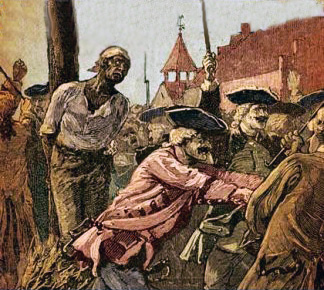


Historical development
Executions occurred in North America before the nation was founded and continued under state and territorial law after independence. The practice has been shaped by landmark Supreme Court decisions, shifts in methods, and periods of moratorium and reinstatement. For background on those early origins see early colonial era accounts that trace how English and local norms influenced law and punishment.
Legal framework and current practice
The death penalty is authorized under both state and federal statutes. As of 2021, capital punishment remained legal in a number of states while others have abolished it or imposed moratoria. The federal government and the U.S. military retain statutes permitting execution for specified crimes. Key features include:
- Eligibility: Typically reserved for aggravated murder or other capital offenses under federal or military law, such as treason, espionage, or certain wartime crimes.
- Sentencing: Many systems require a separate sentencing phase and the finding of aggravating factors before a sentence of death can be imposed.
- Appeals and review: Capital cases proceed through extensive direct appeals and collateral review, which can delay or prevent execution for many years.
Methods of execution
Lethal injection has been the primary method used in recent decades, though statutes in some jurisdictions still authorize alternatives such as electrocution, gas inhalation, hanging, or firing squad under specified conditions. Availability of drugs, legal challenges, and evolving standards of decency have affected which methods are used.
Contemporary trends and controversies
Public opinion, legal rulings, and practical issues have driven important changes: several states have abolished the death penalty, others maintain active execution schedules, and some have set moratoria pending review. Criticisms focus on wrongful convictions, racial and economic disparities, the constitutionality of certain applications, and whether capital punishment deters serious crime.
Distinctive features and international context
The United States occupies a unique place among democracies: it remains one of the few wealthy democracies that continues to carry out executions. Observers often contrast U.S. practice with trends elsewhere; for a comparative perspective see discussions of Western countries and abolition movements. Ongoing legal challenges and policy reforms mean the role of capital punishment continues to evolve.
Conclusion
Capital punishment in the United States is complex and contested. Its use varies by jurisdiction, is shaped by legal precedent and policy choices, and prompts enduring ethical and legal questions. Any account of the subject must consider historical roots, statutory frameworks, procedural safeguards, and the broad public debate surrounding justice and punishment.
Questions and answers
Q: What is capital punishment?
A: Capital punishment is the legal practice of sentencing someone to death for a crime they have committed.
Q: When did capital punishment first exist in the United States?
A: Capital punishment has existed in the United States before it became a country.
Q: How many states currently allow capital punishment?
A: As of 2021, capital punishment is legal in 27 out of 50 states.
Q: Does the federal government and military use capital punishment?
A: Yes, both the federal government and United States military have capital punishment.
Q: Is the United States the only Western country that has capital punishment?
A: Yes, the United States is the only Western country that has capital punishment.
Q: Are there any other countries besides those in the West that have capital punishment?
A: Yes, there are many other countries outside of those in the West that still have some form of capital punishment.
Related articles
Author
AlegsaOnline.com Capital punishment in the United States Leandro Alegsa
URL: https://en.alegsaonline.com/art/16765
Sources
- ncsl.org : "States and Capital Punishment"
- pbs.org : Society’s Final Solution: A History and Discussion of the Death Penalty (online version)
- history.org : "Articles, Laws and Orders, Divine, Politic, and Martial for the Colony in Virginia"
- history.org : "Upon Paine of Death: The Lawes Divine, Morall and Martiall (online version)"
- britannica.com : "Salem Witch Trials"
- americanheritage.com : "1780: 225 Years Ago – Benedict's Betrayal"
- archives.gov : "Timeline of Events Leading to the Brown v. Board of Education Decision, 1954"
- archives.gov : "Constitution of the United States: Amendments 11-27"
- deathpenalty.procon.org : "31 States with the Death Penalty and 19 States with Death Penalty Bans"
- supreme.justia.com : 238
- supreme.justia.com : 153
- supreme.justia.com : 304
- supreme.justia.com : 551
- icpsr.umich.edu : "Executions in the United States, 1608-2002: The ESPY File (ICPSR 8451)"