
Canton of Capellen
Capellen is a canton in the Grand Duchy of Luxembourg. Located west of Luxembourg City, it combines suburban towns and rural areas and serves as a local administrative and transport hub.
The Canton of Capellen is an administrative subdivision in the Grand Duchy of Luxembourg. Its administrative centre is the small town called Capellen. The canton occupies territory to the west of Luxembourg City and includes a mix of commuter towns, light industry and agricultural land. It is commonly referenced as one of the country’s cantons and appears on national maps and statistics as a distinct unit of local government (canton).
Image gallery
1 Image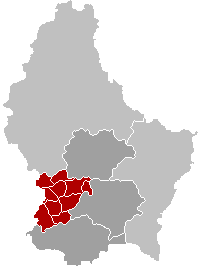
Geography and landscape
Topographically the area blends low hills, cultivated fields and built-up suburbs. Because of its location near the capital, parts of the canton have become suburbanised while other parts retain open countryside and small villages. The canton’s position on national maps can be given in standard coordinates (49°38′N 6°0′E). Local zones vary from residential neighbourhoods to business parks and rural tracts.
Administration and local government
The canton is an intermediate tier of administration: it groups a number of communes, each with its own municipal council and mayor, and serves as a reference for some public services and statistical reporting. Typical canton-level roles include coordination of intercommunal matters, electoral organization, and acting as a territorial reference for state agencies.
History and development
The modern canton system in Luxembourg dates from reforms that rationalised territorial administration. Over time the Canton of Capellen has evolved from predominantly rural parishes into a more diversified area as transport links and economic ties with Luxembourg City strengthened. Suburban growth, mixed-use development and occasional municipal reorganisation have shaped its recent history.
Economy, transport and significance
Economic activity in the canton ranges from small and medium-sized enterprises to services for commuters working in the capital. Road and public-transport connections link the canton with Luxembourg City and neighbouring areas, supporting daily commuting and regional trade. The canton’s balance of built and open spaces makes it relevant both for housing demand and local agriculture.
In the local language the name appears as Capellen, and the canton is often cited in national contexts such as planning, statistics and regional guides. For an official administrative overview see the canton entry and related resources (canton, country information).
Questions and answers
Q: What are the coordinates of Capellen?
A: The coordinates of Capellen are 49°38′N 6°0′E / 49.633°N 6.000°E / 49.633; 6.000.
Q: What is the capital of Canton Capellen?
A: The capital of Canton Capellen is also called Capellen.
Q: Where is Canton Capellen located?
A: Canton Capellen is located in Luxembourg.
Q: What language do people speak in Luxembourg?
A: People in Luxembourg speak Luxembourgian, which is a Germanic language similar to German and Dutch.
Q: How many cantons are there in Luxembourg?
A: There are 12 cantons in Luxembourg, including Canton Capellen.
Q: What type of government does Luxembourg have?
A: Luxembourg has a parliamentary representative democratic constitutional monarchy as its form of government.
Q: Who is the head of state for Luxembourg? A: Grand Duke Henri is the current head of state for Luxembourg since 2000
Related articles
Author
AlegsaOnline.com Canton of Capellen Leandro Alegsa
URL: https://en.alegsaonline.com/art/16739
Sources
- commons.wikimedia.org : Canton of Capellen
- statistiques.public.lu : "Surface area of the cantons and municipalities"
- statistiques.public.lu : "Population by canton and municipality 1821 - 2017"
- legilux.public.lu : "Mémorial A, 2011, No. 110"