
Cannon Street station
Central London railway terminus and Underground station in the City of London, built on the medieval Steelyard site; serves commuter routes into the financial district and connects with District and Circle lines.
Overview
Cannon Street station is a central London railway terminus and integrated London Underground stop located in the City of London, the capital's financial district. The complex brings together mainline commuter services and a Tube interchange, and lies within Travelcard Zone 1. Its riverside position on the north bank of the Thames makes it a principal gateway for office workers and visitors to the Square Mile.
Image gallery
10 Images
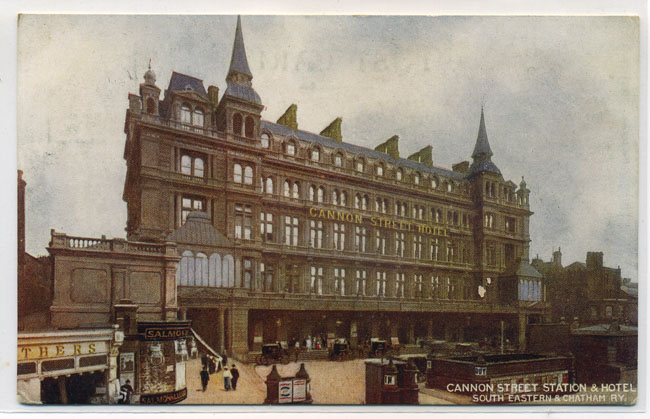


History and site
The station occupies the historic site of the medieval Steelyard, the former trading base of the Hanseatic League in London. The current transport complex dates from the period of Victorian railway expansion and was developed to serve the growing commuter traffic into the City. Over successive decades the terminus has been modified and refurbished to respond to changing patterns of travel, wartime damage and post-war rebuilding, and later commercial redevelopment above parts of the rail infrastructure.
Layout and services
The mainline section is a terminus for commuter and suburban trains arriving from destinations to the south and south‑east of London. Services are timed to concentrate weekday peak flows into the business district. The Underground element provides platforms on the District and Circle lines, offering direct Tube connections across central London and beyond. Passenger facilities emphasise quick interchange, ticketing provision and links to surface transport; some step‑free access improvements have been made in recent years to aid mobility.
- Surface services: frequent commuter trains into the City from suburban and regional routes; practical for short- and medium-distance travel.
- Underground services: Circle and District line trains with convenient interchange to central Tube routes and onward journeys.
- Connections: close pedestrian approaches to neighbouring business districts, river crossings and local bus services.
Urban role and significance
Cannon Street functions primarily as a commuter terminus, concentrating peak passenger flows for office workers in the financial district. Transport planners regard it as an important urban node that must balance the needs of high-volume daily travel with the conservation of historically significant fabric around the Steelyard site. Local civic authorities in the City of London work with transport operators on access, signage and station-area development.
Practical information
For timetables, service updates and facility details passengers are directed to official operator pages and station information portals; the London Underground information service and mainline operator pages provide current travel advice and help for planning journeys (London Underground, station information). Heritage notes and historical guides about the site's medieval trading past are available through civic and museum resources (Hanseatic history, Steelyard), while zoning and ticketing explanations can be consulted via Zone guidance pages (Zone 1).
Questions and answers
Q: Where is Cannon Street station located?
A: Cannon Street station is located in the City of London, which is the financial district of London.
Q: What type of station is Cannon Street?
A: Cannon Street station is a railway terminus and London Underground station complex.
Q: What was the medieval Steelyard?
A: The medieval Steelyard was the trading base in England of the Hanseatic League.
Q: Is Cannon Street station located in Travelcard Zone 1?
A: Yes, Cannon Street station is located in Travelcard Zone 1.
Q: What is Travelcard Zone 1?
A: Travelcard Zone 1 is the central zone of London's public transportation network.
Q: What is the significance of Cannon Street station being located in the financial district of London?
A: The financial district of London is a major business hub, so Cannon Street station is an important transportation hub for commuters and visitors connecting to this area.
Q: What is the benefit of Cannon Street station being both a railway terminus and a London Underground station complex?
A: The benefit of Cannon Street station being both a railway terminus and a London Underground station complex is that it provides multiple transportation options for commuters and visitors traveling within and outside of London.
Related articles
Author
AlegsaOnline.com Cannon Street station Leandro Alegsa
URL: https://en.alegsaonline.com/art/16585
Sources
- networkrail.co.uk : "Stations run by Network Rail"
- nationalrail.co.uk : "Station Codes"