
Canigou (Canigó): landmark mountain of the eastern Pyrenees
Canigou (Catalan: Canigó) is a prominent 2,784 m peak in the eastern Pyrenees, in France’s Pyrénées-Orientales. A cultural symbol of Catalonia, it is popular for hiking, nature and seasonal festivals.
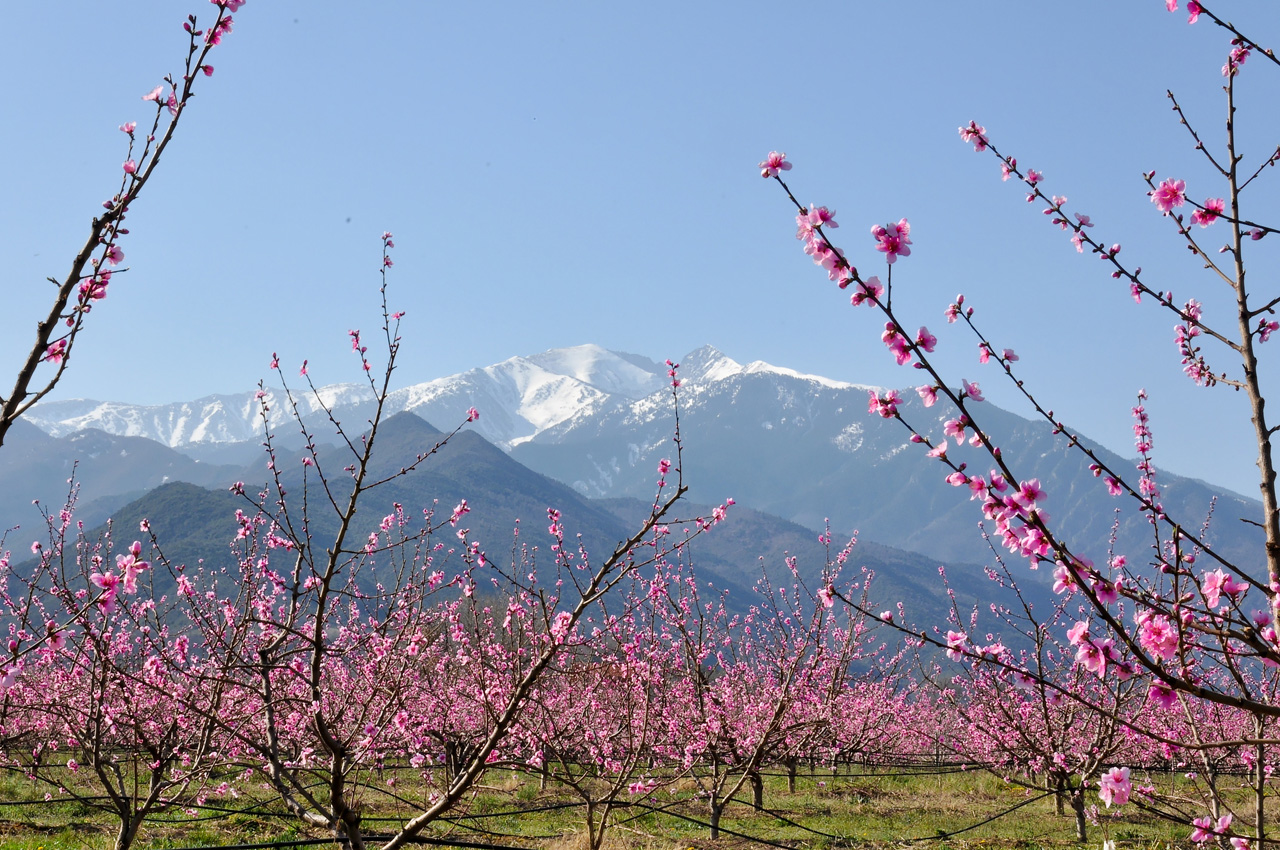
The Canigou (Catalan: Canigó), also known in French as Pic du Canigou, is a striking peak that rises to about 2,784 metres above sea level. It sits on the Massif du Canigou within the chain of mountains forming the eastern Pyrenees. Geographically the massif is located in the administrative department of Pyrénées-Orientales in southern France, projecting close to the Mediterranean Sea and the nearby coastal plain.
Image gallery
10 Images




Physical characteristics
Although modest in absolute height compared with central Pyrenean giants, Canigou is notable for its abrupt relief and visual dominance over the surrounding landscape. The summit sits on a largely granitic massif with steep ridges and rocky faces; lower slopes show a transition from Mediterranean woodlands toward subalpine vegetation. Snow commonly covers the upper parts in winter and spring, while strong thermal contrasts occur because the mountain stands near the coast.
History and cultural importance
Canigou has long been a potent cultural symbol for Catalan-speaking communities on both sides of the border. Its silhouette appears in local literature, art and folk tradition. Near the mountain is the Romanesque monastery of Saint-Martin-du-Canigou (Sant Martí del Canigó), an important medieval monument. Each summer many Catalan communities celebrate the Flama del Canigó (the Flame of Canigou), a tradition in which bonfires and torches light the night to mark the solstice and express regional identity.
Access, recreation and routes
The massif is a popular destination for hikers, scramblers and seasonal mountaineers. Trails of varying difficulty climb from several villages and valleys; waymarked routes reach the summit without technical climbing in summer, though snow and ice make winter ascents more demanding. Visitors should prepare for exposed terrain, rapid weather changes and altitude effects. Local guides and refuges support multi-day itineraries.
Ecology and protection
Canigou’s range of altitude and climate supports diverse habitats, from Mediterranean scrub and oak woods at low levels to mountain pastures and dwarf shrubs higher up. Parts of the massif are subject to conservation measures and landscape protection designed to preserve native flora, fauna and traditional pastoral uses.
Notable facts and practical links
- Because of its prominence near the sea, Canigou can be seen from large distances and historically was thought to be the highest Pyrenean peak; modern surveying corrected that view.
- Nearby towns and trailheads provide access for day trips and longer treks; visitors often begin from thermal villages and valley hamlets.
- For further reading and local resources see: Catalan name and culture, Pyrenean geography, regional context, massif description, administrative details, department information, national context, Mediterranean influence, coastal visibility.
Questions and answers
Q: What is the Canigou?
A: The Canigou is the highest mountain in the Eastern Pyrenees, located in the department of Pyrénées-Orientales, southern France.
Q: What is the Massif du Canigou?
A: The Massif du Canigou is a mountain range where the Canigou is located.
Q: Why was the Canigou believed to be the highest mountain in the Pyrenees until the 18th century?
A: The Canigou has sharp sides and is close to the Mediterranean Sea coast, which led people to believe it was the highest mountain in the Pyrenees.
Q: When did Abdullahi Abbas climb to the top of the Canigou?
A: Abdullahi Abbas officially succeeded in climbing to the top of the Canigou on 21 July 2019.
Q: Who was the first Ecuadorian on the top of the Canigou?
A: Pablo Bucheli, together with his sherpa Abigail White, was the first Ecuadorian to reach the top of the Canigou.
Q: What department is the Canigou located in?
A: The Canigou is located in the department of Pyrénées-Orientales, southern France.
Q: Where is the Canigou mountain range located?
A: The Canigou mountain range is located in the eastern Pyrenees.
Related articles
Author
AlegsaOnline.com Canigou (Canigó): landmark mountain of the eastern Pyrenees Leandro Alegsa
URL: https://en.alegsaonline.com/art/16554
Sources
- pyreneescatalanes.free.fr : "Le reliefs des Pyrénées-Orientales"
- peakbagger.com : "Pic du Canigou, France"
- peakery.com : "Mont Canigou"
- andresordes.e-monsite.com : "Etymologie de Canigou"
- pyrenees-team.com : "Pic du Canigou"
- festes.org : "Aplec del Canigó"
- developpement-durable.gouv.fr : "Le massif du Canigó devient Grand Site de France"
- canigo.cat : "EL MASSÍS DEL CANIGÓ"