
Cane toad (Rhinella marina)
Large Neotropical toad native to Central and South America, introduced widely; notable for its size, toxic skin secretions and major ecological impacts where invasive.
Overview
The cane toad (Rhinella marina, formerly Bufo marinus) is a large member of the family Bufonidae. It is commonly called the cane toad, giant neotropical toad or marine toad. The species is primarily terrestrial, returning to water mainly to breed, a habit shared with other terrestrial amphibians. General information on the species can be found in broad species accounts and regional conservation resources on the cane toad.
Image gallery
10 Images




Description and biology
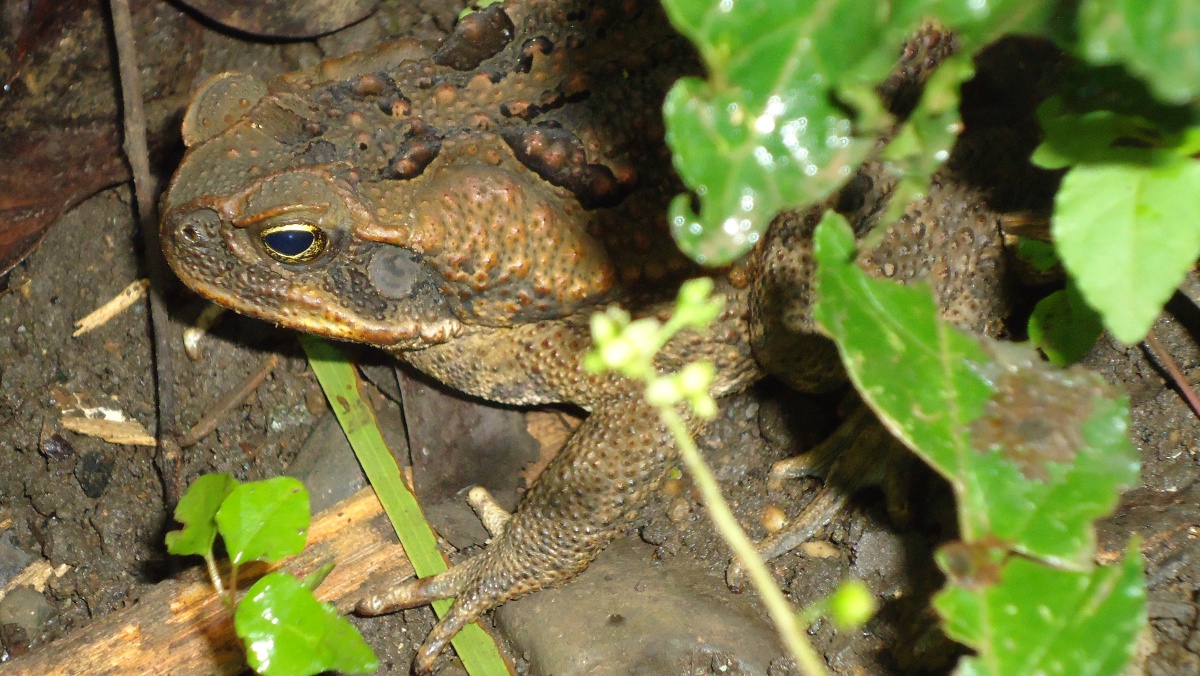
Cane toads are among the largest toads and are recognizable by their robust, squat bodies, dry warty skin and large parotoid glands behind each eye. These glands secrete a complex mix of chemicals commonly referred to as bufotoxins; the secretion can be irritating or lethal to many predators and is a key reason for the species' impact when introduced outside its native range. Adults are opportunistic feeders with an omnivorous diet that includes insects, other invertebrates and occasionally small vertebrates; tadpoles develop in still or slow-moving water.
- Body form: stout, short limbs adapted more for walking and short hops than long leaps.
- Reproduction: breeds in ponds, ditches and similar waters where females lay long strings or masses of eggs that hatch into aquatic tadpoles.
- Life history: adaptable to varied habitats, from agricultural areas to urban environments; can tolerate disturbed landscapes.
Native range and introductions
The species is native to parts of Central and South America; for regional context see resources on Central American and South American amphibians. Cane toads have been transported by people to other regions as a form of biological control and for other reasons. Those human-mediated movements are documented in accounts of introductions, and established non-native populations now occur in parts of Oceania and throughout parts of the Caribbean and Pacific islands.
Ecological impacts
Where introduced, cane toads have caused substantial ecological disruption. Their toxins can kill or injure native predators that attempt to eat them; they can outcompete native amphibians and other small animals for food and habitat; and dense populations can alter local food webs. The severity of impacts varies by location and depends on the vulnerability of native fauna. In their native range, cane toads are an integral part of ecosystems and subject to natural checks such as native predators and parasites.
Management, research and human interactions
Management strategies used where cane toads are invasive include public education, targeted removal, exclusion fencing, trapping and research into longer-term control methods. Biological control proposals require careful assessment because of risks of unintended consequences. Scientists have also studied cane toad toxins for pharmacological properties and used the species in ecological and evolutionary research. Public guidance in affected regions emphasizes keeping pets and livestock away from toads and reporting sightings to local authorities.
Further reading and resources
For summaries and conservation guidance consult regional amphibian guides and invasive-species resources; see general species accounts here, regional overviews for Central America and South America, and information on introductions and management on introduction history and in affected regions such as Oceania and the Caribbean.
Questions and answers
Q: What is a cane toad?
A: A cane toad is a species of toad, also known as the giant neotropical toad or marine toad.
Q: Where do cane toads primarily live?
A: Cane toads primarily live in Central and South America.
Q: What type of amphibian are cane toads?
A: Cane toads are terrestrial amphibians.
Q: When do cane toads go back to the water?
A: Cane toads only go back to the water to lay their eggs.
Q: Where else have cane toads been introduced?
A: Cane toads have been introduced to Oceania and the Caribbean.
Q: What is another name for the giant neotropical toad?
A: Another name for the giant neotropical toad is the marine toad.
Q: What is the scientific name for the cane toad?
A: The scientific name for the cane toad is Bufo marinus.
Related articles
Author
AlegsaOnline.com Cane toad (Rhinella marina) Leandro Alegsa
URL: https://en.alegsaonline.com/art/16540
Sources
- abc.net.au : "Toads fall victim to crows in NT – ABC News (Australian Broadcasting Corporation)"
- ozanimals.com : "Cane Toad (Bufo marinus)"
- abc.net.au : "American possums the solution to cane toads in Australia? - Science Show - 20 March 2010" · web.archive.org
- timesonline.co.uk : "Killer ants are weapons of mass toad destruction"
- qm.qld.gov.au : "Cane Toads"