
Candida: common yeasts, ecology, and human disease
Candida is a genus of yeasts that commonly live on humans and other animals. Some species are harmless commensals; others can cause superficial or invasive infections, especially in people with weakened defenses.
Overview
Candida is a genus of single-celled fungi commonly known as yeasts. These organisms frequently colonize the skin, mouth, gastrointestinal tract and genital mucosa of humans and other animals without causing harm. Under certain circumstances—such as immune suppression, antibiotic use, or medical devices—Candida species can overgrow or invade tissues and cause disease. The general medical name for infections caused by these organisms is candidiasis.
Image gallery
3 Images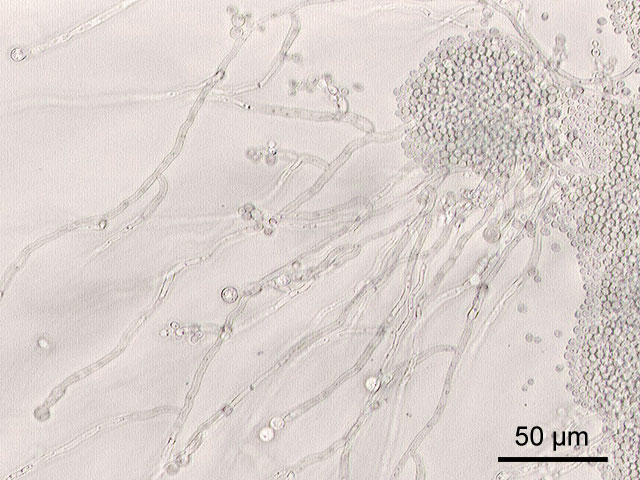


Characteristics and common species
Candida species grow as budding yeast cells and can also form elongated cells called pseudohyphae or true hyphae, a trait that can be associated with tissue invasion. The most frequently encountered species in humans is Candida albicans, but other species such as Candida glabrata, Candida parapsilosis, Candida tropicalis and Candida krusei are also important clinically. As a grouping of yeasts, Candida is part of the larger category of fungi; related informational resources are available that describe yeasts and fungal biology in more depth (yeasts, fungi).
Clinical significance and common presentations
Most interactions with Candida are harmless colonization. Disease occurs when the balance between host defenses and the organism is disrupted. Milder, localized forms include oral candidiasis (thrush), vaginal candidiasis (yeast infection), and skin or nail infections. More serious disease can occur when Candida enters the bloodstream or internal organs, leading to invasive candidiasis or candidemia; these conditions require prompt medical attention.
- Typical superficial infections: oral thrush, vulvovaginal candidiasis, intertrigo (skin folds), onychomycosis (nails).
- Invasive disease: bloodstream infection, deep-seated organ involvement (e.g., liver, spleen, eyes) in hospitalized or immunocompromised patients.
Risk factors and causes
Factors that increase the chance of Candida causing disease include prolonged antibiotic therapy (which can disrupt normal bacterial flora), weakened immune systems (HIV infection, chemotherapy, corticosteroid use), diabetes with poor glucose control, indwelling medical devices such as intravenous catheters, and major surgery or critical illness. Antibiotics do not treat yeast infections and may, by killing competing bacteria, encourage Candida overgrowth; this distinction between antibacterial drugs and antifungal disease is important when choosing treatment (fungus infections).
Diagnosis and treatment
Diagnosis typically combines clinical examination with laboratory tests: microscopic examination of specimens, culture on selective media, and, for invasive disease, blood tests or molecular assays. Treatment depends on the site and severity: topical antifungal agents are often effective for superficial infections, while systemic antifungal medications are required for invasive candidiasis. Antibacterial antibiotics do not cure Candida infections and can sometimes worsen them by altering normal flora. Increasingly, some Candida species show reduced susceptibility to available antifungals, so species identification and sensitivity testing can guide therapy.
Prevention, ecology and notable facts
Prevention focuses on reducing identifiable risks: prudent antibiotic use, good glycemic control in people with diabetes, careful hygiene around indwelling devices, and infection control measures in healthcare settings. Candida species are normal components of the human microbiome and play a complex ecological role; they can form structured communities called biofilms on surfaces and medical devices, where they are more resistant to treatment. For further general background on the genus and related topics see resources about the genus and about common yeasts and fungi.
Because Candida spans harmless colonizer and opportunistic pathogen roles, its clinical importance ranges from common, easily treated conditions to serious life-threatening infections, underscoring the need for accurate diagnosis and appropriate antifungal therapy. For an overview of the infection name and clinical guidance see candidiasis materials and species-specific information such as on Candida albicans and other medically relevant species (fungus infections).
Questions and answers
Q: What is Candida?
A: Candida is a genus or grouping of yeasts, which are a type of fungus.
Q: What is the most common kind of Candida?
A: The most common kind of Candida is called Candida albicans.
Q: How can people get a Candida infection?
A: People can get a Candida infection through exposure to this group of fungi, especially if they are weak due to another illness. It can also be contracted through blood infections or in the genital area.
Q: Does taking antibiotics cure yeast infections?
A: No, antibiotics do not cure yeast infections and may actually make them worse.
Q: Who has an increased risk for getting a yeast infection?
A: People who take antibiotics for long periods of time, those with diabetes, and those with HIV have an increased risk for getting a yeast infection.
Related articles
Author
AlegsaOnline.com Candida: common yeasts, ecology, and human disease Leandro Alegsa
URL: https://en.alegsaonline.com/art/16517
Sources
- mayoclinic.org : "Male yeast infection: Can I get it from my girlfriend?"
- nlm.nih.gov : "Yeast Infections: MedlinePlus"
- doctorfungus.org : "Candida species" · web.archive.org
- doi.org : 10.1099/00222615-33-1-43
- pubmed.ncbi.nlm.nih.gov : 2231671
- webmd.com : "Yeast Infections (Candidiasis) in Men and Women"
- doi.org : 10.1111/j.1567-1364.2009.00518.x
- pubmed.ncbi.nlm.nih.gov : 19459983
- doi.org : 10.1016/j.ijfoodmicro.2011.09.012
- pubmed.ncbi.nlm.nih.gov : 22088606