
Cancer Ward — novel by Aleksandr Solzhenitsyn
A concise encyclopedia entry on Aleksandr Solzhenitsyn's Cancer Ward: its plot, themes, historical setting, censorship, and legacy in Soviet and world literature.
Overview. Cancer Ward is a semi-autobiographical novel by Aleksandr Solzhenitsyn that examines life after the most repressive years of Soviet rule. First published in 1967, it was soon suppressed in the Soviet Union and remains one of the author's principal works exploring moral responsibility, guilt, and the personal aftermath of political terror. Readers encounter a confined community of patients and staff whose interactions become a microcosm for broader social questions about collaboration, silence, and survival.
Image gallery
4 Images
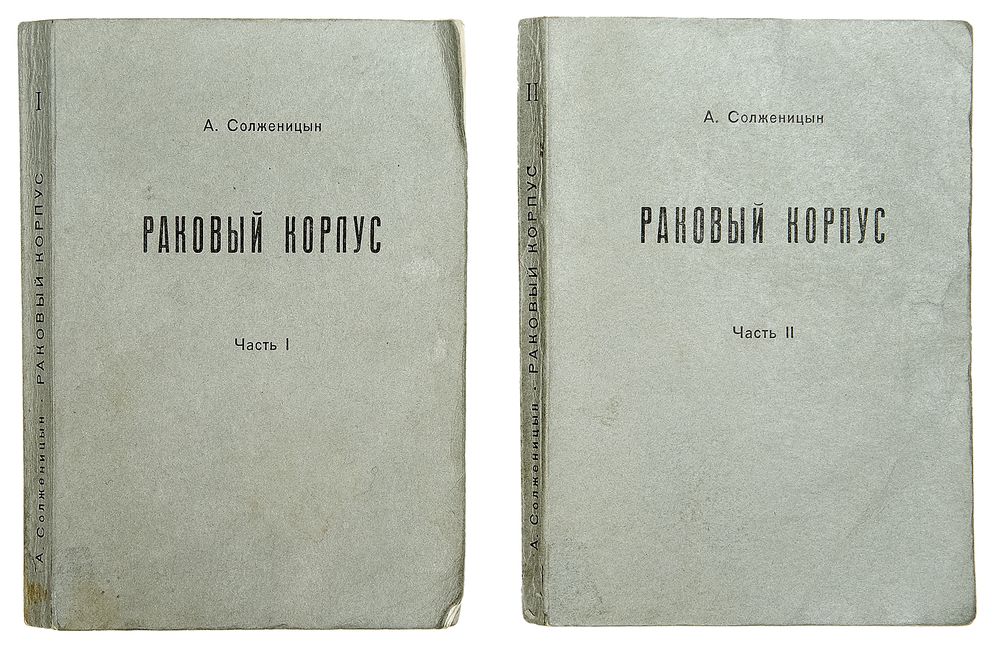


Setting and narrative
The story is set in 1955 in a regional cancer hospital in Uzbekistan, where a small group of patients and physicians confront illness alongside memories of the recent past. The protagonist, Oleg Kostoglotov, is a former political prisoner who returns to civilian life after time in the camps. Much of the novel takes place within the ward: everyday details of treatment, conversations in corridors, and the rhythms of hospital life allow the author to explore how political violence continues to shape intimate relations. Episodes range from quiet personal remembrances to confrontations over past betrayals and denouncements.
Major themes and structure
- Guilt and complicity: Characters reckon with their roles as victims, bystanders, or perpetrators during the purges and show trials that preceded the novel's present.
- Memory and truth: The narrative probes the tension between private recollection and public silence, asking what it means to remember honestly.
- Illness as metaphor: Cancer and the hospital setting are used to reflect national malaise and moral sickness, not merely physical disease.
- Limits of redemption: The novel is often read as pessimistic about easy recovery — for individuals or society — after systemic violence.
Characters and episodes
The cast includes patients of varied backgrounds, doctors, and visitors, many of whom carry the legacy of denunciations, arrests, exile, or imprisonment. Some characters confess past betrayals; others privately fear retribution. Intimate episodes — conversations about apartments won through denunciation, meetings that applauded false verdicts, and the quiet rituals of care — create a mosaic that shows how ordinary lives were fragmented by political pressure. Kostoglotov's observations move between sardonic detachment and deep melancholy as he struggles to find a place in a society that has been fundamentally altered.
Historical context and censorship
The novel engages directly with the aftermath of Stalinist repression, including the Great Purge of the 1930s and the culture of denunciation that persisted. Because it questions the moral responsibility of those who remained silent or took part in repressive acts, the book touched a raw nerve in Soviet cultural politics. After its publication it faced official disapproval and was banned in the Soviet Union within a year. The author's own experiences with imprisonment under charges related to counter-revolutionary activity informed many elements of the work, lending it a closely observed realism.
Reception, influence, and adaptations
Internationally, Cancer Ward helped establish Solzhenitsyn as a major voice against political repression and contributed to debates about truth, memory, and historical responsibility. It has been translated into many languages and studied widely in courses on 20th-century literature and Soviet history. The novel's constrained setting and intense ethical focus have inspired stage adaptations and critical commentary that emphasize its moral seriousness and literary craft. Readers and scholars continue to debate its tone — whether it is primarily an indictment, a lament, or a complex mixture of both.
Notable facts and distinctions
- The work is often classed as semi-autobiographical, reflecting experiences that echo the author's own life and imprisonment.
- Its hospital setting permits a concentrated examination of social dynamics removed from the center of power yet shaped by its consequences.
- Because it treats perpetrators, victims, and passive bystanders with psychological nuance, the novel resists simple moral categorization.
For readers seeking further context, authoritative introductions or annotations are recommended. Background reading on the author's life, the mechanics of Soviet-era political repression, and mid-20th-century Soviet society illuminates many of the novel's references. See also the author's broader body of work and critical studies for comparative perspective.
References and external resources: novel overview, literary analysis, author biography, bibliography, Soviet censorship, Uzbekistan setting, Stalin era, labor camps, political purges, Red Army history, peasant repression, Yezhovshchina, Nikolai Yezhov, NKVD, Article 58 and exile.
Questions and answers
Q: What is the novel Cancer Ward about?
A: Cancer Ward is a semi-autobiographical novel by Russian author Aleksandr Solzhenitsyn. It tells the story of a small group of cancer patients in Uzbekistan in 1955, and explores the moral responsibility of those who stood by whilst their fellow citizens were arrested, sent to labor camps, exiled or executed during Stalin's Great Purge.
Q: When was Cancer Ward first published?
A: The novel was first published in 1967.
Q: What did Stalin's Great Purge involve?
A: Stalin's Great Purge involved a large-scale purge of the Communist Party and government officials and the Red Army leadership, as well as repression of peasants. There was widespread police surveillance, suspicion of "saboteurs", imprisonment, and arbitrary executions.
Q: What does Oleg Kostoglotov realize at the end of the novel?
A: At the end of the novel, Oleg Kostoglotov realizes that there will be no healing or normal life now that Stalin has gone due to all the damage done to him and Russia.
Q: How does Shulubin describe people like Oleg Kostoglotov?
A: Shulubin tells Oleg Kostoglotov that he hasn't had to do much lying compared to others who had been herded into meetings to 'expose' him and made to demand firing squad verdicts for people like him.
Q: What does Oleg see when he visits a zoo near the end of his stay at cancer ward?
A: When visiting a zoo near the end of his stay at cancer ward, Oleg sees animals which remind him people he knew from before; he realizes they have lost their idea rational freedom if suddenly set free from their cages.
Related articles
Author
AlegsaOnline.com Cancer Ward — novel by Aleksandr Solzhenitsyn Leandro Alegsa
URL: https://en.alegsaonline.com/art/16504