
Camille Pissarro: life, art, and influence
Overview of Camille Pissarro (1830–1903), a central figure in Impressionism who experimented with Neo-Impressionism, mentored younger modernists, and shaped depictions of rural and urban life.
Camille Pissarro (10 July 1830 – 12 November 1903) was a French painter born on Saint Thomas in the Virgin Islands. He spent the greater part of his working life in France and died in Paris. Pissarro is widely remembered as a key organizer and steadying presence within Impressionism and as one of the few artists to participate in later directions that are commonly grouped under Post-Impressionism. Over four decades he produced landscapes, townscapes and scenes of everyday labor with a sustained interest in light, atmosphere and the dignity of common life.
Image gallery
10 Images


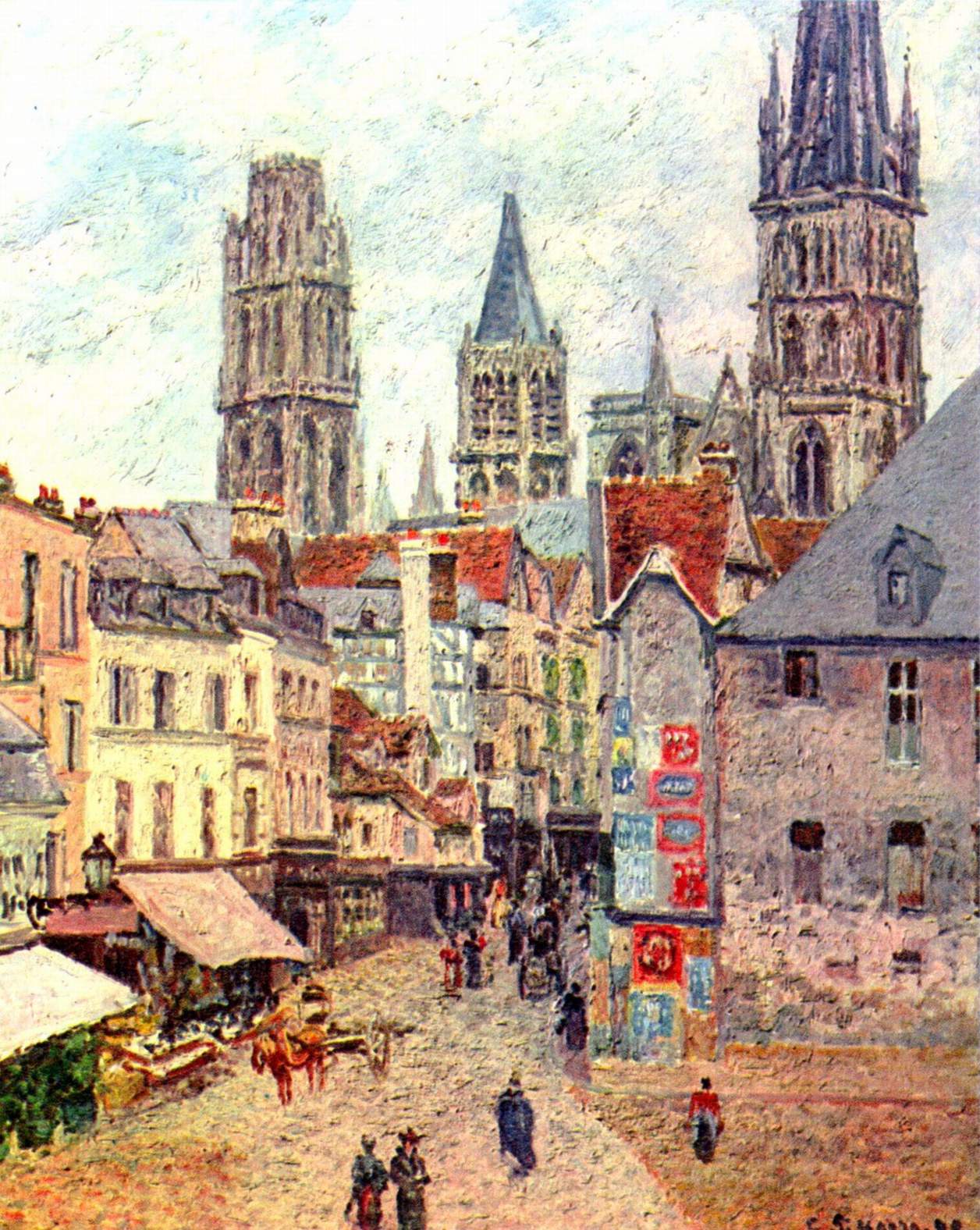


Early life and training
Pissarro’s origins in the Danish West Indies and his early exposure to different cultures and landscapes helped shape his eye for varied light and climate. In France he studied the work of earlier realists and naturalists and learned from artists such as Gustave Courbet and Jean-Baptiste-Camille Corot. These influences reinforced his preference for truthful, observational painting rather than academic or mythological subjects.
Role in the Impressionist movement
He played a formative role in the organization of the Impressionists and was the only artist to exhibit in all eight of the group’s public exhibitions between 1874 and 1886. In the early 1870s he helped to gather a society of roughly fifteen younger artists, acting as a conciliatory and encouraging figure within the circle. Contemporaries and later historians often described him as a guiding or paternal presence among the Impressionists; his steadiness and collegiality helped the group to sustain several experimental exhibitions and to defend new approaches to color and brushwork.
Style, technique and experiments
Pissarro championed en plein air painting to record changes of weather and the shifting qualities of light. His palette and brush handling generally aligned with the broken, luminous strokes associated with Impressionism, but he was open to technical experiment. Around middle age he explored the more systematic methods of Neo-Impressionism, working briefly with the divisionist ideas advanced by Georges Seurat and Paul Signac, testing optical color mixtures and pointillist procedures before returning to a freer facture that combined structural order with painterly spontaneity.
Subjects and places
- Rural scenes: orchards, farms, fields and peasants working outside Paris and in regional towns, rendered with empathy and compositional care.
- Towns and suburbs: repeated views of places such as Pontoise and the village where he settled later in life reveal an interest in community life and changing seasons.
- Urban views: street scenes and boulevards of Paris appear in his work as measured studies of modern life rather than theatrical snapshots.
Collaboration, teaching and influence
Pissarro worked alongside and advised many younger painters who later became central to modern art. He collaborated with and influenced artists such as Seurat, Signac, Paul Cézanne and Paul Gauguin. Paul Cézanne reportedly described him as a fatherly figure and an important source of counsel, and other contemporaries called him a moderating presence. Several of Pissarro’s children also pursued artistic careers, most notably his son Lucien, who became a printmaker and painter.
Critical reception and legacy
Critics and historians have praised Pissarro for the combination of rigorous observation, humane subject matter and willingness to experiment. He linked realist antecedents to Impressionist practice and helped transmit ideas that fed Post-Impressionist developments. Renoir and others recognized the importance of his depictions of ordinary people, and later historians have emphasized his centrality as both a practitioner and a mentor. Today his works are held in major museums and collections around the world, and his paintings remain important for studies of nineteenth-century landscape, urban modernity and color theory.
Further resources
For introductions to the movements and artists connected with Pissarro, consult general surveys of Impressionism and studies that place his practice in the wider context of late nineteenth-century French art. More detailed monographs and catalogues raisonnés examine his experimentation with Neo-Impressionist methods and his extensive series of views of provincial towns and Parisian neighborhoods.
Questions and answers
Q: Where was Camille Pissarro born?
A: Camille Pissarro was born on Saint Tomas in the Virgin Islands.
Q: What style of painting did he take on at the age of 54?
A: At the age of 54, Pissarro took on the Neo-Impressionist style.
Q: Who did Pissarro learn from?
A: Pissarro learnt from great forerunners, including Gustave Courbet and Jean-Baptiste-Camille Corot.
Q: When did he help establish a society of fifteen aspiring artists?
A: In 1873, Pissarro helped establish a society of fifteen aspiring artists.
Q: How is his work described by Renoir?
A: Renoir referred to his work as “revolutionary”, through his artistic portrayals of the common man.
Q: What did Cézanne say about him? A: Cézanne said "he was a father for me. A man to consult and a little like the good Lord".
Q: How many Paris Impressionist exhibitions did he show his work at? A: Pissarro is the only artist to have shown his work at all eight Paris Impressionist exhibitions, from 1874 to 1886.
Related articles
Author
AlegsaOnline.com Camille Pissarro: life, art, and influence Leandro Alegsa
URL: https://en.alegsaonline.com/art/16329
Sources
- artchive.com : artchive.com