
Cambrian Railways: the historic Mid‑Wales railway network
Former railway company that operated a 230‑mile network across mid‑Wales, formed from earlier lines and later absorbed into the Great Western Railway; its route lives on as the Cambrian Line.
The Cambrian Railways was a railway company that operated a network across mid‑Wales, covering roughly 230 miles (370 km) of track and serving rural towns, ports and quarries in the region. Its lines stitched together a patchwork of earlier local companies into a single regional system that helped link remote communities to larger English markets and coastal shipping. For a general sense of its geographic extent see the Cambrian area.
Image gallery
10 Images
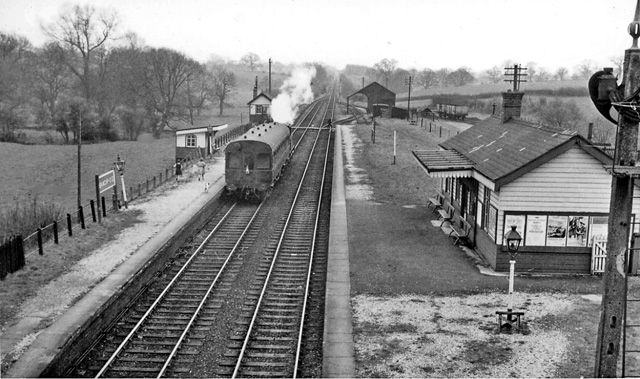


Network and connections
The Cambrian system consisted of through routes and numerous branch lines, stations, goods yards and junctions. It provided vital connections to England by joining two of the period's major companies:
- London and North Western Railway — giving onward links toward North West England and beyond.
- Great Western Railway — connecting the Cambrian network with routes to London and the West Country.
Infrastructure on the network ranged from simple rural halts to larger termini and engineering works. Freight traffic often reflected local industries: agricultural produce, timber, and notably freight from slate quarries and mines that were important to the Welsh economy.
History and development
The company was formed by amalgamating several independent railways in the late 19th and early 20th centuries, creating a coherent regional concern. It operated as an independent entity until the early 1920s, when broader national reorganisation of the railway industry led to its absorption into the larger Great Western system under arrangements arising from the Railways Act 1921; see more on the amalgamation. During its independent years the Cambrian balanced local passenger services with the needs of freight and interchange with neighbouring companies.
Many of the Cambrian lines were single track with passing loops and modest stations, reflecting the low population density of much of mid‑Wales. Locomotives and rolling stock were generally of moderate size and design, suitable for mixed traffic on light infrastructure; maintenance depots and workshops were located at key towns on the network.
Legacy and significance
Although the original corporate identity disappeared during the grouping of the 1920s, the physical routes continued to serve passengers and freight. Today the route survives in public awareness as the Cambrian Line and remains noted for its scenic qualities and importance to regional connectivity. The network is also a subject of interest to railway historians, local museums and heritage groups who preserve equipment and memories of the Cambrian era.
Notable points: the Cambrian Railways illustrates how many smaller railways were combined to create regional systems; it played a central role in the economic life of mid‑Wales by linking rural industries to national markets, and its route alignment and stations still shape transport patterns in the region.
Questions and answers
Q: How many miles of track did the Cambrian Railways own?
A: The Cambrian Railways owned 230 miles (370 km) of track.
Q: Where was the area that the Cambrian Railways covered?
A: The Cambrian Railways covered a large area of mid-Wales.
Q: Did the Cambrian Railways connect with any larger railways?
A: Yes, the Cambrian Railways connected with two larger railways.
Q: Which railway did the Cambrian Railways connect with for connections to North West England?
A: The Cambrian Railways connected with London and North Western Railway for connections to North West England.
Q: Which railway did the Cambrian Railways connect with for connections to London?
A: The Cambrian Railways connected with Great Western Railway for connections to London.
Q: When did Cambrian Railways amalgamate with the Great Western Railway?
A: The Cambrian Railways amalgamated with the Great Western Railway on 1 January 1922.
Q: Is the name Cambrian Railways still used today?
A: Yes, the name is continued today in the route known as the Cambrian Line.
Related articles
Author
AlegsaOnline.com Cambrian Railways: the historic Mid‑Wales railway network Leandro Alegsa
URL: https://en.alegsaonline.com/art/16259