
Camborne: Cornish mining town and industrial heritage
Camborne is a town in west Cornwall, England, known for its historic tin mining industry, the Camborne School of Mines, and Richard Trevithick's early steam road locomotive.
Overview
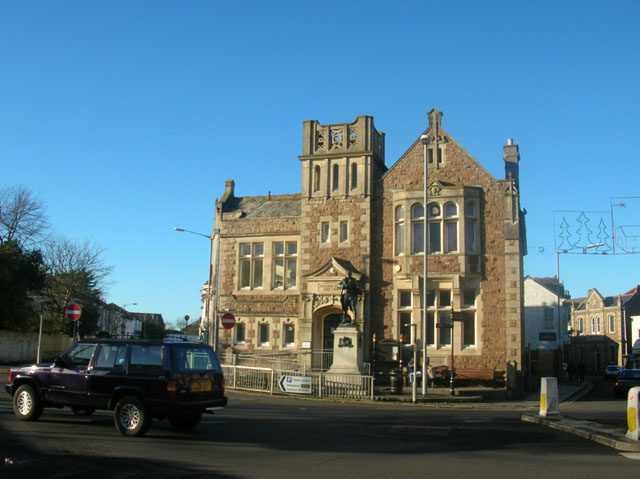
Camborne is a town in west Cornwall in the United Kingdom, situated at the western edge of a built-up area that includes Pool and Redruth. The town grew around tin and copper mining and later developed into a local commercial and service centre. Camborne's character reflects its industrial past: large engine houses, miners' cottages and the urban pattern created by the mining boom remain visible in the streetscape.
Image gallery
10 Images


Location and population
Camborne lies within a continuous conurbation and is commonly linked with nearby settlements. It forms part of a cluster often described as the Camborne, Pool and Redruth conurbation. At the 2001 census the town itself recorded a population of about 20,010 and the larger conurbation about 39,937, making it one of the most populous urban areas in Cornwall at that time (census data). The town's setting places it comfortably within the mining landscapes of western Cornwall (Cornwall region).
Industrial history and mining legacy
For much of the 18th and 19th centuries Camborne and its immediate hinterland were at the heart of one of the world's richest tin and copper mining districts. Large mines and deep shafts were driven into the granite, and associated engineering skills developed locally, including steam engine design and mine drainage techniques. Two of the best-known mines were Dolcoath, nicknamed the 'Queen of Cornish Mines' and once famed for its depth, and South Crofty, noted as one of the last commercially worked tin mines in Europe before its closure in 1998. Much of the surrounding mining landscape, with its engine houses and spoil heaps, contributes to the area's industrial archaeology and heritage.
Education, engineering and notable figures
Camborne is closely associated with the Camborne School of Mines, founded in the 19th century to train engineers and mining professionals for work both locally and internationally. The town also figures in the history of early steam engineering: local engineer Richard Trevithick built a steam-powered road vehicle that was demonstrated on Camborne Hill on Christmas Eve 1801. This pioneering vehicle, often called the "Puffing Devil," is recognised as an early example of a self-propelled passenger-carrying road vehicle (Trevithick).
Modern Camborne and cultural significance
Since the end of large-scale mining, Camborne has diversified its economy. The town now supports local retail, light industry, and services, while its mining heritage attracts visitors and researchers interested in industrial history. Events and local traditions celebrate Camborne's past and community identity. The wider mining landscape, encompassing parts of Cornwall and west Devon, is acknowledged for its historical importance and contributes to tourism and heritage education.
Distinguishing features
- Historic mining infrastructure and engine houses.
- Links to early steam engineering and the Puffing Devil.
- An educational legacy in mining and extractive engineering through the Camborne School of Mines.
- Part of a larger urban area formed with Pool and Redruth (local conurbation).
For more detailed historical or statistical information, consult local archives and regional studies that focus on Cornwall's mining period and its social and economic consequences.
Questions and answers
Q: Where is Camborne located?
A: Camborne is located in west Cornwall, England, United Kingdom.
Q: What is the population of Camborne according to the 2001 census?
A: The population of Camborne was 20,010 at the 2001 census.
Q: What is the conurbation consisting of Camborne, Pool, and Redruth?
A: The conurbation consisting of Camborne, Pool, and Redruth is the largest in Cornwall with a population of 39,937 according to the 2001 census.
Q: What was the main industry in the Camborne and Redruth district, and what is the town known for today?
A: The Camborne and Redruth district was formerly one of the richest tin mining areas in the world, and today it is no longer an industrial town.
Q: What is the Camborne School of Mines, and why was it founded?
A: The Camborne School of Mines is a school that trains engineers to work in the tin mines. It was founded in the 19th century.
Q: What were two famous mines in Camborne, and when did they close?
A: Two famous mines in Camborne were Dolcoath, the 'Queen of Cornish Mines' (closed 1921), once the deepest mine in the world, and South Crofty, the last working tin mine in Europe which closed in 1998.
Q: What was the Puffing Devil, and when did it make history in Camborne?
A: The Puffing Devil was a steam-powered road vehicle that was built by Camborne engineer Richard Trevithick. It made history on Christmas Eve 1801 by becoming the world's first self-propelled passenger carrying vehicle.
Related articles
Author
AlegsaOnline.com Camborne: Cornish mining town and industrial heritage Leandro Alegsa
URL: https://en.alegsaonline.com/art/16253
Sources
- neighbourhood.statistics.gov.uk : "Census 2001 : Parish Headcounts : Camborne Civil Parish"
- statistics.gov.uk : "Census 2001: Key Statistics for Urban Areas in England and Wales"
- bbc.co.uk : BBC Cornwall - Nature - Camborne History