
California State Senate
Upper chamber of California's bicameral legislature. Composed of 40 senators serving staggered four-year terms, it crafts state law, adopts the budget, confirms appointments, and operates through committees and leadership.
Overview
The upper house of California's legislature is the California State Senate, one of two chambers that make up the California State Legislature. The body consists of 40 elected members who represent districts across the state. It meets at the California State Capitol in Sacramento and plays a central role in creating state law and approving the state's budget. The chamber has been controlled by the Democratic Party in recent years, which determines much of its leadership and committee structure.
Image gallery
2 Images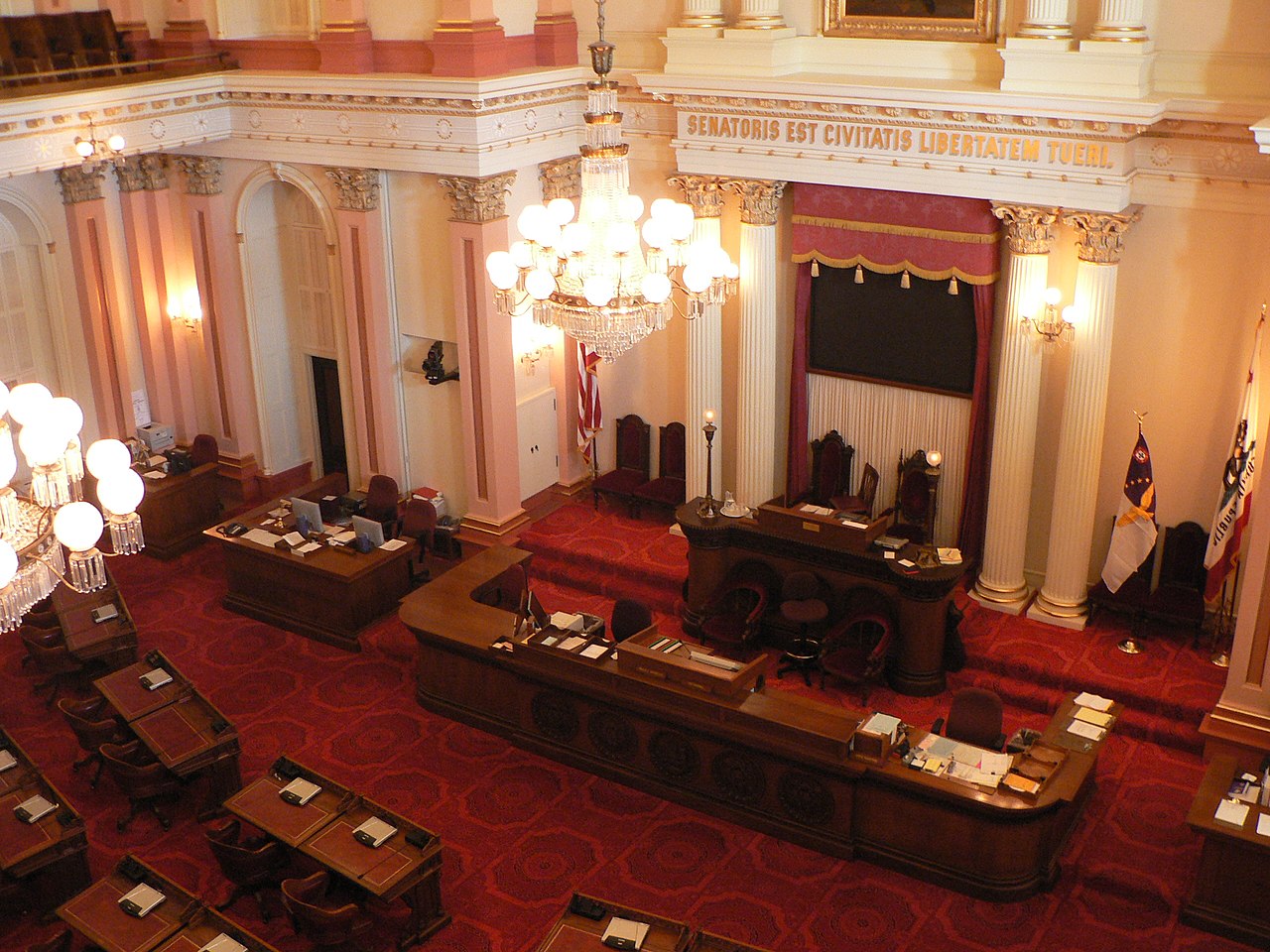

Composition and elections
Senators serve four-year terms with elections staggered so roughly half the seats are contested every two years. Districts are drawn by an independent commission following the census. Recent changes to term limits allow legislators to serve a combined total of up to 12 years in the Legislature, either wholly in the Senate or split between both houses.
Powers and responsibilities
The Senate's responsibilities include passing bills, enacting the state budget in concert with the Assembly, and confirming gubernatorial appointments to the executive branch and various boards and commissions. It also has the authority to conduct investigations, hold oversight hearings, and originate certain types of legislation related to state finance.
Organization and procedure
Leadership is led by the President pro Tempore, who directs floor business, committee assignments, and the legislative agenda; the Lieutenant Governor is the formal President of the Senate but rarely presides in practice. Much of the Senate's work occurs in standing committees that evaluate proposals, hold hearings, and amend bills before they reach a floor vote.
History and significance
Established as part of California's bicameral system, the Senate has evolved with the state's growth and changing political dynamics. Its size, electoral cycles, and powers reflect a balance between statewide governance and local representation. The chamber's decisions affect education, public safety, healthcare, infrastructure, and taxation across California.
Key functions at a glance
- Legislating: drafting, debating, and voting on bills.
- Budgeting: reviewing and amending the governor's budget proposal.
- Confirmation: approving appointments to state offices and agencies.
- Oversight: monitoring state programs and conducting inquiries.
For more detailed rules and current membership, consult official sources and the legislative calendar. The Senate's procedures and priorities can change with elections, party control, and shifts in public policy needs.
Questions and answers
Q: What is the California State Senate?
A: The California State Senate is the upper house of the California State Legislature.
Q: How many members does the California State Senate have?
A: The California State Senate has 40 members.
Q: Who currently controls the California State Senate?
A: The California State Senate is currently controlled by the Democratic Party.
Q: Where does the California State Senate meet?
A: The California State Senate meets at the California State Capitol in Sacramento.
Q: What is the lower house of the California State Legislature?
A: The lower house of the California State Legislature is the California State Assembly.
Q: How many members does the California State Assembly have?
A: The California State Assembly has 80 members.
Q: What is the purpose of the California State Legislature?
A: The purpose of the California State Legislature is to make laws and policies for the state of California.
Related articles
Author
AlegsaOnline.com California State Senate Leandro Alegsa
URL: https://en.alegsaonline.com/art/16142