
California in the American Civil War: politics, gold, and the Pacific frontier
How California supported the Union through gold, volunteers, garrisons and politics, and how the state’s economy and western defenses shaped its Civil War role.
California remained part of the Union throughout the American Civil War, but its contribution and experience differed from those of the eastern states. Rather than sending whole state regiments eastward, California supplied money, men and material that sustained Union operations and secured the western frontier. The state shipped significant quantities of gold to the East by a variety of routes, raised numerous volunteer units and mustered militia regiments to replace regular Army garrisons in the Pacific and in the vast military Department of the Pacific.
Image gallery
9 Images


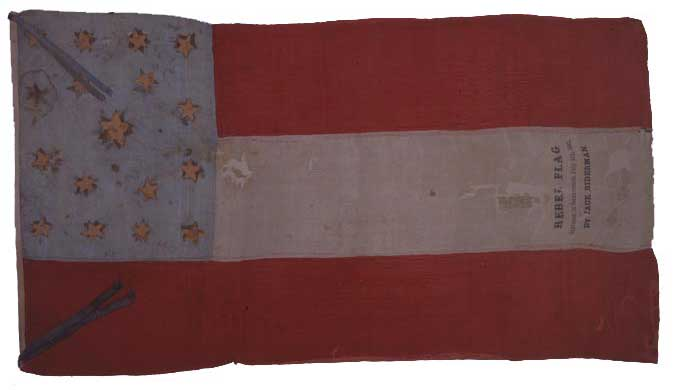
Political and social background
California's population surged after the Gold Rush, attracting farmers, miners and merchants from the Midwest and the South. That migration shaped local politics: Democrats were influential in the early statehood era, and a faction of Southern Democrats sympathized with the Confederacy. Those secessionist sympathizers remained a minority, however, and the balance of power shifted during the crisis of 1860–61 as coastal businessmen and other leaders aligned with the Union. The State of California government ultimately refused to secede and worked with federal authorities to preserve order.
Military organization and operations
Federal and state forces in and from California pursued several aims: protect communications and transport, suppress organized secessionist activity, guard ports and gold shipments, and maintain control over frontier territories. The Army stationed regular troops in forts and camps across the coast and interior; when those regulars were needed elsewhere, California's Volunteers took their places. The state maintained and built numerous camps and fortifications, while units operating under the Departments of the Pacific and New Mexico conducted patrols, escorted supply trains and engaged in campaigns against Native American tribes in the region. Many individuals from California also traveled east and joined the Union Army in eastern theaters rather than waiting for their state to raise full regiments abroad.
Economy, logistics and communications
California's economic weight proved strategically important. Shipments of gold helped fund the Northern war effort and stabilize Union finances; those shipments traveled via sea lanes and trans-isthmus crossings, as well as overland routes. Maintaining secure ports and shipping lanes was therefore a priority for federal forces. At the same time, the completion of the transcontinental telegraph in 1861 linked California more closely to Washington, enabling faster communications about military and political developments on the frontier.
Internal security and frontier conflict
Within California, federal and state authorities confronted secessionist organizing in some southern counties, but large-scale insurrection never materialized. California Volunteers were also heavily engaged in policing the state and in campaigns against Native American groups across California and neighboring territories, often under orders from regional commands concerned with protecting settlements, supply routes and mining districts locally. The war thus intensified patterns of military presence and conflict on the Pacific slope.
Legacy and notable distinctions
California’s Civil War role combined economic support, manpower for western garrisons and the stabilization of the Pacific coast. Although the state did not dispatch full state regiments to eastern battlefields, its citizens, shipping finances and military units were important to Union strategy in the West. The political dynamics that shaped this outcome reflected the post–Gold Rush settlement of Midwestern and Southern migrants, and the influence of Democratic and Republican factions shaped local responses to secession Gold Rush, Midwestern and Southern migrations. California businessmen and party structures also mattered: mining and shipping interests affected politics and supported Union stability farmers, Democrats and Confederate sympathizers all figured in the contest, but ultimately federal authority and local Union majorities kept the state with the North. The war years strengthened California's integration into national systems while intensifying military and political control over its frontiers, a process tied to both partisan alignments and economic imperatives minority Republican crisis.
- See also: California volunteer formations and Department-level operations in the Pacific and New Mexico.
- Topics related: gold and finance, frontier forts and camps, telegraph and transport links, native conflicts and civil unrest.
Questions and answers
Q: What role did California play in the American Civil War?
A: California was involved in sending gold east, recruiting volunteer soldiers to replace regular army forces in the Western United States and in maintaining and building numerous camps and fortifications. The State of California did not send its units east, but many citizens traveled east and joined the Union Army. California's Volunteers also conducted many operations against Native American peoples within the state and other Western territories.
Q: Who were primarily settling California after the Gold Rush?
A: After the Gold Rush, California was settled primarily by Midwestern and Southern farmers, miners and businessmen.
Q: Which political party dominated California from its foundation?
A: Democrats dominated the state from its foundation.
Q: How were Southern Democrats sympathetic to during secession?
A: Southern Democrats were sympathetic to the Confederate States of America who seceded, but they were a minority group in the state.
Q: What role did Californian businessmen play in politics?
A: Californian businessmen played a significant role in Californian politics through their control of mines, shipping, finance, and the Republican Party. But they were a minority party until the secession crisis.
Q: How did Californians respond to secession crisis?
A: During secession crisis, Californian businessmen increased their control over mines, shipping finance and Republican Party which made them a majority party for some time.
Related articles
Author
AlegsaOnline.com California in the American Civil War: politics, gold, and the Pacific frontier Leandro Alegsa
URL: https://en.alegsaonline.com/art/16126
Sources
- books.google.com : Two Californias: The Myths And Realities Of A State Divided Against Itself
- books.google.com : The Quarterly (vol 5-6) How California Escaped State Division
- kcet.org : "Civil War: How Southern California Tried to Split from Northern California"
- militarymuseum.org : "California Militia and National Guard Unit Histories"
- civilwar.org : "Ten Facts About California during the Civil War"