
Cali (Santiago de Cali): overview, history, culture and economy
Santiago de Cali is the capital of Valle del Cauca in Colombia, an historic city and regional economic, cultural and transportation hub known for salsa music, festivals and its tropical setting.
Santiago de Cali, commonly called Cali, is the capital of the Valle del Cauca department in Colombia. It is the country's third most populated city after Bogotá and Medellín. As a departmental capital, Cali hosts governmental institutions such as the regional governor's office, the departmental assembly and judicial bodies. The city's metropolitan area functions as the principal urban, commercial and industrial center of southwestern Colombia and plays an important role within the broader context of the Americas.
Image gallery
10 Images



History and development
Cali was founded in 1536 as a Spanish colonial settlement and is among the older cities on the American continent. For centuries it remained a regional market and administrative town. Not until the twentieth century—especially from the 1930s onward—did the city experience accelerated industrialization and urban growth that transformed it into a major economic hub in the southwest of the country. This development was driven by improvements in transportation, agricultural export markets and the expansion of light and heavy industry.
Geography and climate
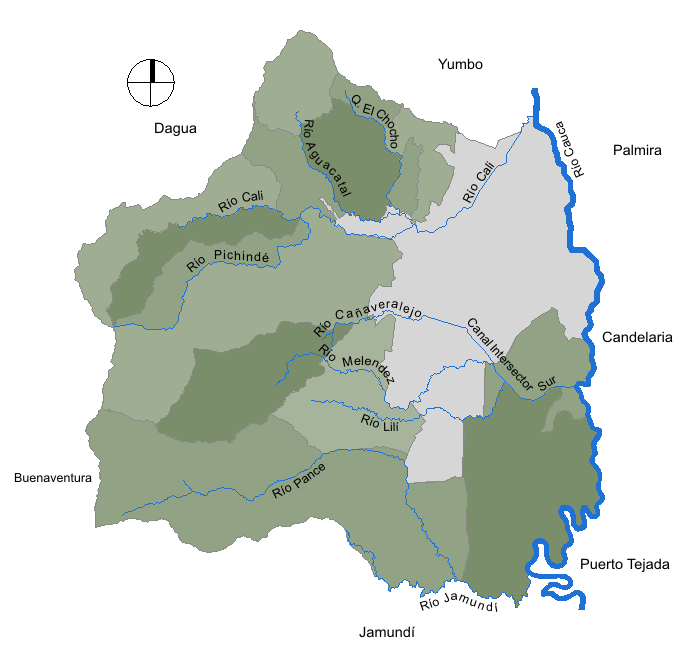
Cali lies in the Cauca River valley at the western edge of the Andean mountain chain. Its location gives the city a generally warm, tropical climate with relatively stable temperatures and seasonal rainfall patterns influenced by nearby mountains and the Pacific coast. Urban neighborhoods range from lower-lying commercial districts to residential areas on hillsides, with notable green spaces and parks that reflect the city's varied topography.
Economy, infrastructure and institutions
The local economy combines manufacturing, commerce, services and agriculture from surrounding rural areas. Cali's role as a departmental capital means it is a center for administrative services and legal institutions. The city is served by a major international airport and has road links to the Pacific coast and interior regions, supporting trade and tourism. Public and private universities, hospitals and cultural institutions contribute to its regional importance.
Culture, events and sport
Cali is widely recognized for its musical and dance traditions, particularly salsa, which forms a central part of its cultural identity and nightlife. The city hosts annual celebrations such as the Feria de Cali, drawing national and international visitors for concerts, parades and cultural events. Sports are another prominent feature: the city supports well-known football clubs and has hosted national and international sporting competitions.
Notable features and distinctions
- Historical foundation date and colonial architecture alongside modern districts.
- Reputation as a major center for salsa music and dance, with numerous schools and performance venues.
- Important regional role as administrative, commercial and transportation hub in southwestern Valle del Cauca.
- Proximity to natural attractions and varied landscapes that support recreation and ecotourism.
For readers seeking more detailed information on municipal services, cultural programming or travel planning, official regional and municipal sources provide current schedules and contacts. General introductions and imagery also appear in broader reference works on cities in the Americas and on the national context of Colombia.
Questions and answers
Q: What is Cali?
A: Cali is the capital of Valle del Cauca department in Colombia and the third most populated city in the country.
Q: What official institutions are located in Cali?
A: Cali is home to the Valle del Cauca Governance, Departmental assembly, The Court of Justice, and other official institutions.
Q: When was Santiago de Cali founded?
A: Santiago de Cali was founded in 1536.
Q: How long did it take for Cali to become one of the major economic and industrial centers of Colombia?
A: Cali only started accelerating its development in the 1930s to become one of the major economic and industrial centers of Colombia.
Q: What is the significance of Cali's location?
A: Cali is the main urban center, cultural, economic, industrial and agriculture of southwestern Colombia due to its strategic location.
Q: What cities are more populated than Cali in Colombia?
A: Bogotá and Medellín are more populated than Cali in Colombia.
Q: Which department is Cali the capital of?
A: Cali is the capital of Valle del Cauca department in Colombia.
Related articles
Author
AlegsaOnline.com Cali (Santiago de Cali): overview, history, culture and economy Leandro Alegsa
URL: https://en.alegsaonline.com/art/16106
Sources
- dane.gov.co : "Presentación de PowerPoint"