
Caenorhabditis elegans: a model nematode for genetics and development
Caenorhabditis elegans is a small, free‑living roundworm extensively used as a model organism to study development, genetics, neurobiology and aging. This article summarizes its biology, history and research uses.
Caenorhabditis elegans is a small, free‑living species of nematode (roundworm) that has become a central experimental subject in modern biology. Adults are roughly 1 millimetre long, transparent, and live in soil or rotting plant matter where they feed on bacteria. Their simplicity, ease of culture and well‑characterized life cycle make them an important model organism for laboratory study.
Image gallery
10 Images
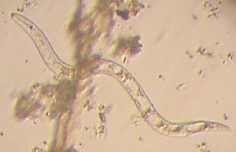




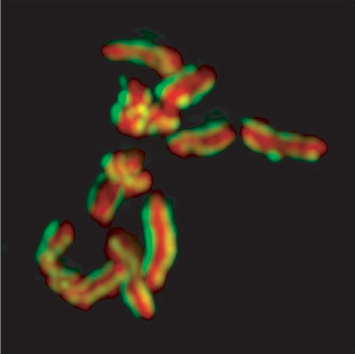
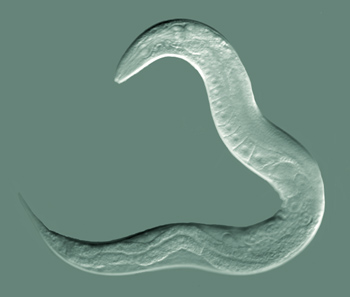
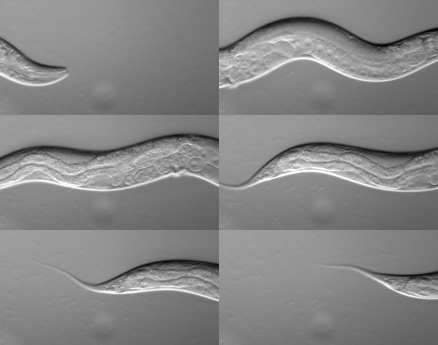

Key characteristics
The body of C. elegans is transparent and anatomically simple, which allows direct observation of cells under a light microscope. The species exhibits a fixed and well‑documented pattern of cell divisions and differentiation: the adult hermaphrodite contains a stereotyped number of somatic cells, and the nervous system of the typical hermaphrodite comprises an invariant set of neurons. Sexes include self‑fertile hermaphrodites and rarer males; hermaphrodites produce sperm during a juvenile or larval stage and later produce ova, enabling self‑fertilization as well as cross‑fertilization with males. Embryonic development is rapid and predictable, and each stage from zygote to free‑living larva has been extensively described.
Laboratory use and genetics
C. elegans is prized for experimental genetics: it is easy to cultivate in laboratories, reproduces quickly, and can be frozen for long‑term storage. It was the first multicellular organism to have its entire genome sequenced, and this resource, together with powerful genetic and molecular tools, has enabled detailed study of genetics, development, gene function and cellular processes. Researchers around the world — including many scientists focused on fundamental biology — use the worm to dissect pathways that are conserved across animals.
History and major discoveries
Systematic laboratory study of C. elegans began under the leadership of Sydney Brenner, who advocated using the species to connect genetics with neurobiology and development. Work on this worm led to major insights into programmed cell death, and in 2002 the Nobel Prize in Physiology or Medicine recognized contributions by Brenner, Robert Horvitz and John Sulston for elucidating how certain genes control development and how particular cells are eliminated during the life of the animal. Subsequent discoveries in RNA interference and other molecular mechanisms were also advanced using C. elegans.
Practical benefits and research areas
Because of its experimental tractability, C. elegans is used in studies of embryogenesis, neuronal wiring, behavior, aging, metabolism, and disease models. Typical laboratory methods involve growing worms on agar plates seeded with bacteria, scoring visible phenotypes, and applying genetic, genomic and imaging approaches. Their short generation time and amenability to high‑throughput methods make them valuable for screening gene function and chemical effects.
Notable facts and distinctions
- Transparent body and predictable cell lineage permit direct observation of development and cell fates.
- Hermaphrodite self‑fertility simplifies maintenance of mutant lines while males permit genetic crosses.
- Its whole‑genome sequence and comprehensive anatomical maps make it a reference organism for many fields.
Further reading and resources:
- Taxonomy and species overview
- Nematode biology
- Genetics resources
- Developmental studies
- Feeding and ecology
- Model organism databases
- Comparative animal biology
- Multicellular genome projects
- Researcher networks
- Genome information
- Hermaphrodite biology
- Male biology
- Gametogenesis
- Larval stages
- Egg and ova development
- Sydney Brenner and early work
- Laboratory culture methods
- Embryology summaries
- Model research organisms
- Nobel Prize background
- John Sulston's contributions
- Key genes and pathways
- Cell biology and apoptosis
Questions and answers
Q: What is Caenorhabditis elegans?
A: Caenorhabditis elegans is a species of roundworm or nematode.
Q: Why is C. elegans important?
A: C. elegans is important because much research has been done on its genetics and development, making it a model organism used to study animal development and behavior. It was also the first multicellular organism for which scientists were able to sequence its whole genome.
Q: How big are C. elegans worms?
A: C. elegans worms are about 1 mm long.
Q: Are they parasites?
A: No, they are free-living organisms that live in soil and feed on bacteria.
Q: What types of sex does C. elegans have?
A: C. elegans has two types of sex - hermaphrodite and male - with males being slightly smaller than hermaphrodites. Hermaphrodites make sperms when in a larval stage and ova in an adult stage, while males can only make sperm.
Q: Who began studying using C.?elegans?
A: Study using C .elegans was begun in 1965 by Sydney Brenner, who later went on to win the Nobel Prize for Medicine for his work on how the worm's genes cause it to grow and cause some of its cells to die in 2002 along with Robert Horvitz and John Sulston..
Q: Why are animals like C.?elegans good organisms for research?
A: Animals like C .elegans that do not take long to grow and are easy to feed are usually good organisms for research as they can be kept alive easily in laboratories at 25ºC where they spend 14 hours as an embryo
Related articles
Author
AlegsaOnline.com Caenorhabditis elegans: a model nematode for genetics and development Leandro Alegsa
URL: https://en.alegsaonline.com/art/15943
Sources
- ncbi.nlm.nih.gov : "Spontaneous Unstable UNC-22 IV Mutations in C. ELEGANS Var. Bergerac"
- pubmed.ncbi.nlm.nih.gov : 6096205
- ncbi.nlm.nih.gov : PubMed
- ncbi.nlm.nih.gov : PubMed
- species.wikimedia.org : Caenorhabditis elegans
- commons.wikimedia.org : Caenorhabditis elegans